Wilkins, Et Al., 2012. “Key Microbial Drivers in Antarctic Aquatic Environments”
Total Page:16
File Type:pdf, Size:1020Kb
Load more
Recommended publications
-
Chemical Structures of Some Examples of Earlier Characterized Antibiotic and Anticancer Specialized
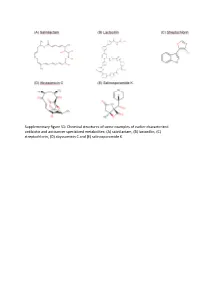
Supplementary figure S1: Chemical structures of some examples of earlier characterized antibiotic and anticancer specialized metabolites: (A) salinilactam, (B) lactocillin, (C) streptochlorin, (D) abyssomicin C and (E) salinosporamide K. Figure S2. Heat map representing hierarchical classification of the SMGCs detected in all the metagenomes in the dataset. Table S1: The sampling locations of each of the sites in the dataset. Sample Sample Bio-project Site depth accession accession Samples Latitude Longitude Site description (m) number in SRA number in SRA AT0050m01B1-4C1 SRS598124 PRJNA193416 Atlantis II water column 50, 200, Water column AT0200m01C1-4D1 SRS598125 21°36'19.0" 38°12'09.0 700 and above the brine N "E (ATII 50, ATII 200, 1500 pool water layers AT0700m01C1-3D1 SRS598128 ATII 700, ATII 1500) AT1500m01B1-3C1 SRS598129 ATBRUCL SRS1029632 PRJNA193416 Atlantis II brine 21°36'19.0" 38°12'09.0 1996– Brine pool water ATBRLCL1-3 SRS1029579 (ATII UCL, ATII INF, N "E 2025 layers ATII LCL) ATBRINP SRS481323 PRJNA219363 ATIID-1a SRS1120041 PRJNA299097 ATIID-1b SRS1120130 ATIID-2 SRS1120133 2168 + Sea sediments Atlantis II - sediments 21°36'19.0" 38°12'09.0 ~3.5 core underlying ATII ATIID-3 SRS1120134 (ATII SDM) N "E length brine pool ATIID-4 SRS1120135 ATIID-5 SRS1120142 ATIID-6 SRS1120143 Discovery Deep brine DDBRINP SRS481325 PRJNA219363 21°17'11.0" 38°17'14.0 2026– Brine pool water N "E 2042 layers (DD INF, DD BR) DDBRINE DD-1 SRS1120158 PRJNA299097 DD-2 SRS1120203 DD-3 SRS1120205 Discovery Deep 2180 + Sea sediments sediments 21°17'11.0" -
Consistent Responses of Soil Microbial Communities to Elevated Nutrient Inputs in Grasslands Across the Globe
Consistent responses of soil microbial communities to elevated nutrient inputs in grasslands across the globe Jonathan W. Leffa,b, Stuart E. Jonesc, Suzanne M. Proberd, Albert Barberána, Elizabeth T. Borere, Jennifer L. Firnf, W. Stanley Harpoleg,h,i, Sarah E. Hobbiee, Kirsten S. Hofmockelj, Johannes M. H. Knopsk, Rebecca L. McCulleyl, Kimberly La Pierrem, Anita C. Rischn, Eric W. Seabloomo, Martin Schützn, Christopher Steenbockb, Carly J. Stevensp, and Noah Fierera,b,1 aCooperative Institute for Research in Environmental Sciences, University of Colorado, Boulder, CO 80309; bDepartment of Ecology and Evolutionary Biology, University of Colorado, Boulder, CO 80309; cDepartment of Biological Sciences, University of Notre Dame, Notre Dame, IN 46556; dCommonwealth Scientific and Industrial Research Organisation Land and Water Flagship, Wembley, WA 6913, Australia; eDepartment of Ecology, Evolution and Behavior, University of Minnesota, St. Paul, MN 55108; fSchool of Earth, Environmental and Biological Sciences, Queensland University of Technology, Brisbane, QLD 4001, Australia; gDepartment of Physiological Diversity, Helmholtz Center for Environmental Research UFZ, 04318 Leipzig, Germany; hGerman Centre for Integrative Biodiversity Research Halle-Jena-Leipzig, D-04103 Leipzig, Germany; iInstitute of Biology, Martin Luther University Halle-Wittenberg, 06108 Halle (Saale), Germany; jEcology, Evolution, and Organismal Biology Department, Iowa State University, Ames, IA 50011; kSchool of Biological Sciences, University of Nebraska, Lincoln, NE 68588; lDepartment of Plant and Soil Sciences, University of Kentucky, Lexington, KY 40546; mDepartment of Integrative Biology, University of California, Berkeley, CA 94720; nCommunity Ecology, Swiss Federal Institute for Forest, Snow and Landscape Research, 8903 Birmensdorf, Switzerland; oDepartment of Ecology, Evolution, and Behavior, University of Minnesota, St. Paul, MN 55108; and pLancaster Environment Centre, Lancaster University, Lancaster, LA1 4YQ, United Kingdom Edited by Peter M. -

Bacterial Epibiotic Communities of Ubiquitous and Abundant Marine Diatoms Are Distinct in Short- and Long-Term Associations
fmicb-09-02879 December 1, 2018 Time: 14:0 # 1 ORIGINAL RESEARCH published: 04 December 2018 doi: 10.3389/fmicb.2018.02879 Bacterial Epibiotic Communities of Ubiquitous and Abundant Marine Diatoms Are Distinct in Short- and Long-Term Associations Klervi Crenn, Delphine Duffieux and Christian Jeanthon* CNRS, Sorbonne Université, Station Biologique de Roscoff, Adaptation et Diversité en Milieu Marin, Roscoff, France Interactions between phytoplankton and bacteria play a central role in mediating biogeochemical cycling and food web structure in the ocean. The cosmopolitan diatoms Thalassiosira and Chaetoceros often dominate phytoplankton communities in marine systems. Past studies of diatom-bacterial associations have employed community- level methods and culture-based or natural diatom populations. Although bacterial assemblages attached to individual diatoms represents tight associations little is known on their makeup or interactions. Here, we examined the epibiotic bacteria of 436 Thalassiosira and 329 Chaetoceros single cells isolated from natural samples and Edited by: collection cultures, regarded here as short- and long-term associations, respectively. Matthias Wietz, Epibiotic microbiota of single diatom hosts was analyzed by cultivation and by cloning- Alfred Wegener Institut, Germany sequencing of 16S rRNA genes obtained from whole-genome amplification products. Reviewed by: The prevalence of epibiotic bacteria was higher in cultures and dependent of the host Lydia Jeanne Baker, Cornell University, United States species. Culture approaches demonstrated that both diatoms carry distinct bacterial Bryndan Paige Durham, communities in short- and long-term associations. Bacterial epibonts, commonly University of Washington, United States associated with phytoplankton, were repeatedly isolated from cells of diatom collection *Correspondence: cultures but were not recovered from environmental cells. -

Motiliproteus Sediminis Gen. Nov., Sp. Nov., Isolated from Coastal Sediment
Antonie van Leeuwenhoek (2014) 106:615–621 DOI 10.1007/s10482-014-0232-2 ORIGINAL PAPER Motiliproteus sediminis gen. nov., sp. nov., isolated from coastal sediment Zong-Jie Wang • Zhi-Hong Xie • Chao Wang • Zong-Jun Du • Guan-Jun Chen Received: 3 April 2014 / Accepted: 4 July 2014 / Published online: 20 July 2014 Ó Springer International Publishing Switzerland 2014 Abstract A novel Gram-stain-negative, rod-to- demonstrated that the novel isolate was 93.3 % similar spiral-shaped, oxidase- and catalase- positive and to the type strain of Neptunomonas antarctica, 93.2 % facultatively aerobic bacterium, designated HS6T, was to Neptunomonas japonicum and 93.1 % to Marino- isolated from marine sediment of Yellow Sea, China. bacterium rhizophilum, the closest cultivated rela- It can reduce nitrate to nitrite and grow well in marine tives. The polar lipid profile of the novel strain broth 2216 (MB, Hope Biol-Technology Co., Ltd) consisted of phosphatidylethanolamine, phosphatidyl- with an optimal temperature for growth of 30–33 °C glycerol and some other unknown lipids. Major (range 12–45 °C) and in the presence of 2–3 % (w/v) cellular fatty acids were summed feature 3 (C16:1 NaCl (range 0.5–7 %, w/v). The pH range for growth x7c/iso-C15:0 2-OH), C18:1 x7c and C16:0 and the main was pH 6.2–9.0, with an optimum at 6.5–7.0. Phylo- respiratory quinone was Q-8. The DNA G?C content genetic analysis based on 16S rRNA gene sequences of strain HS6T was 61.2 mol %. Based on the phylogenetic, physiological and biochemical charac- teristics, strain HS6T represents a novel genus and The GenBank accession number for the 16S rRNA gene T species and the name Motiliproteus sediminis gen. -
Metagenomic Profiling of the Methane-Rich Anoxic Waters of Lake Untersee As an Ocean Worlds Analog
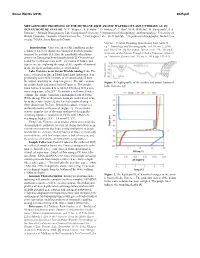
Ocean Worlds (2019) 6025.pdf METAGENOMIC PROFILING OF THE METHANE-RICH ANOXIC WATERS OF LAKE UNTERSEE AS AN OCEAN WORLDS ANALOG. N. Y. Wagner1, A. S. Hahn2,3, D. Andersen4, C. Roy5, M. B. Wilhelm6, M. Vanderwilt1, S. S. Johnson1, 1 Johnson Biosignatures Lab, Georgetown University, 2 Department of Microbiology and Immunology, University of British Columbia, 3 Koonkie Cloud Services Inc., 4 Carl Sagan Center, SETI Institute, 5 Department of Geography, McGill Uni- versity, 6NASA Ames Research Center. Untersee, Central Dronning Maud Land, East Antarcti- Introduction: Under ocean worlds conditions on En- ca.” Limnology and Oceanography, vol. 51, no. 2, 2006, celadus, it has been shown that biological methane produc- pp.1180–1194, [4] Bevington, James, et al. “The Thermal tion may be possible [1]. Also, the possibility of methano- Structure of the Anoxic Trough in Lake Untersee, Antarcti- genesis on Europa has been hypothesized [2]. Given the po- ca.”Antarctic Science, vol. 30, no. 6, 2018, pp. 333–344. tential for methanogenesis on the icy moons of Saturn and Jupiter, we are exploring the range of life capable of survival in an extremely methane-rich terrestrial analog. Lake Untersee as an Ocean Worlds Analog: Lake Un- tersee is located in Queen Maud Land, East Antarctica. It is perennially covered in 3 meters of ice and closed off from the outside world by the Anuchin glacier. The lake contains Figure 1. Depth profile of the aerobic and anoxic basins of an aerobic basin and anoxic basin (Figure 1). The aerobic Lake Untersee [4]. basin has been measured to be up to 169m deep with a con- stant temperature of 0.25˚C. -

Genome of Phaeocystis Globosa Virus Pgv-16T Highlights the Common Ancestry of the Largest Known DNA Viruses Infecting Eukaryotes
Genome of Phaeocystis globosa virus PgV-16T highlights the common ancestry of the largest known DNA viruses infecting eukaryotes Sebastien Santinia, Sandra Jeudya, Julia Bartolia, Olivier Poirota, Magali Lescota, Chantal Abergela, Valérie Barbeb, K. Eric Wommackc, Anna A. M. Noordeloosd, Corina P. D. Brussaardd,e,1, and Jean-Michel Claveriea,f,1 aStructural and Genomic Information Laboratory, Unité Mixte de Recherche 7256, Centre National de la Recherche Scientifique, Aix-Marseille Université, 13288 Marseille Cedex 9, France; bCommissariat à l’Energie Atomique–Institut de Génomique, 91057 Evry Cedex, France; cDepartment of Plant and Soil Sciences, University of Delaware, Newark, DE 19711; dDepartment of Biological Oceanography, Royal Netherlands Institute for Sea Research, NL-1790 AB Den Burg (Texel), The Netherlands; eAquatic Microbiology, Institute for Biodiversity and Ecosystem Dynamics, University of Amsterdam, Amsterdam, The Netherlands; and fService de Santé Publique et d’Information Médicale, Hôpital de la Timone, Assistance Publique–Hôpitaux de Marseille, FR-13385 Marseille, France Edited by James L. Van Etten, University of Nebraska, Lincoln, NE, and approved May 1, 2013 (received for review February 22, 2013) Large dsDNA viruses are involved in the population control of many viruses: 730 kb and 1.28 Mb for CroV and Megavirus chilensis, globally distributed species of eukaryotic phytoplankton and have respectively. Other studies, targeting virus-specific genes [e.g., a prominent role in bloom termination. The genus Phaeocystis (Hap- DNA polymerase B (8) or capsid proteins (9)] have suggested tophyta, Prymnesiophyceae) includes several high-biomass-forming a close phylogenetic relationship between Mimivirus and several phytoplankton species, such as Phaeocystis globosa, the blooms of giant dsDNA viruses infecting various unicellular algae such as which occur mostly in the coastal zone of the North Atlantic and the Pyramimonas orientalis (Chlorophyta, Prasinophyceae), Phaeocys- North Sea. -

The Trophic-Dynamic Aspect of Ecology Author(S): Raymond L
The Trophic-Dynamic Aspect of Ecology Author(s): Raymond L. Lindeman Reviewed work(s): Source: Ecology, Vol. 23, No. 4 (Oct., 1942), pp. 399-417 Published by: Ecological Society of America Stable URL: http://www.jstor.org/stable/1930126 . Accessed: 30/01/2012 10:50 Your use of the JSTOR archive indicates your acceptance of the Terms & Conditions of Use, available at . http://www.jstor.org/page/info/about/policies/terms.jsp JSTOR is a not-for-profit service that helps scholars, researchers, and students discover, use, and build upon a wide range of content in a trusted digital archive. We use information technology and tools to increase productivity and facilitate new forms of scholarship. For more information about JSTOR, please contact support@jstor.org. Ecological Society of America is collaborating with JSTOR to digitize, preserve and extend access to Ecology. http://www.jstor.org THE TROPHIC-DYNAMIC ASPECT OF ECOLOGY RAYMOND L. LINDEMAN OsbornZoological Laboratory,Yale University Recent progressin the studyof aquatic community. A more "bio-ecological" food-cycle relationships invites a re- species-distributionalapproach would appraisal of certain ecological tenets. recognize both the plants and animals Quantitative productivitydata provide as co-constituentsof restricted"biotic" a basis for enunciating certain trophic communities,such as "plankton com- principles, which, when applied to a munities," "benthic communities,"etc., series of successional stages, shed new in which membersof the living commu- light on the dynamics of ecological nity "co-act" with each other and "re- succession. act" with the non-livingenvironment (Clementsand Shelford,'39; Carpenter, "COMMUNITY" CONCEPTS '39, '40; T. Park, '41). -

Resilience of Microbial Communities After Hydrogen Peroxide Treatment of a Eutrophic Lake to Suppress Harmful Cyanobacterial Blooms
microorganisms Article Resilience of Microbial Communities after Hydrogen Peroxide Treatment of a Eutrophic Lake to Suppress Harmful Cyanobacterial Blooms Tim Piel 1,†, Giovanni Sandrini 1,†,‡, Gerard Muyzer 1 , Corina P. D. Brussaard 1,2 , Pieter C. Slot 1, Maria J. van Herk 1, Jef Huisman 1 and Petra M. Visser 1,* 1 Department of Freshwater and Marine Ecology, Institute for Biodiversity and Ecosystem Dynamics, University of Amsterdam, 1090 GE Amsterdam, The Netherlands; t.f.piel@uva.nl (T.P.); giovanni.sandrini@gmail.com (G.S.); g.muijzer@uva.nl (G.M.); corina.brussaard@nioz.nl (C.P.D.B.); p.c.slot@uva.nl (P.C.S.); m.j.vanherk@uva.nl (M.J.v.H.); j.huisman@uva.nl (J.H.) 2 Department of Marine Microbiology and Biogeochemistry, NIOZ Royal Netherland Institute for Sea Research, 1790 AB Den Burg, The Netherlands * Correspondence: p.m.visser@uva.nl; Tel.: +31-20-5257073 † These authors have contributed equally to this work. ‡ Current address: Department of Technology & Sources, Evides Water Company, 3006 AL Rotterdam, The Netherlands. Abstract: Applying low concentrations of hydrogen peroxide (H2O2) to lakes is an emerging method to mitigate harmful cyanobacterial blooms. While cyanobacteria are very sensitive to H2O2, little Citation: Piel, T.; Sandrini, G.; is known about the impacts of these H2O2 treatments on other members of the microbial com- Muyzer, G.; Brussaard, C.P.D.; Slot, munity. In this study, we investigated changes in microbial community composition during two P.C.; van Herk, M.J.; Huisman, J.; −1 lake treatments with low H2O2 concentrations (target: 2.5 mg L ) and in two series of controlled Visser, P.M. -

Which Organisms Are Used for Anti-Biofouling Studies
Table S1. Semi-systematic review raw data answering: Which organisms are used for anti-biofouling studies? Antifoulant Method Organism(s) Model Bacteria Type of Biofilm Source (Y if mentioned) Detection Method composite membranes E. coli ATCC25922 Y LIVE/DEAD baclight [1] stain S. aureus ATCC255923 composite membranes E. coli ATCC25922 Y colony counting [2] S. aureus RSKK 1009 graphene oxide Saccharomycetes colony counting [3] methyl p-hydroxybenzoate L. monocytogenes [4] potassium sorbate P. putida Y. enterocolitica A. hydrophila composite membranes E. coli Y FESEM [5] (unspecified/unique sample type) S. aureus (unspecified/unique sample type) K. pneumonia ATCC13883 P. aeruginosa BAA-1744 composite membranes E. coli Y SEM [6] (unspecified/unique sample type) S. aureus (unspecified/unique sample type) graphene oxide E. coli ATCC25922 Y colony counting [7] S. aureus ATCC9144 P. aeruginosa ATCCPAO1 composite membranes E. coli Y measuring flux [8] (unspecified/unique sample type) graphene oxide E. coli Y colony counting [9] (unspecified/unique SEM sample type) LIVE/DEAD baclight S. aureus stain (unspecified/unique sample type) modified membrane P. aeruginosa P60 Y DAPI [10] Bacillus sp. G-84 LIVE/DEAD baclight stain bacteriophages E. coli (K12) Y measuring flux [11] ATCC11303-B4 quorum quenching P. aeruginosa KCTC LIVE/DEAD baclight [12] 2513 stain modified membrane E. coli colony counting [13] (unspecified/unique colony counting sample type) measuring flux S. aureus (unspecified/unique sample type) modified membrane E. coli BW26437 Y measuring flux [14] graphene oxide Klebsiella colony counting [15] (unspecified/unique sample type) P. aeruginosa (unspecified/unique sample type) graphene oxide P. aeruginosa measuring flux [16] (unspecified/unique sample type) composite membranes E. -

Algal Toxic Compounds and Their Aeroterrestrial, Airborne and Other Extremophilic Producers with Attention to Soil and Plant Contamination: a Review
toxins Review Algal Toxic Compounds and Their Aeroterrestrial, Airborne and other Extremophilic Producers with Attention to Soil and Plant Contamination: A Review Georg G¨аrtner 1, Maya Stoyneva-G¨аrtner 2 and Blagoy Uzunov 2,* 1 Institut für Botanik der Universität Innsbruck, Sternwartestrasse 15, 6020 Innsbruck, Austria; georg.gaertner@uibk.ac.at 2 Department of Botany, Faculty of Biology, Sofia University “St. Kliment Ohridski”, 8 blvd. Dragan Tsankov, 1164 Sofia, Bulgaria; mstoyneva@uni-sofia.bg * Correspondence: buzunov@uni-sofia.bg Abstract: The review summarizes the available knowledge on toxins and their producers from rather disparate algal assemblages of aeroterrestrial, airborne and other versatile extreme environments (hot springs, deserts, ice, snow, caves, etc.) and on phycotoxins as contaminants of emergent concern in soil and plants. There is a growing body of evidence that algal toxins and their producers occur in all general types of extreme habitats, and cyanobacteria/cyanoprokaryotes dominate in most of them. Altogether, 55 toxigenic algal genera (47 cyanoprokaryotes) were enlisted, and our analysis showed that besides the “standard” toxins, routinely known from different waterbodies (microcystins, nodularins, anatoxins, saxitoxins, cylindrospermopsins, BMAA, etc.), they can produce some specific toxic compounds. Whether the toxic biomolecules are related with the harsh conditions on which algae have to thrive and what is their functional role may be answered by future studies. Therefore, we outline the gaps in knowledge and provide ideas for further research, considering, from one side, Citation: G¨аrtner, G.; the health risk from phycotoxins on the background of the global warming and eutrophication and, ¨а Stoyneva-G rtner, M.; Uzunov, B. -

Culturomics of Anaerobic Sludge
Culturomics of Anaerobic Sludge Jack Matthew Murgatroyd MSc by Research University of York Biology January 2019 Abstract Ever increasing concerns surrounding climate change are making alternative energy sources a focus of global discussion. Anaerobic digestion holds promise as one method of generating renewable energy with a low carbon footprint. The simple principle that underlies anaerobic digestion is the degradation of organic material by microorganisms to produce digestate and biogas. While this process occurs without human intervention in a variety of environments, there is still large scope for refinement of the process in order to increase its efficiency in industry. A key problem that limits technology advancement is the understanding of the microbiomes within anaerobic digesters. This can be attributed to the fastidious growth requirements of many of the organisms involved and as such, novel methods for culturing must be adopted if we are to advance our understanding. Work undertaken used a number of different growth backgrounds and isolation chips as a novel method for the enrichment of methanogens and anaerobic fungi from anaerobic sludge samples. 16S rRNA gene sequencing technology was used to assign taxonomy to 1,152 samples. A potential novel bacterial species was further investigated using fluorescent in-situ hybridisation and Sanger sequencing with a view to demonstrating the efficacy of this culturing method for the isolation and culturing of novel microbes. This alternative approach for the cultivation of multiple microbes in isolation has shown promise in terms of the number of novel species grown. Given that 16 samples were investigated at an individual level and one of these has been identified as a novel species, it is likely that novel species have also been cultured within the other 1,136 samples that have not yet been studied individually. -
(Antarctica) Glacial, Basal, and Accretion Ice
CHARACTERIZATION OF ORGANISMS IN VOSTOK (ANTARCTICA) GLACIAL, BASAL, AND ACCRETION ICE Colby J. Gura A Thesis Submitted to the Graduate College of Bowling Green State University in partial fulfillment of the requirements for the degree of MASTER OF SCIENCE December 2019 Committee: Scott O. Rogers, Advisor Helen Michaels Paul Morris © 2019 Colby Gura All Rights Reserved iii ABSTRACT Scott O. Rogers, Advisor Chapter 1: Lake Vostok is named for the nearby Vostok Station located at 78°28’S, 106°48’E and at an elevation of 3,488 m. The lake is covered by a glacier that is approximately 4 km thick and comprised of 4 different types of ice: meteoric, basal, type 1 accretion ice, and type 2 accretion ice. Six samples were derived from the glacial, basal, and accretion ice of the 5G ice core (depths of 2,149 m; 3,501 m; 3,520 m; 3,540 m; 3,569 m; and 3,585 m) and prepared through several processes. The RNA and DNA were extracted from ultracentrifugally concentrated meltwater samples. From the extracted RNA, cDNA was synthesized so the samples could be further manipulated. Both the cDNA and the DNA were amplified through polymerase chain reaction. Ion Torrent primers were attached to the DNA and cDNA and then prepared to be sequenced. Following sequencing the sequences were analyzed using BLAST. Python and Biopython were then used to collect more data and organize the data for manual curation and analysis. Chapter 2: As a result of the glacier and its geographic location, Lake Vostok is an extreme and unique environment that is often compared to Jupiter’s ice-covered moon, Europa.