Identification, Characterization and Synthesis of Walterospermin, A
Total Page:16
File Type:pdf, Size:1020Kb
Load more
Recommended publications
-
The Circadian Rhythm and Visual Elements in Scorpions: a Review
Arthropods, 2013, 2(4): 150-158 Article The circadian rhythm and visual elements in scorpions: A review M. R. Warburg Dept. of Biology, Technion-Israel Institute of Technology, Haifa 32000, Israel E-mail: warburg@tx.technion.ac.il Received 12 August 2013; Accepted 15 September 2013; Published online 1 December 2013 Abstract The purpose of this paper is to review the state of research in this field and to outline future ways how to proceed. The term: "Zeitgeber", implies ‘time giver’ meaning: synchronizer when an external entrainment factor synchronizes the endogenous rhythm. Is this ‘time’, the chronological date in the sense that it is related to the time of day as reflected in the natural light-dark cycles? Or does it mean cyclic phases of activity as demonstrated in the laboratory? Moreover, is it totally independent of the animal's physiological condition? This subject was studied largely in buthid species (15) of a total of only 30 scorpion species. Moreover, many (over 25%) of the studies (19) were done on a single buthid species: Androctonus australis. Species diversity was observed only by one author’s work who studied eye structure in seven species. Since he found variability in eye structure it would not be advisable to generalize. The fact that experimenting was carried out irrespective of species diversity, gender, ecological or physiological conditions, and was usually done on animals kept in captivity for some time before the experimenting had started, is a major drawback to this kind of study. The diurnal rhythms is triggered either directly through spontaneous arrhythmic activity in the central nervous system, or by neurosecretory material. -

Toxic Effects of Crude Venom of a Desert Cobra, Walterinnesia Aegyptia, on Liver, Abdominal Muscles and Brain of Male Albino Rats
Pakistan J. Zool., vol. 45(5), pp. 1359-1366, 2013 Toxic Effects of Crude Venom of a Desert Cobra, Walterinnesia aegyptia, on Liver, Abdominal Muscles and Brain of Male Albino Rats Mohammed Khalid Al-Sadoon,1 * Gamal Mohamed Orabi1,2 and Gamal Badr3,4 1Zoology Department, College of Science, King Saud University, P.O. Box 2455Riyadh 11451, Saudi Arabia 2Zoology Department, Faculty of Science, Suez Canal University, Ismailia, Egypt 3Princes Johara Alibrahim Center for Cancer Research, Prostate Cancer Research Chair, College of Medicine, King Saud University, Riyadh, Saudi Arabia 4Zoology Department, Faculty of Science, Assiut University, 71516 Assiut, Egypt Abstract.- The toxic effect of an acute dose of Walterinnesia aegyptia crude venom was studied in male albino rats. Liver enzymes,alaninetransaminase (ALT), aspartate transaminase (AST) and gamma glutamyltransferase(γ-GT), total protein concentration and Alkaline phosphatase(ALP) enzyme activity in the liver, abdominal muscles and cerebrum brain were measured at timed intervals of 1, 3, 6, 12, 24, 72 h and 7 days post envenomation. The histological changes in the liver sections were simultaneously investigated. These parameters were found to be fluctuated with time, with a tendency to regain to normal control levels within the first 6 h. Histological changes induced by treatment with LD50 of W. aegyptia crude venom in liver 3 to 6 hours post envenomation showed inflammatory cellular infiltrations(ICI) around the hepatic vein, dilated blood sinusoids (S), hepatocyticvacuolations (HV) and prominent van kuffer cells. The 12 to 24 h period seems to be crucial for the process of physiological recovery. Histological changes induced by treatment with LD50 of W. -

Chronic Social Isolation Reduces 5-HT Neuronal Activity Via Upregulated SK3 Calcium-Activated Potassium Channels Derya Sargin1, David K Oliver1, Evelyn K Lambe1,2,3*
SHORT REPORT Chronic social isolation reduces 5-HT neuronal activity via upregulated SK3 calcium-activated potassium channels Derya Sargin1, David K Oliver1, Evelyn K Lambe1,2,3* 1Department of Physiology, University of Toronto, Toronto, Canada; 2Department of Obstetrics and Gynaecology, University of Toronto, Toronto, Canada; 3Department of Psychiatry, University of Toronto, Toronto, Canada Abstract The activity of serotonin (5-HT) neurons is critical for mood regulation. In a mouse model of chronic social isolation, a known risk factor for depressive illness, we show that 5-HT neurons in the dorsal raphe nucleus are less responsive to stimulation. Probing the responsible cellular mechanisms pinpoints a disturbance in the expression and function of small-conductance Ca2+-activated K+ (SK) channels and reveals an important role for both SK2 and SK3 channels in normal regulation of 5-HT neuronal excitability. Chronic social isolation renders 5-HT neurons insensitive to SK2 blockade, however inhibition of the upregulated SK3 channels restores normal excitability. In vivo, we demonstrate that inhibiting SK channels normalizes chronic social isolation- induced anxiety/depressive-like behaviors. Our experiments reveal a causal link for the first time between SK channel dysregulation and 5-HT neuron activity in a lifelong stress paradigm, suggesting these channels as targets for the development of novel therapies for mood disorders. DOI: 10.7554/eLife.21416.001 Introduction *For correspondence: evelyn. Major depression is a prevalent and debilitating disease for which standard treatments remain inef- lambe@utoronto.ca fective. Social isolation has long been implicated as a risk factor for depression in humans Competing interests: The (Cacioppo et al., 2002,2006; Holt-Lunstad et al., 2010) and induces anxiety- and depressive-like authors declare that no behaviors in rodents (Koike et al., 2009; Wallace et al., 2009; Dang et al., 2015; Shimizu et al., competing interests exist. -
Apamin As a Selective Blocker of the Calcium-Dependent Potassium
Proc. NatL Acad. Sci. USA Vol. 79, pp. 1308-1312, February 1982 Neurobiology Apamin as a selective blocker of the calcium-dependent potassium channel in neuroblastoma cells: Voltage-clamp and biochemical characterization of the toxin receptor (receptor binding/neuroblastoma cell differentiation) M. HUGUES, G. ROMEY, D. DUVAL, J. P. VINCENT, AND M. LAZDUNSKI Centre de Biochimie du Centre National de la Recherche Scientifique, Facult, des Sciences, Parc Valrose, 06034 Nice Cedex, France Communicated by Jean-Marie P. Lehn, October 13, 1981 ABSTRACT This paper describes the interaction of apamin, MATERIALS AND METHODS a bee venom neurotoxin, with the mouse neuroblastoma cell mem- brane. Voltage-clamp analyses have shown thatapamin atlowcon- Cultures of Neuroblastoma Cells. Neuroblastoma cells centrations specifically blocks the Ca2"-dependent K+ channel in (clone N1E 115) were grown as described (12); they were in- differentiated neuroblastoma cells. Binding experiments with duced to differentiate in the presence of1% fetal calfserum and highly radiolabeled toxin indicate that the dissociation constant of 1.5% dimethyl sulfoxide. the apamin-receptor complex in differentiated neuroblastoma lodination ofApamin. Apamin was purified as described (13). cells is 15-22 pM and the maximal binding capacity is 12 fmol/ There is no tyrosine residue in the sequence, but there is his- mg ofprotein. The receptor is destroyed by proteases, suggesting tidine residue that is not essential for activity (4) and that can that it is a protein.The binding capacity ofneuroblastoma cells for be iodinated. It has been found that the previously radiolabeled apamin dramatically increases during the transition described to prepare "2I-labeled apamin ('p9rocedureI-apamin) (14) could from the nondifferentiated to the differentiated state. -

Cobra Risk Assessment
Invasive animal risk assessment Biosecurity Queensland Agriculture Fisheries and Department of Cobra (all species) Steve Csurhes and Paul Fisher First published 2010 Updated 2016 Pest animal risk assessment © State of Queensland, 2016. The Queensland Government supports and encourages the dissemination and exchange of its information. The copyright in this publication is licensed under a Creative Commons Attribution 3.0 Australia (CC BY) licence. You must keep intact the copyright notice and attribute the State of Queensland as the source of the publication. Note: Some content in this publication may have different licence terms as indicated. For more information on this licence visit http://creativecommons.org/licenses/ by/3.0/au/deed.en" http://creativecommons.org/licenses/by/3.0/au/deed.en Photo: Image from Wikimedia Commons (this image is reproduced under the terms of a GNU Free Documentation License) Invasive animal risk assessment: Cobra 2 Contents Summary 4 Introduction 5 Identity and taxonomy 5 Taxonomy 3 Description 5 Diet 5 Reproduction 6 Predators and diseases 6 Origin and distribution 7 Status in Australia and Queensland 8 Preferred habitat 9 History as a pest elsewhere 9 Uses 9 Pest potential in Queensland 10 Climate match 10 Habitat suitability 10 Broad natural geographic range 11 Generalist diet 11 Venom production 11 Disease 11 Numerical risk analysis 11 References 12 Attachment 1 13 Invasive animal risk assessment: Cobra 3 Summary The common name ‘cobra’ applies to 30 species in 7 genera within the family Elapidae, all of which can produce a hood when threatened. All cobra species are venomous. As a group, cobras have an extensive distribution over large parts of Africa, Asia, Malaysia and Indonesia. -
Antimicrobial Activity of Apitoxin, Melittin and Phospholipase A2 of Honey Bee (Apis Mellifera) Venom Against Oral Pathogens
Anais da Academia Brasileira de Ciências (2015) 87(1): 147-155 (Annals of the Brazilian Academy of Sciences) Printed version ISSN 0001-3765 / Online version ISSN 1678-2690 http://dx.doi.org/10.1590/0001-3765201520130511 www.scielo.br/aabc Antimicrobial activity of apitoxin, melittin and phospholipase A2 of honey bee (Apis mellifera) venom against oral pathogens LUÍS F. LEANDRO, CARLOS A. MENDES, LUCIANA A. CASEMIRO, ADRIANA H.C. VINHOLIS, WILSON R. CUNHA, ROSANA DE ALMEIDA and CARLOS H.G. MARTINS Laboratório de Pesquisas em Microbiologia Aplicada (LaPeMA), Universidade de Franca, Av. Dr. Armando Salles Oliveira, 201, Bairro Parque Universitário, 14404-600 Franca, SP, Brasil Manuscript received on November 19, 2013; accepted for publication on June 30, 2014 ABSTRACT In this work, we used the Minimum Inhibitory Concentration (MIC) technique to evaluate the antibacterial potential of the apitoxin produced by Apis mellifera bees against the causative agents of tooth decay. Apitoxin was assayed in natura and in the commercially available form. The antibacterial actions of the main components of this apitoxin, phospholipase A2, and melittin were also assessed, alone and in combination. The following bacteria were tested: Streptococcus salivarius, S. sobrinus, S. mutans, S. mitis, S. sanguinis, Lactobacillus casei, and Enterococcus faecalis. The MIC results obtained for the commercially available apitoxin and for the apitoxin in natura were close and lay between 20 and 40µg / mL, which indicated good antibacterial activity. Melittin was the most active component in apitoxin; it displayed very promising MIC values, from 4 to 40µg / mL. Phospholipase A2 presented MIC values higher than 400µg / mL. Association of mellitin with phospholipase A2 yielded MIC values ranging between 6 and 80µg / mL. -
Top-Down Sequencing of Apis Dorsata Apamin by MALDI-TOF MS and Evidence of Its Inactivity Against Microorganisms
Toxicon 71 (2013) 105–112 Contents lists available at SciVerse ScienceDirect Toxicon journal homepage: www.elsevier.com/locate/toxicon Top-down sequencing of Apis dorsata apamin by MALDI-TOF MS and evidence of its inactivity against microorganisms D. Baracchi a,*, G. Mazza a, E. Michelucci b, G. Pieraccini b, S. Turillazzi a,b, G. Moneti b a Department of Biologia Evoluzionistica “Leo Pardi”, University of Firenze, Via Romana 17, 50125 Firenze, Italy b Mass Spectrometry Centre, University of Firenze, Viale G. Pieraccini 6, 50139 Firenze, Italy article info abstract Article history: Apis mellifera venom is one of the best characterized venoms among Hymenoptera, yet Received 13 March 2013 relatively little is known about venom belonging to other species in the genus Apis. Received in revised form 18 May 2013 Melittin, one of the most important bioactive peptides, has been isolated and characterized Accepted 22 May 2013 in A. mellifera, Apis cerana, Apis dorsata and Apis florea, while apamin has been only Available online 7 June 2013 characterized in A. mellifera and A. cerana. At present, no information is available about the sequence of A. dorsata apamin. Moreover, while the antiseptic properties of melittin and Keywords: MCD peptides are well documented, the antimicrobial activity of apamin has never been MALDI-TOF Venom tested. In the present study, we isolated and characterized apamin from the venom of the Honeybee giant honeybee A. dorsata. We tested the activity of apamin against bacteria and yeasts in a Antimicrobial peptides microbiological assay to gain a more complete understanding of the antimicrobial Peptide sequencing competence of the medium molecular weight venom fraction. -

Price List 2018
SA VENOM SUPPLIERS – PRICE LIST 2018 SNAKE VENOM N.B Certificate of origin available on request at $50.00 per certificate. Anti-snake bite serum prices available on request. Polyvalent for most African snakes, monovalent for Echis and Boomslang. SPECIES KNOWN AS US$ PRICE PER GRAM Aspidelaps scutatus Shield Nose Snake 2016.00 Atheris Chloreschis Bush Viper 2100.00 Atheris Nitschei Great Lakes Bush Viper 1848.00 Bitis arietans Puff Adder 202.00 Bitis caudalis Horned Adder 1680.00 Bitis gabonica Gaboon Adder 235.00 Bitis nasicornis Rhino Viper 235.00 Bitis rhinoceros West African Gaboon Adder 235.00 Bothrops Atrox Fer-Der-Lance 700.00 Causus rhombeatus Night Adder 258.00 Cerastes Cerastes Horned Viper 812.00 Dendroaspis angusticeps Green Mamba 571.00 Dendroaspis polylepis Black Mamba 554.00 Dendroaspis jamesoni Jameson's Mamba 952.00 Dendroaspis viridis West African Green Mamba 728.00 Dispholidus typus Boomslang 4800.00 Echis Leucogaster White-bellied Carpet Viper 4368.00 Echis Pyramidium North East Carpet Viper 3640.00 Echis Ocellatus West African Carpet Viper 3752.00 Echis Coloratus Painted Carpet Viper 3808.00 Hemachatus Haemachatus Rinkhals 414.00 Naja annulifera Snouted Cobra 392.00 Naja Kaouthia Kaouthia Monocle Cobra 280.00 Naja melanoleuca Forest Cobra 392.00 venom@venomsa.com | bewild@worldonline.co.za www.venomsa.com Naja pallida Red spitting Cobra 235.00 Naja mossambica Mozambique Spitting Cobra 336.00 Naja Nubiae Nubian Spitting Cobra 235.00 Naja Nivea Cape Cobra 476.00 Naja Haje Haje Egyptian Cobra 392.00 Naja Nigricollis Black-necked Spitting Cobra 336.00 Proatheris Superciliaris Swamp Viper 2240.00 Pseudocerastes Persicus Spider Tail Horned Viper 874.00 Rhamphiophis Rostratus Rufous Beaked Snake 2240.00 Trimerusurus Okinawnesis Okinawa Habu 280.00 Walterinnesia Aegyptia Black Desert Cobra 1400.00 SCORPION VENOM N.B Certificate of origin available on request at $50.00 per certificate. -
Synthesis and Structure-Activity Studies of Novel Potassium K+ Ion
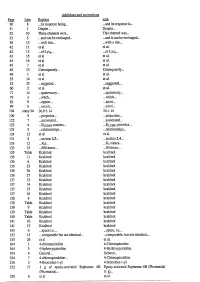
P^ge Urn Replace with 30 8 ...its responce being... ...and its response is... 31 1 Dispite... Despite... 32 10 These channels were... This channel was... 33 5 ...and can be envisaged... ...and it can be envisaged... 38 13 ...with rise... ...with a rise... 42 11 etal etal. 42 13 ...of Lys^... ...or Lys^... 43 15 etal etal. 44 16 etal etal. 45 7 etal etal. 48 13 Concequently... Consequently... 49 1 etal etal. 52 14 etal etal. 52 25 ...suggeted... ...suggested... 60 2 etal etal. 77 14 ...quatermaiy... ...quaternary... 79 3 ...whch... ...which... 82 9 ...appart... ...apart... 99 6 ...excert... ...exert... 104 entry 14 26.0 + 14 26 ±14 109 9 ...propeiies... ...properties... 122 7 ...accosiated... ...associated... 123 4 —Elumo consists... -E lumo provides... 123 5 ...ralationships... ...relationships... 124 12 etal etal. 131 4 ...section 2.3... ...section 2.4... 133 12 ...IC-jS... ...Ki values... 133 13 ...500 times... ...50 times... 135 Table Kcal/raol kcal/mol 135 11 Kcal/mol kcal/mol 136 6 Kcal/mol kcal/mol 136 23 Kcal/mol kcal/mol 136 26 Kcal/mol kcal/mol 136 27 Kcal/mol kcal/mol 137 13 Kcal/mol kcal/mol 137 14 Kcal/mol kcal/mol 137 15 Kcal/mol kcal/mol 137 16 Kcal/mol kcal/mol 138 6 Kcal/mol kcal/mol 138 Table KcalAnol kcal/mol 139 9 Kcal/mol kcal/mol 139 Table Kcal/mol kcal/mol 140 Table Kcal/mol kcal/mol 141 10 Kcal/mol kcal/mol 141 12 Kcal/mol kcal/mol 143 6 ...space i.e.... ...space, i.e... -

Actiflagelin, a New Sperm Activator Isolated From
Actiflagelin, a new sperm activator isolated from Walterinnesia aegyptia venom using phenotypic screening Tarek Mohamed Abd El-Aziz, Sawsan Al Khoury, Lucie Jaquillard, Mathilde Triquigneaux, Guillaume Martinez, Sandrine Bourgoin-Voillard, Michel Sève, Christophe Arnoult, Rémy Beroud, Michel de Waard To cite this version: Tarek Mohamed Abd El-Aziz, Sawsan Al Khoury, Lucie Jaquillard, Mathilde Triquigneaux, Guillaume Martinez, et al.. Actiflagelin, a new sperm activator isolated from Walterinnesia aegyptia venom using phenotypic screening. Journal of Venomous Animals and Toxins including Tropical Diseases, Biomed Central, 2018, 24 (1), pp.2. 10.1186/s40409-018-0140-4. hal-01833333 HAL Id: hal-01833333 https://hal.archives-ouvertes.fr/hal-01833333 Submitted on 11 Jul 2018 HAL is a multi-disciplinary open access L’archive ouverte pluridisciplinaire HAL, est archive for the deposit and dissemination of sci- destinée au dépôt et à la diffusion de documents entific research documents, whether they are pub- scientifiques de niveau recherche, publiés ou non, lished or not. The documents may come from émanant des établissements d’enseignement et de teaching and research institutions in France or recherche français ou étrangers, des laboratoires abroad, or from public or private research centers. publics ou privés. Abd El-Aziz et al. Journal of Venomous Animals and Toxins including Tropical Diseases (2018) 24:2 DOI 10.1186/s40409-018-0140-4 RESEARCH Open Access Actiflagelin, a new sperm activator isolated from Walterinnesia aegyptia venom using phenotypic screening Tarek Mohamed Abd El-Aziz1,2,3†, Sawsan Al Khoury1,2†, Lucie Jaquillard4, Mathilde Triquigneaux4, Guillaume Martinez5,6, Sandrine Bourgoin-Voillard5,7,8, Michel Sève5,7,8, Christophe Arnoult5,6, Rémy Beroud4 and Michel De Waard1,2,4* Abstract Background: Sperm contains a wealth of cell surface receptors and ion channels that are required for most of its basic functions such as motility and acrosome reaction. -
Annotated Checklist of Reptilian Fauna of Basrah, South of Iraq
Saman R. Afrasiab et al. Bull. Iraq nat. Hist. Mus. DOI: http://dx.doi.org/10.26842/binhm.7.2018.15.1.0077 July, (2018) 15 (1): 77-92 ANNOTATED CHECKLIST OF REPTILIAN FAUNA OF BASRAH, SOUTH OF IRAQ Saman R. Afrasiab* Azhar A. Al-Moussawi and Hind D. Hadi Iraq Natural History Research Center and Museum, University of Baghdad, Baghdad, Iraq *Corresponding author: s_lahony@yahoo.com Received Date: 03 January 2018 Accepted Date: 02 April 2018 ABSTRACT Basrah province is situated at the extreme south of Iraq, it has an interesting reptile fauna (Squamata and Serpentes) and represents a land bridge between three different zoogeographical regions ( Oriental, Palaearctic and Ethiopian). This situation gave Basrah province a topographic specific opportunity for raising its own faunal diversity including reptiles; in this study Basrah province was divided into four main zones: the cities and orchards, marshes and wetlands (sabkha), the true dessert, the seashore and Shat Al-Arab. Forty nine reptile species were recorded including snakes, sea and fresh water turtles, and Lizards; brief notes and descriptions for the rare and important species were provided and supported by Plates. Key words: Basrah, Squamata, Serpentes, Turtles, Zoogeography. INTRODUCTION There are some previous lists for Iraqi herpetofauna (Boulenger, 1920 a, b) and for snakes Corkill (1932), Khalaf (1959), Mahdi and Georg (1969) and Habeeb and Rastegar-Pouyani (2016); most of them depended on references, there is no specific collection list for Basrah province except that of Afrasiab and Ali (1989a) for west Basrah. The Basrah province is a very important area from the geographical point of view because it is a triple bridge connecting three different zoogeographical regions, at south east the oriental penetration, at south west the Arabian and Ethiopian penetration and from north the dominant Palaearctic region. -
Crucial Role of a Shared Extracellular Loop in Apamin Sensitivity and Maintenance of Pore Shape of Small- Conductance Calcium-Activated Potassium (SK) Channels
Crucial role of a shared extracellular loop in apamin sensitivity and maintenance of pore shape of small- conductance calcium-activated potassium (SK) channels Kate L. Weatheralla, Vincent Seutinb, Jean-François Liégeoisc, and Neil V. Marriona,1 aSchool of Physiology and Pharmacology, University of Bristol, Bristol BS8 1TD, United Kingdom; and Laboratories of bPharmacology and Groupe Interdisciplinaire de Génoprotéomique Appliquée-Neuroscience and cCentre Interfacultaire de Recherche du Médicament, University of Liège, B-4000 Liège, Belgium Edited by Michael D. Cahalan, University of California, Irvine, CA, and approved September 29, 2011 (received for review July 3, 2011) Activation of small-conductance calcium (Ca2+)-dependent potas- apamin does not behave as a classical pore blocker, but blocks sium (KCa2) channels (herein called “SK”) produces membrane hy- using an allosteric mechanism (7). Apamin also interacts with perpolarization to regulate membrane excitability. Three subtypes a serine residue in the S3–S4 extracellular loop to impart a high- (SK1–3) have been cloned and are distributed throughout the ner- sensitivity block of SK2, with mutation of the corresponding vous system, smooth muscle, and heart. It is difficult to discern the threonine in hSK1 to a serine increasing sensitivity of block of physiological role of individual channel subtypes as most blockers hSK1 by the toxin (8). Block of SK channel current by apamin is or enhancers do not discriminate between subtypes. The archetyp- clearly more complicated than these data suggest, as despite ical blocker apamin displays some selectivity between SK channel containing an identical outer pore sequence to the apamin-sen- – subtypes, with SK2 being the most sensitive, followed by SK3 and sitive hSK1 and a serine in this position in the S3 S4 loop, rSK1 – then SK1.