Newsletter 2009 Eng Issue 12 for PRESS.FH11
Total Page:16
File Type:pdf, Size:1020Kb
Load more
Recommended publications
-
Kathmandu - Bhaktapur 0 0 0 0 5 5
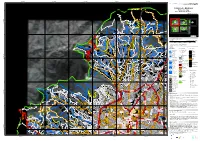
85°12'0"E 85°14'0"E 85°16'0"E 85°18'0"E 85°20'0"E 322500 325000 327500 330000 332500 335000 337500 GLIDE number: N/A Activation ID: EMSN012 Product N.: Reference - A1 NEPAL, v2 Kathmandu - Bhaktapur 0 0 0 0 5 5 7 7 Reference map 7 7 0 0 3 3 2014 - Detail 25k Sheet A1 Production Date: 18/07/2014 N " 0 ' n 8 4 N ° E " !Gonggabu 7 E ú A1 A2 A3 0 2 E E ' 8 E !Jorpati 4 ! B Jhormahankal ° ! n ú B !Kathmandu 7 ! B n 2 !Kirtipur n Madhy! apur Sangla ú !Bhaktapur ú ú ú n ú B1 B2 ú n ! B ! ú B 0 0 0 0 0 n Kabhresthali n 0 5 5 7 7 0 0 3 3 0 5 10 km /" n n ú ú ú n ú n n n Cartographic Information ! ! B B ! B ú ! B ! n B 1:25000 Full color A1, low resolution (100 dpi) ! WX B ! ú B n Meters n ú ú 0 n n 10000 n 20000 30000 40000 50000 XY ! B ú ú Grid: WGS 1984 UTM Zone 45N map coordinate system ni t ! ú B a ! Jitpurphedi ú B Tick Marks: WGS 84 geographical coordinate system ú i n m d n u a ICn n n N n h ! B ! B Legend s ! B i ! B ! n B ! B ! B B ! B n n n ! n B n TokhaChandeswori Hydrography Transportation Urban Areas úú n ! B ! B ! Crossing Point (<500m) Built Up Area n RB iver Line (500>=nm) ! B ! ! B B ! B ú ! ! B B ú n ! ú B WXWX Intermittent Bridge Point Agricultural ! B ! B ! B ! ! ú B B Penrennial WX Culvert Commercial ! B ú ú n River Area (>=1Ha) XY n Ford Educational N n ! B " n n n n n Intermittent Crossing Line (>=500m) Industrial 0 ! B ' n ! ! B B 6 ! B IC ! B Perennial Bridge 4 0 n 0 Institutional N ° E 0 n 0 n E " 7 5 ú Futung ú n5 ! Reservoir Point (<1Ha) B 2 2 0 2 E Culvert ' Medical 7 E 7 6 0 n E 0 õö 3 ú 3 IC 4 Reservoir Point -
Nepal Side, We Must Mention Prof
The Journal of Newar Studies Swayambhv, Ifliihichaitya Number - 2 NS 1119 (TheJournal Of Newar Studies) NUmkL2 U19fi99&99 It has ken a great pleasure bringing out the second issue of EdltLlo the journal d Newar Studies lijiiiina'. We would like to thank Daya R Sha a Gauriehankar Marw&~r Ph.D all the members an bers for their encouraging comments and financial support. ivc csp~iilly:-l*-. urank Prof. Uma Shrestha, Western Prof.- Todd ttwria Oregon Univers~ty,who gave life to this journd while it was still in its embryonic stage. From the Nepal side, we must mention Prof. Tej Shta Sudip Sbakya Ratna Kanskar, Mr. Ram Shakya and Mr. Labha Ram Tuladhar who helped us in so many ways. Due to our wish to publish the first issue of the journal on the Sd Fl~ternatioaalNepal Rh&a levi occasion of New Nepal Samht Year day {Mhapujii), we mhed at the (INBSS) Pdand. Orcgon USA last minute and spent less time in careful editing. Our computer Nepfh %P Puch3h Amaica Orcgon Branch software caused us muble in converting the files fm various subrmttd formats into a unified format. We learn while we work. Constructive are welcome we try Daya R Shakya comments and will to incorporate - suggestions as much as we can. Atedew We have received an enormous st mount of comments, Uma Shrcdha P$.D.Gaurisbankar Manandhar PIID .-m -C-.. Lhwakar Mabajan, Jagadish B Mathema suggestions, appreciations and so forth, (pia IcleI to page 94) Puma Babndur Ranjht including some ~riousconcern abut whether or not this journal Rt&ld Rqmmtatieca should include languages other than English. -
PDF Generated By
OUP UNCORRECTED PROOF – FIRSTPROOFS, Mon Dec 07 2015, NEWGEN 3 Vajrayāna Traditions in Nepal Todd Lewis and Naresh Man Bajracarya Introduction The existence of tantric traditions in the Kathmandu Valley dates back at least a thousand years and has been integral to the Hindu– Buddhist civi- lization of the Newars, its indigenous people, until the present day. This chapter introduces what is known about the history of the tantric Buddhist tradition there, then presents an analysis of its development in the pre- modern era during the Malla period (1200–1768 ce), and then charts changes under Shah rule (1769–2007). We then sketch Newar Vajrayāna Buddhism’s current characteristics, its leading tantric masters,1 and efforts in recent decades to revitalize it among Newar practitioners. This portrait,2 especially its history of Newar Buddhism, cannot yet be more than tentative in many places, since scholarship has not even adequately documented the textual and epigraphic sources, much less analyzed them systematically.3 The epigraphic record includes over a thousand inscrip- tions, the earliest dating back to 464 ce, tens of thousands of manuscripts, the earliest dating back to 998 ce, as well as the myriad cultural traditions related to them, from art and architecture, to music and ritual. The religious traditions still practiced by the Newars of the Kathmandu Valley represent a unique, continuing survival of Indic religions, including Mahāyāna- Vajrayāna forms of Buddhism (Lienhard 1984; Gellner 1992). Rivaling in historical importance the Sanskrit texts in Nepal’s libraries that informed the Western “discovery” of Buddhism in the nineteenth century (Hodgson 1868; Levi 1905– 1908; Locke 1980, 1985), Newar Vajrayāna acprof-9780199763689.indd 872C28B.1F1 Master Template has been finalized on 19- 02- 2015 12/7/2015 6:28:54 PM OUP UNCORRECTED PROOF – FIRSTPROOFS, Mon Dec 07 2015, NEWGEN 88 TanTric TradiTions in Transmission and TranslaTion tradition in the Kathmandu Valley preserves a rich legacy of vernacular texts, rituals, and institutions. -

Tables Table 1.3.2 Typical Geological Sections
Tables Table 1.3.2 Typical Geological Sections - T 1 - Table 2.3.3 Actual ID No. List of Municipal Wards and VDC Sr. No. ID-No. District Name Sr. No. ID-No. District Name Sr. No. ID-No. District Name 1 11011 Kathmandu Kathmandu Ward No.1 73 10191 Kathmandu Gagalphedi 145 20131 Lalitpur Harisiddhi 2 11021 Kathmandu Kathmandu Ward No.2 74 10201 Kathmandu Gokarneshwar 146 20141 Lalitpur Imadol 3 11031 Kathmandu Kathmandu Ward No.3 75 10211 Kathmandu Goldhunga 147 20151 Lalitpur Jharuwarasi 4 11041 Kathmandu Kathmandu Ward No.4 76 10221 Kathmandu Gongabu 148 20161 Lalitpur Khokana 5 11051 Kathmandu Kathmandu Ward No.5 77 10231 Kathmandu Gothatar 149 20171 Lalitpur Lamatar 6 11061 Kathmandu Kathmandu Ward No.6 78 10241 Kathmandu Ichankhu Narayan 150 20181 Lalitpur Lele 7 11071 Kathmandu Kathmandu Ward No.7 79 10251 Kathmandu Indrayani 151 20191 Lalitpur Lubhu 8 11081 Kathmandu Kathmandu Ward No.8 80 10261 Kathmandu Jhor Mahakal 152 20201 Lalitpur Nallu 9 11091 Kathmandu Kathmandu Ward No.9 81 10271 Kathmandu Jitpurphedi 153 20211 Lalitpur Sainbu 10 11101 Kathmandu Kathmandu Ward No.10 82 10281 Kathmandu Jorpati 154 20221 Lalitpur Siddhipur 11 11111 Kathmandu Kathmandu Ward No.11 83 10291 Kathmandu Kabresthali 155 20231 Lalitpur Sunakothi 12 11121 Kathmandu Kathmandu Ward No.12 84 10301 Kathmandu Kapan 156 20241 Lalitpur Thaiba 13 11131 Kathmandu Kathmandu Ward No.13 85 10311 Kathmandu Khadka Bhadrakali 157 20251 Lalitpur Thecho 14 11141 Kathmandu Kathmandu Ward No.14 86 10321 Kathmandu Lapsephedi 158 20261 Lalitpur Tikathali 15 11151 Kathmandu -
Food Insecurity and Undernutrition in Nepal
SMALL AREA ESTIMATION OF FOOD INSECURITY AND UNDERNUTRITION IN NEPAL GOVERNMENT OF NEPAL National Planning Commission Secretariat Central Bureau of Statistics SMALL AREA ESTIMATION OF FOOD INSECURITY AND UNDERNUTRITION IN NEPAL GOVERNMENT OF NEPAL National Planning Commission Secretariat Central Bureau of Statistics Acknowledgements The completion of both this and the earlier feasibility report follows extensive consultation with the National Planning Commission, Central Bureau of Statistics (CBS), World Food Programme (WFP), UNICEF, World Bank, and New ERA, together with members of the Statistics and Evidence for Policy, Planning and Results (SEPPR) working group from the International Development Partners Group (IDPG) and made up of people from Asian Development Bank (ADB), Department for International Development (DFID), United Nations Development Programme (UNDP), UNICEF and United States Agency for International Development (USAID), WFP, and the World Bank. WFP, UNICEF and the World Bank commissioned this research. The statistical analysis has been undertaken by Professor Stephen Haslett, Systemetrics Research Associates and Institute of Fundamental Sciences, Massey University, New Zealand and Associate Prof Geoffrey Jones, Dr. Maris Isidro and Alison Sefton of the Institute of Fundamental Sciences - Statistics, Massey University, New Zealand. We gratefully acknowledge the considerable assistance provided at all stages by the Central Bureau of Statistics. Special thanks to Bikash Bista, Rudra Suwal, Dilli Raj Joshi, Devendra Karanjit, Bed Dhakal, Lok Khatri and Pushpa Raj Paudel. See Appendix E for the full list of people consulted. First published: December 2014 Design and processed by: Print Communication, 4241355 ISBN: 978-9937-3000-976 Suggested citation: Haslett, S., Jones, G., Isidro, M., and Sefton, A. (2014) Small Area Estimation of Food Insecurity and Undernutrition in Nepal, Central Bureau of Statistics, National Planning Commissions Secretariat, World Food Programme, UNICEF and World Bank, Kathmandu, Nepal, December 2014. -
INTERNATIONAL JOURNAL of ENVIRONMENT Volume-3, Issue-4, Sep-Nov 2014 ISSN 2091-2854 Received:26 June Revised:19 November Accepted:27 November
INTERNATIONAL JOURNAL OF ENVIRONMENT Volume-3, Issue-4, Sep-Nov 2014 ISSN 2091-2854 Received:26 June Revised:19 November Accepted:27 November ENVIRONMENTAL IMPACT ASSESSMENT OF KATHMANDU TERAI FAST- TRACK Padam Kanta Dahal1, Lalita Dahal2, Sarina Khanal3, Sazina Poudel4, Bhawana Khatiwada5 1KIST Medical College and Teaching Hospital, Lalitpur Nepal 2,3,4 Department of Environmental Sciences, Tri Chandra Multiple College, Kathmandu Nepal 5Valley College of Technical Sciences, Kathmandu Nepal Abstract Road transport is dominant necessity for the overall economic development of any nation. In case of Nepal, an easy access between the Capital City and Terai, the store-house of the country and is very necessary. To facilitate this promotion of an improved core road network, Government of Nepal has launched the Kathmandu Terai Fast Track Project. Many concerned personalities and sectors had considered this project to be number one in the list of seventeen projects of national pride declared by the government. The main objective of this study was to identify the impacts of proposed project implementation on physical, biological, socio-economic and cultural environment of the project area and propose mitigation measures to avoid or mitigate such impacts. Primary information collection and secondary data review was the source of data with cross sectional descriptive study design. Data was taken purposively in the project affected area. Length of 72.6 km fast track from Kathmandu – Lalitpur – Makawanpur and up to Nijgadh in Bara district to link with the East West Highway will be of four lanes with 50 m on each side. The project was proposed to have 96 bridges big or small; 1.6 km long tunnel will be built in Thingan of Makawanpur on public- private partnership. -

Kathmandu - Bhaktapur 0 0 0 0 5 5
85°22'0"E 85°24'0"E 85°26'0"E 85°28'0"E 85°30'0"E 340000 342500 345000 347500 350000 352500 GLIDE number: N/A Activation ID: EMSN012 Product N.: Reference - A2 NEPAL, v2 Kathmandu - Bhaktapur 0 0 0 0 5 5 7 7 Reference map 7 7 0 0 3 3 2014 - Detail 25k Sheet A2 Production Date: 18/07/2014 N " A1 !Gonggabu A2 A3 0 ' 8 !Jorpati 4 E N ° E " ! 7 Kathmandu E 0 ' 2 E E 8 4 ! ° Kirtipur Madh!yapur ! 7 Bhaktapur 2 B1 B2 0 ú 0 0 Budanilkantha 0 ! B 0 0 5 5 7 7 0 di n 0 3 Na Sundarijal 3 0 5 10 km /" ati um ! hn B Bis ! B ! B ú Cartographic Information 1:25000 Full color A1, high resolution (300 dpi) ! B ! B n ChapaliBhadrakali Meters ú nn n 0 10000 20000 30000 40000 50000 n n Grid: WGS 1984 UTM Zone 45N map coordinate system ! B ! B Tick Marks: WGS 84 geographical coordinate system n n ú ú n n WX Legend n n n n ! B Hydrography Transportation Urban Areas n ! B ! River Line (500>=m) Crossing Point (<500m) B d n Built Up Area a ú o ú R Intermittent Bridge Point Agricultural ! n in B ! B ! ! ú B a B ú n Perennial WX M ! Culvert Commercial r ú n B ú ta õö u River Area (>=1Ha) XY lf Ford Educational o n ! G n B n n Intermittent Crossing Line (>=500m) Industrial n ú Perennial Bridge 0 0 Institutional N n 0 n 0 " n ú 5 5 0 Reservoir Point (<1Ha) 2 2 Culvert ' Medical 7 7 6 ú 0 0 õö 4 3 3 E N Reservoir Point ° Ford E " Military 7 E 0 ' 2 E Reservoir Area (>=1Ha) 4 ú n Baluwa E 6 Ï Tunnel Point (<500m) Other 4 ! B IC ° ! B Intermittent ! B n n n 7 TunnelLine (>=500m) ú n 2 Recreational/Sports n Perennial n n Airfield Point (<1Ha) Religious ú n Ditch -

Water Security in Peri-Urban South Asia Adapting to Climate Change and Urbanization
WATER SECURITY IN PERI-URBAN SOUTH ASIA ADAPTING TO CLIMATE CHANGE AND URBANIZATION Scoping Study Report: Nepal Prof. Ashutosh Shukla Mr. Mohan Bikram Prajapati Mr. Rajesh Sada Mrs. Anushiya Shrestha Working primarily on water security issues in Peri-Urban South Asia, across India, Bangladesh and Nepal, the project's main concerns are the rapidly changing peri-urban landscapes due to urbanisation and implications for water security in specific locations in the larger context of climate change. As an action research project, working across four locations in South Asia, it will serve as a basis for capacity-building at the grass roots level to address concerns of the poor, marginalised and other vulnerable communities to water security and seek to understand the dynamics of adaptation in the specific locations, for action and policy agenda at the regional level. It will build their capacities to cope with climate change induced water in-security. The project is being coordinated by SaciWATERs, Hyderabad, India and executed in association with Bangladesh University of Engineering and Technology (BUET), Dhaka in Bangladesh and Nepal Engineering College (nec), Kathmandu in Nepal. This project is supported by Canada's International Development Research Centre (IDRC). A scoping study was carried out for a period of six months from August 2010 – January 2011. It was an exploratory phase that investigated the key peri-urban and climate-change related issues in the research sites. The process of changing peri-urban landscape and its impact on water security and vulnerability was probed by literature review, field visits, discussions with various stakeholders, and use of other qualitative techniques. -

Site Specific Conservation Action Plan for Bats in the Kathmandu Valley, Nepal
Site specific Conservation Action plan for bats in the Kathmandu valley, Nepal 2018-2023 1 A draft submitted to Rufford Small Grants, UK Submitted by: Small Mammals Conservation and Research Foundation, Kathmandu, Nepal Technical Team: Debbie Bartlett, PhD (Advisor) Mr. Sanjan Thapa, Mr. Ganesh Shrestha, Mr. Tejab Pun, Ms. Babita Gurung, Ms. Varsha Rai, Mr. Hari Basnet, Mr. Sagar Dahal, Ms. Aditi Subba, Ms. Sabita Gurung Photographs: Front Cover: A colony of Intermediate Horseshoe Bat (Rhinolophus affinis) at an old abandoned house in Sankhu, the house was demolished in the 2015 Earthquake All photographs by: Sanjan Thapa, Hari Basnet, Sabita Gurung, Bishnu Achhami, Sagar Dahal, Gabor Csorba, C.M. Francis Acknowledgements We would like to express esteem acknowledgements to The Rufford Small Grants Foundation, UK for the financial support; Department of Forests and Department of National Parks and Wildlife Conservation, Babar Mahal, Kathmandu; Department of Plant Resources, Thapathali, Kathmandu; Shivapuri Nagarjun National Park, Panimuhan, Kathmandu and Godawari Botanical Garden, Godawari, Lalitpur for their support to conduct the monitoring surveys which was helpful to prepare this action plan for the conservation of bats in the Kathmandu valley . I would like to express sincere gratitude to Dr. Maheshwar Dhakal, Joint Secretary, Ministry of Forest and Soil Conservation; Dr. Stephen Rossiter, Queen Mary University of London, UK and Dr. B.A. Daniel, Scientist, Zoo Outreach Organization, Coimbatore, India for their kind and continuous support. I am indebted to Dr. Debbie Bartlett, University of Greenwich, UK for guiding through the process of preparation of the action plan and Dr. Richard Crompton for technical support. -

SANA GUTHI and the NEWARS: Impacts Of
SANA GUTHI AND THE NEWARS: Impacts of Modernization on Traditional Social Organizations Niraj Dangol Thesis Submitted for the Degree: Master of Philosophy in Indigenous Studies Faculty of Humanities, Social Sciences and Education University of Tromsø Norway Autumn 2010 SANA GUTHI AND THE NEWARS: Impacts of Modernization on Traditional Social Organizations By Niraj Dangol Thesis Submitted for the Degree: Master of Philosophy in Indigenous Studies Faculty of Social Science, University of Tromsø Norway Autumn 2010 Supervised By Associate Professor Bjørn Bjerkli i DEDICATED TO ALL THE NEWARS “Newa: Jhi Newa: he Jui” We Newars, will always be Newars ii ACKNOWLEDGEMENTS I regard myself fortunate for getting an opportunity to involve myself as a student of University of Tromsø. Special Thanks goes to the Sami Center for introducing the MIS program which enables the students to gain knowledge on the issues of Indigeneity and the Indigenous Peoples. I would like to express my grateful appreciation to my Supervisor, Associate Prof. Bjørn Bjerkli , for his valuable supervision and advisory role during the study. His remarkable comments and recommendations proved to be supportive for the improvisation of this study. I shall be thankful to my Father, Mr. Jitlal Dangol , for his continuous support and help throughout my thesis period. He was the one who, despite of his busy schedules, collected the supplementary materials in Kathmandu while I was writing this thesis in Tromsø. I shall be thankful to my entire family, my mother and my sisters as well, for their continuous moral support. Additionally, I thank my fiancé, Neeta Maharjan , who spent hours on internet for making valuable comments on the texts and all the suggestions and corrections on the chapters. -

Shortlisted Candidates to Appear in Written Examination for the Position
Prime Commercial Bank Ltd. Shortlisted Candidates for Written Examination Applied Position: Trainee Assistant (Outside Valley Branches) Details of Written Examination Date: 20th Bhadra 2071, Friday Reporting Time: 3:00 PM Exam Time: 3:30 PM (Sharp) Venue: Golden Gate International College, Wisdom Tower, Trikuti Colony, Old Baneshwor, Battisputali, Kathmandu, Nepal SN Applicant ID Name Permanent Address Temporary Address 348 Tripura Marg, Kathmadu, 348 Tripura Marg, Kathmadu, 1 418 Aastha Shrestha Nepal Nepal 2 683 Aavash Rauniyar Pokhariya-7,Parsa Panitanki-10,Birgunj,Parsa Bhagwan Kripa Marg, Aayush Bir Singh 3 415 Naharephant, Jadibuti, Koteswor, Athekohal, Ghorai - 11, Dang Tamrakar Kathmandu 35, Nepal 4 696 Abiaj Dahal Aambhanjyang-3, Makwanpur New Baneshor, Kathmandu 5 201 Abina Pradhan Pipal Chowk, Biratnagar Pipal Chowk, Biratnagar 6 677 Aklisha Shrestha Pulchowk, Lalitpur Pulchowk, Lalitpur 7 747 Alisha Shrestha Dhungrebas-9, Sindhuli Kalanki, Kathmandu 8 406 Ambika Pokhrel Birendranagar, Surkhet Koteahwor-35 New Baneshwor, Kathmandu, 9 192 Amit Kumar Sah Vdc-Bhatauliya, Mahottari, Nepal Nepal 10 528 Amod K.C. Mahadevsthan-6,Thankot Nepal Mahadevsthan-6,Thankot Nepal Tillottama Municipality- 11 219 Amrit Khadka Kirtipur-9,Kathmandu 15,Rupandehi 12 714 Amrit Thapaliya Nuwakot Balaju 13 108 Amrita Basnet Morang 01 Kerown Vanesthali 14 656 Amrita Paudel Makar-7,Nawalparasi Birauta-17,Pokhara 15 582 Anil Kumar Chaudhary Jogidaha-02 Kathmandu 16 381 Anita Wagle Dhankuta-2 Patle, Dhankuta Koteswor-35,Kathmandu 17 584 Anjan Shakya Inacho-6,Bkt Inacho-6,Bkt 18 611 Anshu Manandhar Birgunj, Nepal New Baneshwor, Kathmandu 19 163 Anu Niroula Biratnagar, Madhumara Biratnagar, Madhumara 20 93 Arbindra Raj Shrestha Vanasthali-16 Vanasthali-16 21 68 Archana Maharjan Khusibhu, Nayabazar, Ktm Khusibhu, Nayabazar, Ktm 1 Prime Commercial Bank Ltd. -

NEPAL: Kathmandu - Operational Presence Map (As of 30 Jun 2015)
NEPAL: Kathmandu - Operational Presence Map (as of 30 Jun 2015) As of 30 June 2015, 110 organizations are reported to be working in Kathmandu district Number of organizations per cluster Health Shelter NUMBER OF ORGANI WASH Protection Protection Education Nutrition 22 5 1 20 20 40 ZATIONS PER VDC No. of Org Gorkha Health No data Dhading Rasuwa 1 Nuwakot 2 - 4 Makawanpur Shelter 5 - 7 8 - 18 Sindhupalchok INDIA CHINA Kabhrepalanchok No. of Org Dolakha Sindhuli Ramechhap Education No data 1 No. of Org Okhaldunga 2 - 10 WASH 11- 15 No data 16 - 40 1 - 2 Creation date: Glide number: Sources: 3 - 4 The boundaries and names shown and the desi 4 - 5 No. of Org 10 July 20156 EQ-2015-000048-NPL- 8 Cluster reporting No data No. of Org 1 2 Nutrition gnations used on this map do not imply offici 3 No data 4 1 2 - 5 6 - 10 11 - 13 al endorsement or acceptance by the Uni No. of Org Feedback: No data nepal@humanitarianresponse.info www.humanitarianresponse.info1 2 ted Nations. 3 4 Kathmandu District List of organizations by VDC and cluster Health Protection Shelter and NFI WASH Nutrition Edaucation VDC name Alapot UNICEF,WHO Caritas Nepal,HDRVG SDPC Restless Badbhanjyang UNICEF,WHO HDRVG OXFAM SDPC Restless Sangkhu Bajrayogini HERD,UNICEF,WHO IRW,MC IMC,OXFAM SDPC NSET Balambu UNICEF,WHO GIZ,LWF IMC UNICEF,WHO DCWB,Women for Human Rights Caritas Nepal RMSO,Child NGO Foundation Baluwa Bhadrabas UNICEF,WHO SDPC Bhimdhunga UNICEF,WHO WV NRCS,WV SDPC Restless JANTRA,UNICEF,WHO,CIVCT Nepal DCWB,CIVCT Nepal,CWISH,The Child NGO Foundation,GIZ,Global SDPC Restless Himalayan Innovative Society Medic,NRCS,RMSO Budhanilkantha UNICEF,WHO ADRA,AWO International e.