Muestra Colectiva De Arte
Total Page:16
File Type:pdf, Size:1020Kb
Load more
Recommended publications
-
Gallery of Mexican Art
V oices ofMerico /January • March, 1995 41 Gallery of Mexican Art n the early the 1930s, Carolina and Inés Amor decided to give Mexico City an indispensable tool for promoting the fine arts in whatI was, at that time, an unusual way. They created a space where artists not only showed their art, but could also sell directly to people who liked their work. It was a place which gave Mexico City a modem, cosmopolitan air, offering domestic and international collectors the work of Mexico's artistic vanguard. The Gallery of Mexican Art was founded in 1935 by Carolina Amor, who worked for the publicity department at the Palace of Fine Arts before opening the gallery. That job had allowed her to form close ties with the artists of the day and to learn about their needs. In an interview, "Carito" —as she was called by her friends— recalled a statement by the then director of the Palace of Fine Arts, dismissing young artists who did not follow prevailing trends: "Experimental theater is a diversion for a small minority, chamber music a product of the court and easel painting a decoration for the salons of the rich." At that point Carolina felt her work in that institution had come to an end, and she decided to resign. She decided to open a gallery, based on a broader vision, in the basement of her own house, which her father had used as his studio. At that time, the concept of the gallery per se did not exist. The only thing approaching it was Alberto Misrachi's bookstore, which had an The gallery has a beautiful patio. -

Ofrecen Recorridos Teatralizados En Museos De Toluca
This page was exported from - Report3 Export date: Fri Oct 1 22:17:27 2021 / +0000 GMT Ofrecen recorridos teatralizados en museos de Toluca Para cerrar las actividades que la Secretaría de Cultura y Turismo organizó para celebrar el Día Internacional de los Museos, se llevaron a cabo dos recorridos por los Museos de Arte Moderno, en el Centro Cultural Mexiquense, y el Museo del Paisaje, en el Corredor de la Plástica. Con el objetivo de dar vida a estos espacios culturales e invitar al público a vivir la experiencia de encontrarse en la época y en los sentimientos de los protagonistas de estos recintos, convocaron a los asistentes con todas las medidas de sanidad para que su estancia sea siempre segura. El recorrido escenificado ¿Y tú qué sabes hacer de lo moderno?, que se llevó a cabo en el Museo de Arte Moderno, estuvo ejecutado por la compañía de teatro Infantería del Teatro Clásico, que a través del personaje de ?Nahui Ollin?, una de las pintoras más importantes del siglo XX, llevó de la mano a las y los visitantes por las salas de la feminidad para explicar obras de Gabriel Flores Ledesma, David Alfaro Siqueiros, Antonio Ruiz y Gerardo Murillo, conocido como el ?Dr. Alt?. La muestra continuó con la explicación de una de las obras más representativas del arte contemporáneo en México, ?El mural Periplo Plástico?, de Leopoldo Flores, donde plasmó su visión de la historia de la pintura. Siguió por la Sala Visiones sobre la Feminidad el Arte Mexicano del siglo XX, donde se dio pie a una breve puesta en escena ya que Nahui salió del cuadro de Gerardo Murillo. -

David Alfaro Siqueiros's Pivotal Endeavor
City University of New York (CUNY) CUNY Academic Works School of Arts & Sciences Theses Hunter College Spring 5-15-2016 David Alfaro Siqueiros’s Pivotal Endeavor: Realizing the “Manifiesto de New York” in the Siqueiros Experimental Workshop of 1936 Emily Schlemowitz CUNY Hunter College How does access to this work benefit ou?y Let us know! More information about this work at: https://academicworks.cuny.edu/hc_sas_etds/68 Discover additional works at: https://academicworks.cuny.edu This work is made publicly available by the City University of New York (CUNY). Contact: AcademicWorks@cuny.edu David Alfaro Siqueiros’s Pivotal Endeavor: Realizing the “Manifiesto de New York” in the Siqueiros Experimental Workshop of 1936 By Emily Schlemowitz Submitted in partial fulfillment of the requirements for the degree of Master of Arts in Art History Hunter College of the City of New York 2016 Thesis Sponsor: __May 11, 2016______ Lynda Klich Date First Reader __May 11, 2016______ Harper Montgomery Date Second Reader Acknowledgments I wish to thank my advisor Lynda Klich, who has consistently expanded my thinking about this project and about the study of art history in general. This thesis began as a paper for her research methods class, taken my first semester of graduate school, and I am glad to round out my study at Hunter College with her guidance. Although I moved midway through the thesis process, she did not give up, and at every stage has generously offered her time, thoughts, criticisms, and encouragement. My writing and research has benefited immeasurably from the opportunity to work with her; she deserves a special thank you. -
Jazzamoart El Estado Chileno No Es Editor
EXCELSIOR MIÉrcoles 27 DE MAYO DE 2015 Foto: CortesíaFoto: INAH PATRICIA LEDESMA B. TEMPLO MAYOR, NUEVO TIMÓN La arqueóloga Patricia Ledesma Bouchan fue designada ayer como nueva titular del Museo del Templo Mayor, en sustitución de Carlos Javier González. Así lo anunció el Instituto Nacional de Antropología e Historia mediante un comunicado, en el que destacó su labor en temas relacionados “con la gestión del patrimonio arqueológico y la divulgación del conocimiento científico”. expresiones@gimm.com.mx @Expresiones_Exc Foto: Cortesía Nuria Gironés El Estado chileno no es editor “Chile tiene que hacerse cargo de un problema estructural que se arrastra desde la dictadura militar (1973-1990), cuando se destruyó el tejido cultural por la censura”, dice en entrevista Marcelo Montecinos, presidente de la Cooperativa de Editores de La Furia. >4 Reaparece Jazzamoart Una obra de carácter vibrante, que a ritmo de pinceladas “se hace lumínica y cromática”, es lo que ofrecerá el pintor y escultor mexicano Francisco Javier Vázquez, mejor conocido como Jazzamoart, Revelan la trama acerca de la sustracción, en 1904, del llamado en su exposición Improntas, que M A PA se presenta a partir de ayer en el Lienzo de Tlapiltepec, patrimonio “extraviado” de México > 5 Museo Dolores Olmedo. >6 Foto: Cortesía Fundación Alfredo Harp Helú Oaxaca FOTOGALERÍA ESPECIAL Exposición Visita MULTI Galería Throckmorton Recintos celebran ¿Qué me pongo? MEDIA Exhiben en Nueva York imágenes Recomendaciones para Marcelino Perelló. 2 poco comunes de Frida Kahlo. la Noche de los Museos. 2: EXPRESIONES MIÉRCOLES 27 DE MAYO DE 2015 : EXCELSIOR ¿Qué me pongo? PALACIO DE CULTURA BANAMEX MARCELINO PERELLÓ El desastre que viene Retorna La jungla sudamericana no es únicamente el pulmón de la Tierra. -

Morton Subastas SA De CV
Morton Subastas SA de CV Lot 1 CARLOS MÉRIDA Lot 3 RUFINO TAMAYO (Quetzaltenango, Guatemala, 1891 - Ciudad de México, 1984) (Oaxaca de Juárez, México, 1899 - Ciudad de México, 1991)< La casa dorada, 1979 Mujer con sandía, 1950 Firmada a lápiz y en plancha Firmada Mixografía 97 / 100 Litografía LIX / LX Procedencia: Galería del Círculo. Publicada en: PEREDA, Juan Carlos, et al. Rufino Tamayo Catalogue Con documento de la Galería AG. Raisonné Gráfica / Prints 1925-1991, Número 32. México. Fundación Olga y "Un hombre brillante que se daba el lujo de jugar integrando todos los Rufino Tamayo, CONACULTA, INBA, Turner, 2004, Pág. 66, catalogada 32. elementos que conocía, siempre con una pauta: su amor a lo indígena que le dio Impresa en Guilde Internationale de l'Amateur de Gravures, París. su razón de ser, a través de una geometría. basado en la mitología, en el Popol 54.6 x 42.5 cm Vuh, el Chilam Balam, los textiles, etc. Trató de escaparse un tiempo (los treintas), pero regresó". Miriam Kaiser. $65,000-75,000 Carlos Mérida tuvo el don de la estilización. Su manera de realizarlo se acuñó en París en los tiempos en que se cocinaban el cubismo y la abstracción. Estuvo cerca de Amadeo Modigliani, el maestro de la estilización sutil, y de las imágenes del paraíso de Gauguin. Al regresar a Guatemala por la primera guerra mundial decide no abandonar el discurso estético adopado en Europa y más bien lo fusiona con el contexto latinoamericano. "Ningún signo de movimiento organizado existía entonces en nuestra América", escribe Mérida acerca del ambiente artístico que imperaba a su llegada a México en 1919. -
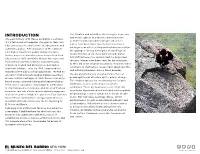
Introduction and Will Be Subject to Additions and Corrections the Early History of El Museo Del Barrio Is Complex
This timeline and exhibition chronology is in process INTRODUCTION and will be subject to additions and corrections The early history of El Museo del Barrio is complex. as more information comes to light. All artists’ It is intertwined with popular struggles in New York names have been input directly from brochures, City over access to, and control of, educational and catalogues, or other existing archival documentation. cultural resources. Part and parcel of the national We apologize for any oversights, misspellings, or Civil Rights movement, public demonstrations, inconsistencies. A careful reader will note names strikes, boycotts, and sit-ins were held in New York that shift between the Spanish and the Anglicized City between 1966 and 1969. African American and versions. Names have been kept, for the most part, Puerto Rican parents, teachers and community as they are in the original documents. However, these activists in Central and East Harlem demanded variations, in themselves, reveal much about identity that their children— who, by 1967, composed the and cultural awareness during these decades. majority of the public school population—receive an education that acknowledged and addressed their We are grateful for any documentation that can diverse cultural heritages. In 1969, these community- be brought to our attention by the public at large. based groups attained their goal of decentralizing This timeline focuses on the defining institutional the Board of Education. They began to participate landmarks, as well as the major visual arts in structuring school curricula, and directed financial exhibitions. There are numerous events that still resources towards ethnic-specific didactic programs need to be documented and included, such as public that enriched their children’s education. -

Grand Canyon, Zion and Sedona Experience”
1 2 Inverarte Art Gallery presents Jorge Obregon “Grand Canyon, Zion and Sedona Experience” Opening and Artist Reception, Wednesday, October 17th, 2018 On view October 17th, 2018 through January 9th, 2019 Inverarte Art Gallery 923 N Loop 1604 E Ste 103, San Antonio, TX 78232 Contact +1 210-305-6528 mail: info@inverarte.com Mon - Thu 10:00 to 19:00 Fri - Sat 10:00 to 17:00 www.inverarteartgallery.com Grand Canyon, Zion, and Sedona Experience “Grand Canyon, Zion and Sedona Experience,” this could be the title showed not only the landscape, but they also included the buildings and of an adventure movie or a documentary, but in this case, it is the name of people who populated those places. Therefore those paintings were more this exhibition which consists of 18 paintings made by Jorge Obregon in than artworks but also historical testimonies of the landscape and customs his latest expedition. But looking back at it, why not, it is also the name of of that time. However, it was not until 1855, with the arrival to Mexico of the this catalogue that narrates a little of the history of such excellent artist, as Italian painter Eugenio Landesio, as a landscape and perspective professor well as his participation and relationship with the history of art in Mexico. at the Academy of San Carlos, that landscape painting truly began in Mexico. Moreover, it presents us a movie in slow motion, meaning, frame by frame, Eugenio Landesio had several excellent disciples, but the most outstanding about his adventure through the Colorado Plateau. -

CENTROS DE ACOPIO Operador No
CENTROS DE ACOPIO Operador No. Ubicación Corporativo Acento Locales 6 y 7, Av. Jorge Jiménez Cantú 1 S/N, Colonia Hacienda de Valle Escondido, C.P. 52937, Atizapán de Zaragoza, Estado de México. Av. López Mateos No. 4175, Colonia La Giralda, C.P. 45050, Zapopan; Jalisco. ALCATEL 2 ONE TOUCH Blvd. Manuel Ávila Camacho No. 1007 L-5B, Colonia San 3 Lucas Tepetlacalco, Tlalnepantla de Baz, Estado de México. Av. Miguel Ángel de Quevedo No. 1065, Colonia El Rosedal, 4 Delegación Coyoacán, Distrito Federal. Prado Norte No. 320, Colonia Lomas de Chapultepec, 5 Delegación Miguel Hidalgo, Distrito Federal. Eje 1 Norte Mosqueta No. 259, Colonia Local N1-60, 6 Delegación Cuauhtémoc, Distrito Federal. Presidente Masaryk No. 182, Colonia Polanco, Delegación 7 Miguel Hidalgo, Distrito Federal. Melchor Ocampo No. 193 L-G 25, Colonia Verónica Anzures, 8 Delegación Miguel Hidalgo, Distrito Federal. Blvd. Interlomas No. 5, Colonia San Fernando, Huixquilucan, 9 Estado de México. Av. Vasco de Quiroga No. 3800, Colonia Antigua Mina de 10 Totoloapa, Delegación Cuajimalpa, Distrito Federal. Av. Montevideo (Mezanine) No. 363 L-228, Colonia Lindavista, 11 Delegación Gustavo A. Madero, Distrito Federal. Florencia No. 69, Colonia Juárez, Delegación Cuauhtémoc, IUSACELL 12 Distrito Federal. Plaza Madrid No. 8, Colonia Roma Norte, Delegación 13 Cuauhtémoc, Distrito Federal. Circuito Arquitectos No. 1, Ciudad Satélite, Naucalpan de 14 Juárez, Estado de México. Circuito Centro Comercial (dentro de Plaza Satélite) No. 2251, 15 Local 422, Ciudad Satélite, Naucalpan de Juárez, Estado de México. Av. Canal de Tezontle No. 1512, Colonia Alfonso Ortiz Tirado, 16 Delegación Iztapalapa, Distrito Federal. División del Norte No. -

A Promenade Trough the Visual Arts in Carlos Monsivais Collection
A Promenade Trough the Visual Arts in Carlos Monsivais Collection So many books have been written, all over the world and throughout all ages about collecting, and every time one has access to a collection, all the alarms go off and emotions rise up, a new and different emotion this time. And if one is granted access to it, the pleasure has no comparison: with every work one starts to understand the collector’s interests, their train of thought, their affections and their tastes. When that collector is Carlos Monsiváis, who collected a little bit of everything (that is not right, actually it was a lot of everything), and thanks to work done over the years by the Museo del Estanquillo, we are now very aware of what he was interested in terms of visual art in the 20th Century (specially in painting, illustration, engraving, photography). It is only natural that some of the pieces here —not many— have been seen elsewhere, in other exhibitions, when they were part of the main theme; this time, however, it is a different setting: we are just taking a stroll… cruising around to appreciate their artistic qualities, with no specific theme. This days it is unusual, given that we are so used to looking for an overarching “theme” in every exhibition. It is not the case here. Here we are invited to partake, along with Carlos, in the pleasures of color, texture, styles and artistic schools. We’ll find landscapes, portraits, dance scenes, streetscapes, playful scenes. All executed in the most diverse techniques and styles by the foremost mexican artist of the 20th Century, and some of the 21st as well. -

De La Mano Por Los Derechos Humanos -.: CODHEM
artac aiap.unesco De la mano por los derechos humanos CATÁLOGO ICONOGRÁFICO DE LA DECLARACIÓN UNIVERSAL DE LOS DERECHOS HUMANOS 2010. Año del Bicentenario de la Independencia de México COMISIÓN DE DERECHOS HUMANOS DEL ESTADO DE MÉXICO ASOCIACIÓN DE ARTISTAS PLÁSTICOS DE MÉXICO A.C. De la mano por los derechos humanos. Catálogo iconográfico de la Declaración Universal de los Derechos Humanos CENTRO DE ESTUDIOS ISBN: 978-607-95235-8-9 Número de autorización del Cómite Editorial: CE/BLB/06/10 © D.R. Comisión de Derechos Humanos del Estado de México Dr. Nicolás San Juan No. 113, Col. Ex Rancho Cuauhtémoc, C.P. 50010, Toluca, México. Tel. (01 722) 2360560 Fax (01 722) 214-08-70 Página de internet: http://www.codhem.org.mx Tiraje: 0000 ejemplares Primera edición 2010 Comisionado de los Derechos Humanos Marco Antonio Morales Gómez Coordinador General: Albino Luna Sánchez Colaboradoras: Claudia Carranza López Bertha Sonia Calderón Fotografía: Graciela Ferreiro Robles Lugar de edición: CENTRO DE ESTUDIOS Diseño de portada y formación: Deyanira Rodríguez Sánchez Las opiniones vertidas en este texto son responsabilidad de su autor. La Comisión de Derechos Humanos del Estado de México lo ha publicado en apoyo a la libertad de expresión y el respeto a la pluralidad. 2 PRESENTACIÓN El arte es un lenguaje universal. Una imagen bella, una melodía armoniosa, una historia bien contada. Cada una de las manifestaciones que los artistas de hoy y siempre nos ofrecen, son capaces de establecer un diálogo generoso con el público de todas las naciones y de todas las condiciones. En la Comisión de Derechos Humanos del Estado de México estamos convencidos de que el acceso a la belleza creada por el ser humano debe ser parte de nuestros derechos. -
INFORME ANUAL CORRESPONDIENTE AL ÚLTIMO SEMESTRE DEL 2013 Y PRIMER SEMESTRE DE 2014
INFORME ANUAL CORRESPONDIENTE AL ÚLTIMO SEMESTRE DEL 2013 y PRIMER SEMESTRE DE 2014. Informe presentado por el Consejo Directivo Nacional de la Sociedad Mexicana de Autores de las Artes Plásticas, Sociedad De Gestión Colectiva De Interés Público, correspondiente al segundo semestre del 2013 y lo correspondiente al año 2014 ante la Asamblea General de Socios. Nuestra Sociedad de Gestión ha tenido varios resultados importantes y destacables con ello hemos demostrado que a pesar de las problemáticas presentadas en nuestro país se puede tener una Sociedad de Gestión como la nuestra. Sociedades homologas como Arte Gestión de Ecuador quienes han recurrido al cierre de la misma por situaciones económicas habla de la crisis vivida en nuestros días en Latinoamérica. Casos como Guatemala, Colombia, Honduras en especial Centro América, son a lo referido, donde les son imposibles abrir una representación como Somaap para representar a sus autores plásticos, ante esto damos las gracias a todos quienes han hecho posible la creación y existencia de nuestra Sociedad Autoral y a quienes la han presidido en el pasado enriqueciéndola y dándoles el impulso para que siga existiendo. Es destacable mencionar los logros obtenidos en las diferentes administraciones donde cada una han tenido sus dificultades y sus aciertos, algunas más o menos que otras pero a todas les debemos la razón de que estemos en estos momentos y sobre una estructura solida para afrontar los embates, dando como resultado la seguridad de la permanencia por algunos años más de nuestra querida Somaap. Por ello, es importante seguir trabajando en conjunto para lograr la consolidación de la misma y poder pensar en la Somaap por muchas décadas en nuestro país, como lo ha sido en otras Sociedades de Gestión. -

Untitled (Aftersherrielevine.Com/8.Jpg) Y Michael Mandiberg, 3250Px X 4250Px (At 850Dpi), 2001
Plan de doctorado: Artes Visuales, Producción, Gestión y Restauración El ensamblaje escultórico: análisis y tipologías objetuales en el Arte Contemporáneo Mexicano Tesis Doctoral presentada por Pablo Joaquín Estévez Kubli Dirigida por Dra. D. Maribel Domènech Ibáñez Dr. D. Vicente Barón Linares Tutor: Joaquín Aldás Ruiz Valencia, 2012 Agradecimientos Con relación al apoyo académico y económico recibido para la conclusión de la tesis, es momento de agradecer por solidaridad directa. En primera instancia les corresponde a los Doctores de la Universidad Politécnica de Valencia, Dra. Maribel Doménech Ibáñez y al Dr. Vicente Barón Linares, por sus aportaciones para consolidar el texto final. En un segundo y distinguido agradecimiento es para el Dr. Juan Bautista Peiró López, coordinador del programa de Doctorado entre la UPV y la ENAP-UNAM. Por otro lado agradezco al Dr. Daniel Manzano Águila, Director de la Escuela Nacional de Artes Plásticas por apoyarme a lo largo del trabajo de tesis. Además, debo incluir a mi familia en general y en forma especial a mi hermano Manuel y a mi cuñada Marcela, como a todos los integrantes del clan Estévez. Índice Introducción 11 Capítulo I. MARCO TEÓRICO DEL ASSEMBLAGE 1.1. Definición deassemblage 21 1.2. Parámetros del ensamblaje-construcción 41 1.3. Aplicación de la deconstrucción y palimpsesto 65 1.4. Impulso alegórico del ensamblaje 78 1.5. Efectos del montaje y dispositivo de apropiación 91 1.6. Cuadro de síntesis de términos 106 Capítulo II. ANTECEDENTES HISTÓRICOS DEL ASSEMBLAGE 2.1. Vanguardias artísticas (1912-1959) 111 2.1.1. Ready-made y el objet trouvé 121 2.2.