Socio-Economic Transformation and Gender Relations in Lao PDR
Total Page:16
File Type:pdf, Size:1020Kb
Load more
Recommended publications
-
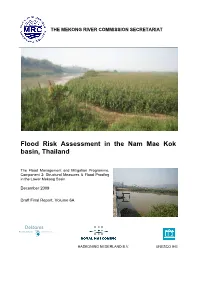
Flood Risk Assessment in the Nam Mae Kok Basin, Thailand
THE MEKONG RIVER COMMISSION SECRETARIAT Flood Risk Assessment in the Nam Mae Kok basin, Thailand The Flood Management and Mitigation Programme, Component 2: Structural Measures & Flood Proofing in the Lower Mekong Basin December 2009 Draft Final Report, Volume 6A HASKONING NEDERLAND B.V. UNESCO IHE Guide to the reporting structure of the Flood Management and Mitigation Programme - Component 2, Structural Measures and Flood Proofing Component 2 on Structural Measures and Flood Proofing of the Mekong River Commission's Flood Management and Mitigation Programme was implemented from September 2007 till January 2010 under a consultancy services contract between MRCS and Royal Haskoning in association with Deltares and Unesco-IHE. The Implementation was in three Stages, an Inception Phase, and two implementation Stages. During each stage a series of outputs were delivered and discussed with the MRC, the National Mekong Committees and line agencies of the four MRC member countries. A part of Component 2 - on 'Roads and Floods' - was implemented by the Delft Cluster under a separate contract with MRC. The consultancy services contract for Component 2 specifies in general terms that, in addition to a Final Report, four main products are to be delivered. Hence, the reports produced at the end of Component 2 are structured as follows: Volume 1 Final Report Volume 2 Characteristics of Flooding in the Lower Mekong Basin: Volume 2A Hydrological and Flood Hazard in the Lower Mekong Basin; Volume 2B Hydrological and Flood Hazard in Focal Areas; Volume 2C Flood Damages, Benefits and Flood Risk in Focal Areas, and Volume 2D Strategic Directions for Integrated Flood Risk management in Focal Areas. -

The People's Highway: Past, Present and Future Transport on the Mekong River System
THE PEOPLE'S HIGHWAY: PAST, PRESENT AND FUTURE TRANSPORT ON THE MEKONG RIVER SYSTEM Mekong Development Series No. 3 April 2004 Published in Phnom Penh in April 2004 by the Mekong River Commission This document should be cited as Peter Starr, 2003. The People's Highway: Past, Present and Future Transport on the Mekong River System. Mekong Development Series No. 3. Mekong River Commission, Phnom Penh, 44 pages. c Mekong River Commission Secretariat P.0. Box 6101, 184 Fa Ngoum Road, Unit 18, Ban Sithane Neua, Sikhottabong District, Vientiane 01000 Lao P.D.R E-mail: mrcs@mrcmekong.org Editors: Lieven Geerinck and Delia Paul Series editor: Delia Paul Pictures: Jim Holmes, Mikkel Ostergaard, Chhoy Pisei, Lieven Geerinck, White Lotus, Independent Journalism Foundation (IJF), The pictures on page 15 are from a Chinese publication, " A Golden Waterway to the Asian and Pacific Area ", published by Sun Sai Kei, Kunming 1993. Design and layout: Sawaddh So The opinions and interpretations expressed within are those of the author and do not necessarily reflect the views of the Mekong River Commission. Foreword The Mekong was always an international river, in the sense that foreigners were always interested in it. Since ancient times, people and goods have moved along this wide brown highway that preceded roads, railways and modern freight containers. As described in many historical accounts, it also provided access to the interior of the Mekong region to generations of conquerors, explorers and traders. The years of turmoil in the Mekong region account for much of the neglect of this major inland waterway in the latter part of the 20th century. -

Revolution, Reform and Regionalism in Southeast Asia
Revolution, Reform and Regionalism in Southeast Asia Geographically, Cambodia, Laos and Vietnam are situated in the fastest growing region in the world, positioned alongside the dynamic economies of neighboring China and Thailand. Revolution, Reform and Regionalism in Southeast Asia compares the postwar political economies of these three countries in the context of their individual and collective impact on recent efforts at regional integration. Based on research carried out over three decades, Ronald Bruce St John highlights the different paths to reform taken by these countries and the effect this has had on regional plans for economic development. Through its comparative analysis of the reforms implemented by Cam- bodia, Laos and Vietnam over the last 30 years, the book draws attention to parallel themes of continuity and change. St John discusses how these countries have demonstrated related characteristics whilst at the same time making different modifications in order to exploit the strengths of their individual cultures. The book contributes to the contemporary debate over the role of democratic reform in promoting economic devel- opment and provides academics with a unique insight into the political economies of three countries at the heart of Southeast Asia. Ronald Bruce St John earned a Ph.D. in International Relations at the University of Denver before serving as a military intelligence officer in Vietnam. He is now an independent scholar and has published more than 300 books, articles and reviews with a focus on Southeast Asia, -

CARE Rapid Gender Analysis an Analysis of Gender Equality and Social Inclusion Among Flood-Affected Communities in Attapeu Province, Lao PDR
CARE Rapid Gender Analysis An analysis of gender equality and social inclusion among flood-affected communities in Attapeu Province, Lao PDR 4 October 2018, Version 1 1 Elizabeth Cowan CARE International in Lao PDR Acknowledgements This Rapid Gender Analysis is supported by the Australian Government and has benefitted from the valuable contributions from CARE International colleagues, especially Phetsakhone Somphongbouthakanh, CARE in Lao PDR’s Gender Advisor. Disclaimer This publication has been funded by the Australian Government through the Department of Foreign Affairs and Trade. The views expressed in this publication are the author’s alone and are not necessarily the views of the Australian Government. 2 Contents Executive Summary ................................................................................................................................ 1 Key findings ..................................................................................................................................... 1 Key recommendations ..................................................................................................................... 1 Introduction ......................................................................................................................................... 2 Background information on Lao PDR flooding ................................................................................ 2 The Rapid Gender, Equality and Social Inclusion Analysis objectives ............................................ 2 -

Report on China-Laos Cooperation Opportunities Under the Belt and Road Initiative in 2018 China Economic Information Service
Report on China-Laos Cooperation Opportunities under the Belt and Road Initiative in 2018 China Economic Information Service Xinhua Silk Road Department 1 Contents Abstract......................................................................................................................................3 1. Substantial Achievements in Trade and Economic Cooperation.....................................5 (1) Rapid growth of bilateral trade and economic relations....................................................... 5 (2) Expansion of cooperation in the field of investment............................................................ 6 (3) Unique advantages of project contracting.............................................................................8 (4) Remarkable achievements in financial cooperation..............................................................9 (5) Aids to Laos to stimulate its demand...................................................................................11 2. The Belt and Road Initiative provides constant dynamics for China-Laos trade and economic cooperation............................................................................................................. 12 (1) Mutual connectivities shortens the distance between China and Laos...............................12 i. The railway facilitates Lao dream of a “land-linked country”....................................... 12 ii. The satellite connects Laos with the world.................................................................. 13 (2) Production -

National Integrated Water Resources Management Support Project (Cofinanced by the Government of Australia and the Spanish Cooperation Fund for Technical Assistance)
Technical Assistance Consultant’s Report Project Number: 43114 August 2014 Lao People’s Democratic Republic: National Integrated Water Resources Management Support Project (Cofinanced by the Government of Australia and the Spanish Cooperation Fund for Technical Assistance) Prepared by: IDOM Ingenieria Y Consultoria S.A. (Vizcaya, Spain) in association with Lao Consulting Group Ltd. (Vientiane, Lao PDR) For: Ministry of Natural Resources and Environment Department of Water Resources Nam Ngum River Basin Committee Secretariat This consultant’s report does not necessarily reflect the views of ADB or the Government concerned, and ADB and the Government cannot be held liable for its contents. NATIONAL INTEGRATED WATER RESOURCES MANAGEMENT SUPPORT PROGRAM ADB TA-7780 (LAO) PACKAGE 2: RIVER BASIN MANAGEMENT NIWRMSP - PACKAGE 2 FINAL REPORT August 2014 NIWRMSP - PACKAGE 2 FINAL REPORT National Integrated Water Resources Management Support Program ADB TA-7780 (LAO) Package 2 - River Basin Management CONTENTS EXECUTIVE SUMMARY IN ENGLISH ................................................................................................... S1 EXECUTIVE SUMMARY IN LAO ........................................................................................................... S4 1. BACKGROUND ............................................................................................................................... 1 2. RESOURCES ASSIGNED TO THE TECHNICAL ASSISTANCE .................................................. 2 3. WORK DEVELOPED AND OBJECTIVES -
A Comparative Analysis of Access to Reproductive Health Care in Laos and Southeast Asia
Loyola University Chicago Loyola eCommons Master's Theses Theses and Dissertations 2017 A Comparative Analysis of Access to Reproductive Health Care in Laos and Southeast Asia Malakhone Sonethavong Loyola University Chicago Follow this and additional works at: https://ecommons.luc.edu/luc_theses Part of the Feminist, Gender, and Sexuality Studies Commons Recommended Citation Sonethavong, Malakhone, "A Comparative Analysis of Access to Reproductive Health Care in Laos and Southeast Asia" (2017). Master's Theses. 3706. https://ecommons.luc.edu/luc_theses/3706 This Thesis is brought to you for free and open access by the Theses and Dissertations at Loyola eCommons. It has been accepted for inclusion in Master's Theses by an authorized administrator of Loyola eCommons. For more information, please contact ecommons@luc.edu. This work is licensed under a Creative Commons Attribution-Noncommercial-No Derivative Works 3.0 License. Copyright © 2017 Malakhone Sonethavong LOYOLA UNIVERSITY CHICAGO A COMPARATIVE ANALYSIS OF ACCESS TO REPRODUCTIVE HEALTH CARE IN LAOS AND SOUTHEAST ASIA A THESIS SUBMITTED TO THE FACULTY OF THE GRADUATE SCHOOL IN CANDIDACY FOR THE DEGREE OF MASTER OF ARTS PROGRAM IN WOMEN’S STUDIES AND GENDER STUDIES BY MALAKHONE SONETHAVONG CHICAGO, IL AUGUST 2017 Copyright by Malakhone Sonethavong, 2017 All Rights Reserved. ACKNOWLEDGEMENTS I would like to express my acknowledgment to Professor Anne Figert, the Director of Department of Sociology and the Chair of the thesis committee. This thesis made possible with the encouragement of Prof. Figert who visions my potential ability and passion towards analysis of health care access in the Global South countries. I am also thankful for the great support from Professor Shweta Singh, an Associate Professor of the School of Social Work who understands and supports my research, and to Professor Suzanne Bost, who is the director of the graduate school of women’s studies and gender studies and an academic advisor for my graduate program. -

Iron Man of Laos Prince Phetsarath Ratanavongsa the Cornell University Southeast Asia Program
* fll!!I ''{f'':" ' J.,, .,.,Pc, IRON MAN OF LAOS PRINCE PHETSARATH RATANAVONGSA THE CORNELL UNIVERSITY SOUTHEAST ASIA PROGRAM The Southeast Asia Program was organized at Cornell University in the Department of Far Eastern Studies in 1950. It is a teaching and research program of interdisciplinary studies in the humanities, social sciences, and some natural sciences. It deals with Southeast Asia as a region, and with the individual countries of the area: Brunei, Burma, Indonesia, Kampuchea, Laos, Malaysia, the Philippines, Singapore, Thailand, and Vietnam. The activities of the Program are carried on both at Cornell and in Southeast Asia. They include an undergraduate and graduate curriculum at Cornell which provides instruction by specialists in Southeast Asian cultural history and present-day affairs and offers intensive training in each of the major languages of the area. The Program sponsors group research projects on Thailand, on Indonesia, on the Philippines, and on linguistic studies of the languages of the area. At the same time, individual staff and students of the Program have done field research in every Southeast Asian country. A list of publications relating to Southeast Asia which may be obtained on prepaid order directly from the Program is given at the end of this volume. Information on Program staff, fellowships, requirements for degrees, and current course offerings is obtainable· from the Director, Southeast Asia Program, 120 Uris Hall, Cornell University, Ithaca, New York 14853. 11 IRON MAN OF LAOS PRINCE PHETSARATH RATANAVONGSA by "3349" Trc1nslated by .John B. �1urdoch F.di ted by · David K. \-vyatt Data Paper: Number 110 -Southeast Asia Program Department of Asian Studies Cornell University, Ithaca, New York .November 197·8 Price: $5.00 111 CORNELL UNIVERSITY SOUTHEAST ASIA PROGRAM 1978 International Standard Book Number 0-87727-110-0 iv C.ONTENTS FOREWORD • • • • • • • • • • • • • • • • • • • • • • . -

Freshwater Snail Diversity in Mae Lao Agricultural Basin (Chiang Rai, Thailand) with a Focus on Larval Trematode Infections
ISSN (Print) 0023-4001 ISSN (Online) 1738-0006 Korean J Parasitol Vol. 56, No. 3: 247-257, June 2018 ▣ ORIGINAL ARTICLE https://doi.org/10.3347/kjp.2018.56.3.247 Freshwater Snail Diversity in Mae Lao Agricultural Basin (Chiang Rai, Thailand) with a Focus on Larval Trematode Infections Kittichai Chantima*, Krittawit Suk-ueng, Mintra Kampan Energy and Environment Program, Faculty of Science and Technology, Chiang Rai Rajabhat University, Chiang Rai 57100, Thailand Abstract: The aim of this study was to conduct a freshwater snail survey in Mae Lao agricultural basin to assess the di- versity with a focus on habitat types and their larval trematode infections. Snails were collected and examined in 14 sites of Mae Lao agricultural basin from August 2016 to October 2017. A total of 1,688 snail individuals were collected and classified into 7 families, 8 genera, and 12 species. Snail diversity and habitat types were higher in rice paddies than irri- gation canals and streams. The most abundant species was Bithynia siamensis siamensis, representing 54.6% of the sample. Three species of snails act as first intermediate host were found with cercarial infections. They were Filopaludina sumatrensis polygramma, B. s. siamensis, and Melanoides tuberculata. The cercariae were categorized into 7 types; echi- nostome, monostome, gymnocephalous, virgulate, parapleurolophocercous, pleurolophocercous and megalurous cer- cariae. Parapleurolophocercous cercariae constituted the most common type of cercariae recovered, contributing 41.2% of all infections in snails. Echinostome metacercariae infections were found in 6 snail species with 7.6% prevalence. In addition, the metacercaria of avian trematode, Thapariella sp. were found in Filopaludina spp. -

Impact of Laos's Accession to the World Trade Organization
Thirteen Annual Conference on Global Economic Analysis Laos’ World Trade Organization Accession and Poverty Reduction Phouphet KYOPHILAVONG Shinya Takamatsu Jong-Hwan Ko 15th April 2010 1 The Impact of Laos’ Accession to the World Trade Organization Phouphet Kyophilavong, Shinya Takamatsu, and Jong-Hwan Ko 1 Abstract World Trade Organization (WTO) accession produces tangible benefits but also has costs, especially for transitional economies and Least Developed Countries (LDC) like Laos. Despite the benefits and costs of WTO accession, there are very few quantitative studies on Laos‟ accession to the WTO. Therefore, the main objective of this paper is to attempt to quantify the economy-wide impact and poverty of Laos‟ WTO accession. We employ a standard GTAP model for this analysis. The simulation results show that Laos will gain from accession to the WTO, but these gains are quite small. The real GDP will increase about 0.5% and welfare (equivalent variation) will increase by about US$ 8 million. On the other hand, the trade deficit will increase and output in some sectors will be reduced. Therefore, it is difficult to conclude that Laos will gains benefits from WTO accession. The micro-simulation using the household survey indicates that the change in household welfare due to the tariff reduction is heterogeneous. The winners from the tariff reduction are households which live in Vientiane capital, and are the non-poor in the urban area. The losers from this policy change are the households which do not belong to the above categories, and their household income drops and their poverty rates increase slightly. -

Epr Atlas 1080
Laos Ethnicity in Laos Group selection Laos is a multi-ethnic country officially encompassing 49 ethnic groups (2910), which have been grouped primarily by language and 2910 [National Statistics Center of the Lao PDR, 2006] location into one of three categories: the Lao Loum (Lowland Lao), and the hill tribes constituting of the Lao Theung (Upper Lao) and the Lao Sung (Highland Lao) (2911; 2912, 247-248). Based on this 2911 [National Statistics Center of the Lao PDR, 2006] classification and linguistic considerations, we identify the following 2912 [Levinson, 1998] politically relevant groups: • The Lao (incl. Phuan) make up just over half of the total population according to the 2015 census and tend to be con- centrated in the flatlands and valleys (2913). They speak Lao, a 2913 [Minority Rights Group International, 2018a] Tai-language, and are the largest and most important Lao Loum group (2914, 247). Most people from this group are Theravada 2914 [Levinson, 1998] Buddhists (2915). 2915 [Minority Rights Group International, 2018a] • The remaining Lao Tai speakers include the lowland Phu Tai and several tribes who live in the higher valleys and on the middle slopes of the mountains in northern Laos. The tribes are usually categorized according to their traditional costumes, e.g. the Tai Dam (Black Tai). They are regarded as inferior by lowland Lao, and Tai, in turn, look down on lowland Lao for having failed to maintain Tai tradition and culture (2916). 2916 [Minority Rights Group International, 2018b] • The Lao Theung, sometimes called Lao Thoeng tend to inhabit mid-level slopes and speak numerous Mon-Khmer languages. -

Drinking Culture in the Thai-Isaan Context of Northeast Thailand
DRINKING CULTURE IN THAI-ISAAN CONTEXT DRINKING CULTURE IN THE THAI-ISAAN CONTEXT OF NORTHEAST THAILAND Jirawat Moolasart1 and Siriporn Chirawatkul2 1Department of Psychiatry, Sappasitthiprasong Hospital, Ubon Ratchathani; 2Faculty of Nursing, Khon Kaen University, Khon Kaen, Thailand Abstract. Ethnographic research aimed to explore drinking context, drinking be- haviors, and perception of lay people about their drinking and drinking-related behaviors in Thai-Isaan context. The study was conducted in a suburban village in the northeast of Thailand during 2008. Participant observation and informal interview were employed for data collection throughout the year. Findings of the study revealed that alcoholic beverages and drinking were woven into everyday life and integrated into various social events and traditional rites as part of social life. Alcohol consumption was permitted overtly with positive attitudes toward drinking and a low level of restriction. Enjoyment and social functions of drinking were recognized by direct experience in real life. Conversely, problem drinking and overt intoxication with loss of self-control or lack of responsibility were not expected or acceptable. Drinking was rarely perceived as a social distress. From an insiders’ view, their drinking was less correlated to alcohol abuse or alcohol- related social problems. In the context of a permissive drinking culture, the ex- isting alcohol regulation measures may be neither supported nor conformed as expected. An alcohol policy that aims to reduce the overall volume of consump- tion or to indicate the negative consequences may dispute local perceptions and norms. The challenge for public health within this culture is how to persuade the drinkers to realize such negative potential and how to raise societal awareness of negative consequences.