Tour in Tuscia
Total Page:16
File Type:pdf, Size:1020Kb
Load more
Recommended publications
-
Accommodation
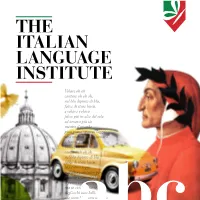
THE ITALIAN LANGUAGE INSTITUTE Volare oh oh cantare oh oh oh, nel blu dipinto di blu, felice di stare lassù, e volavo volavo felice più in alto del sole ed ancora più sù, mentre il mondo pian piano spariva laggiù, una musica dolce suonava soltanto per me. Volare oh oh cantare oh oh oh nel blu dipinto di blu felice di stare lassù. Ma tutti i sogni nell’alba svaniscon perchè, quando tramonta la luna li porta con se, ma io continuo a sognare negl’occhi tuoi belli, che sono blu come un cielo trapunto di stelle. THE SCHOOL THE TOWN The institute is situated in the centre of Viterbo and has been Viterbo (population: 60,000) is in central Italy, around 65 offering courses for ENGLISH and ITALIAN since 1995 and miles (105 km) north of Rome. The medieval walled hill town is accredited by the Italian Ministry of Education and Cam- is situated in Lazio. The region is also known as Tuscia, and bridge English Language Assessment. The experience, the lies within the loosely-defined area ofE truria, which spreads methods and the supervision of our teaching ensure the high across Lazio, Umbria and Tuscany, incorporating the heart- standard of our courses. lands of the ancient Etruscan civilization. We also pride ourselves on the warm, welcoming atmosphere The main attraction in Viterbo is its medieval architecture: in the school as well as the helpfulness of the staff. Teaching in the remains of its grand Papal Palace (Palazzo dei Papi) and small groups enables closer contact with teachers and fellow the humbler medieval lanes. -

The Cities and Cemeteries of Etruria
Universitäts- und Landesbibliothek Tirol The cities and cemeteries of Etruria Dennis, George 1883 Chapter XV Bombarzo urn:nbn:at:at-ubi:2-12107 CHAPTER XV. BOHABZO. Miremur periisse homines ?—monnmenta fatiscunt, Mors etiam saxis nominibusque venit .—Ausonius. Ecce libet-pisces Tyrrhenaque monstra Dicere. Ovid. About twelve miles east of Viterbo, on the same slope of the Ciminian, is the village of Bomarzo, in the immediate neighbour¬ hood of an Etruscan town where extensive excavations have been made. The direct road to it runs along the base of the mountain, but the excursion may be made more interesting by a detour to Fdrento, which must be donfe in the saddle, the road being quite impracticable for vehicles. From Ferento the path leads across a deep ravine, past the village of Le Grotte di Santo Stefano, whose name marks the existence of caves in its neighbourhood,1 and over the open heath towards Bomarzo. But before reaching that place, a wooded ravine, Fosso della Vezza, which forms a natural fosse to the Ciminian, has to be crossed, and here the proverb —Chi va piano va sano —must be borne in mind. A more steep, slippery, and dangerous tract I do not remember to have traversed in Italy. Stiff miry clay, in which the steeds will anchor fast ; rocks shelving and smooth-faced, like inclined planes of ice, are the alternatives. Let the traveller take warning, and not pursue this track after heavy rains. It would be advisable, especially if ladies are of the party, to return from Ferento to Viterbo, and to take the direct road thence to Bomarzo. -

3.1 – Presenza Di Aree a Rischio Idrogeologico in Attuazione Della
3.1 – Presenza di aree a rischio idrogeologico In attuazione della Legge 183/89 è stato emanato il D.L. n. 180 dell’11 giugno 1998 (Decreto Sarno) con la finalità di individuare le aree a più elevato rischio idrogeologico e di adottare idonee misure di salvaguardia e prevenzione. La difesa del suolo diviene in tal modo, se pur sulla base della emotività scatenata dalla tragedia di Sarno, una attività preventiva e non, come in precedenza, riparativa di danni ormai avvenuti sul territorio. Lo stesso decreto fu convertito con modificazioni dalla legge n. 267 del 3 agosto 1998 e promulgato il D.P.C.M 29 settembre 1998 per la individuazione dei criteri relativi agli adempimenti da compiere in merito alla perimetrazione delle aree esposte a diversi livelli di rischio. Esso traccia, inoltre, la fase di programmazione della mitigazione del rischio attraverso elaborazioni, anche grafiche tali da individuare le tipologie di interventi da realizzare per mitigare o rimuovere lo stato di rischio. In attesa di un riordino successivo all’entrata in vigore del nuovo Decreto legislativo 152/2006 si riportano le strategie di intervento fino ad oggi attuate per quanto riguarda la difesa del suolo. Esse si inquadrano nell’ambito della pianificazione di bacino che le 5 Autorità di bacino competenti sul territorio regionale (Tevere, Liri-Garigliano, Fiora, Tronto, Bacini regionali) elaborano ed approvano. Lo strumento pianificatorio attualmente approvato e vigente su tutto il territorio regionale è il Piano Straordinario per l’Assetto Idrogeologico (PSAI). Le Autorità di Bacino che interessano il territorio provinciale sono tre, di seguito si riportano i dati salienti (Tab. -

On the Distribution of Lathyrus L. Species (Fabaceae) in Lazio (Central Italy)
ZOBODAT - www.zobodat.at Zoologisch-Botanische Datenbank/Zoological-Botanical Database Digitale Literatur/Digital Literature Zeitschrift/Journal: Linzer biologische Beiträge Jahr/Year: 1997 Band/Volume: 0029_1 Autor(en)/Author(s): Mortellaro Rosella, Colasante Maretta Artikel/Article: On the distribution of Lathyrus L. species (Fabaceae) in Lazio (Central Italy). 247-297 © Biologiezentrum Linz/Austria; download unter www.biologiezentrum.at Linzer biol. Beitr. 29/1 247-297 31.7.1997 On the distribution of Lathyrus L. species (Fabaceae) in Lazio (Central Italy) R. MORTELLARO & M. COLASANTE Abstract: Information about the distribution of species helps us to settle the se- paration of infrageneric taxa and are also useful to interpret the evolution of the ob- served genus. Here we refer to the distribution of Lathyrus species in Lazio (Central Italy) with information obtained from herbaria, field and Bibliographic data. In our investigation we found that some taxa need a complete systematic revision to solve their taxonomic problems concerning mainly a lot of intermediate forms which pro- bably are natural hybrids between some closely related taxa. It is obvious that the corresponding distribution feels the effect of this. In our opinion, according to recent investigations, we consider the following nineteen species to be spread in Lazio: L. amphicarpos L., L. annuus L., L. aphaca L., L. cicera L., L. clymenum L., L. hirsutus L., L. latifolius L., L. linifolius (REICHARD) BÄSSLER, L. niger (L.) BERNH., L. nisso- lia L., L. ochrus (L.) DC, L. pannonicus (JACQ.) GARCKE, L. pratensis L., L. sativus L., L. setifolius L., L. sphaericus RETZ, L. sylvestris L., L. venetus (MILLER) WOHLF., L. -

ETRUSCAN TUSCANY – 7 Nights/ 8 Days
ETRUSCAN TUSCANY 8 days to discover the most ancient sites of Tuscany D01: ROME - VITERBO Arrival at Roma airport. Meeting with our bus driver and guide. The trip starts immediately to Cerveteri necropolis of Banditaccia, the oldest evidence of the Etruscan-Italic world of the origins. The architecture of the great tumulus, the ancient conception of the cycle of life, death and rebirth, and sacred arts and sciences. At twilight, nice accommodation in agriturismo near Viterbo. D02: LAKE BOLSENA – SORANO In the morning, trip around the Bolsena Lake to the Parco dei Mostri di Bomarzo, a unique monumental park. Here, carved in the living rock, stand the depictions of the fabulous myths of the ancient world, rediscovered during the Renaissance: the Giants, the Earth Goddess, drakes, sphinxes, sirens and other marvels. After the park, a stop to visit Civita di Bagnoregio, one of the most handsome Italian hamlets, then, trough the panoramic perimeter of the lake of Bolsena, we will arrive to our agriturismo in the Etruscan area Sorano-Pitigliano-Sovana. Dinner at the stunning old borgo of Sorano. D03: SORANO - SOVANA - PITIGLIANO - TUFO AREA Visit to the Etruscan zone of Sovana. Excursion to the volcanic rupestrian environment, where there are still the remains of the major Etruscan monuments like the Tomba della Sirena, the Ildebranda, the Cavone, the Tomba delle Ninfe Alate and many others. After lunch, visit to the medieval borgo of Sovana to the Duomo and the Church of Santa Maria, where the face of Jesus is said to have appeared, then proceeding to the Spring of the river Sileno and down to the Via Cava di San Giuseppe, walking up to the walled city of Pitigliano. -

Historic Preservation and Sustainable Design in the Etruscan Hill Towns of Central Italy May 6 – May 16, 2020 36 AIA-Approved HSW Learning Units
Historic Preservation and Sustainable Design in the Etruscan Hill Towns of Central Italy May 6 – May 16, 2020 36 AIA-Approved HSW Learning Units Civita di Bagnoregio, Italy Travel to the Etruscan Hill Town region of Italy to discover these intensely beautiful towns, landscapes and culture. This 10-day travel program focuses on modern and historic design, sustainability, preservation, art and architecture, food and wine in ancient hill towns and world-renowned UNESCO World Heritage Sites. Email us at programs@civitainstitute.org for more information Siena Cortona Perugia Pienza Assisi Todi Orvieto Civita di Bagnoregio Tuscania Caprarola Tarquinia Map modified from Mapquest source The Etruscan hill town civilization of central Italy was crucial to the development of Western culture, art, agriculture, and architecture. Enduring yet fragile, geological instability, conflicts and time have taken their toll requiring continual creativity, rebuilding, and stabilization. Travel to the Etruscan Hill Town region of Italy to discover these intensely beautiful towns, landscapes and culture. These hill towns present a living laboratory of sustainable design efforts across history. Join us in Italy for this small group tour and explore historical and modern design culture in an unforgettable series of experiences createdEmail to us promote at programs@civitainstitute.org design excellence by CrossCulture,for more information The Civita Institute and the American Institute of Architects. Your experiences include: ▪ An insider’s connections with The Civita Institute and the famed hilltown of Civita di Bagnoregio, an ancient Etruscan sss site that predates the founding of Rome. ▪ Travel to the Etruscan hill town of Perugia and a first hand look at a modern city with a highly preserved historic center. -

Aspetti Naturalistici
Provincia di Viterbo – Assessorato Ambiente – Relazione sullo stato dell’ambiente Nelle conche calderiche di Bolsena e Latera esiste una variante più umida con prevalenza di cerrete e boschi misti mesofili e frammenti di faggete. Abbondanti elementi della lecceta sulle isole Bisentina e Martana. REGIONE TEMPIERATA DI TRANSIZIONE 4(7) - Termotipo collinare inferiore/superiore o mesomediterraneo superiore; ombrotipo umido inferiore; Regione mesaxerica. P medio-alte con episodi estivi più contenuti; aridità estiva non molto pronunciata a luglio e agosto; freddo intenso che si prolunga da ottobre a maggio; t appena inferiore a zero. Valle del Tevere e valli secondarie connesse (Orte, Gallese, Borghetto, ecc.). Querceti a cerro e roverella con elementi, talvolta anche abbondanti, della flora mediterranea. REGIONE MEDITERRANEA DI TRANSIZIONE 5(9) - Termotipo mesomediterraneo medio o collinare inferiore; Ombrotipo subumido superiore; Regione xeroterica/mesaxerica. P inferiori a 1000 mm con apporti estivi (Pest) intorno ai 100 mm; aridità estiva presente da giugno ad agosto e sporadicamente anche a maggio; freddo prolungato ma non intenso da novembre ad aprile; t da 2.3 a 4 °C. Maremma laziale interna a sud della conca vulsina fino a Blera e Monte Romano, parte della valle del F.Fiora, Canino e pianori a Ovest di Viterbo. Cerrete, querceti misti a roverella e cerro con abbondanti elementi della biocora mediterranea; boschi misti mesofili nelle forre e macchia mediterranea sui dossi e sugli affioramenti tufacei. 6(11)- Termotipo mesomediterraneo medio; ombrotipo subumido superiore/umido inferiore; Regione xeroterica. P da 800 fino a l11 00 mm circa con Pest intorno ai 100 mm e temperatura media piuttosto elevata; nei mesi estivi l'aridità non raggiunge intensità molto pronunciate; freddo poco intenso da novembre ad aprile; t da 3.4 a 4 °C. -

WORLD HERITAGE and DISASTER Knowledge, Culture and Rapresentation Le Vie Dei Mercanti XV International Forum
Fabbrica della Conoscenza numero 71 Collana fondata e diretta da Carmine Gambardella Fabbrica della Conoscenza Collana fondata e diretta da Carmine Gambardella Scientific Committee: Carmine Gambardella, UNESCO Chair on Landscape, Cultural Heritage and Territorial Governance President and CEO of Benecon, Past-Director of the Department of Architecture and Industrial Design University of Studies of Campania “Luigi Vanvitelli” Federico Casalegno, Massachusetts Institute of Technology, Boston Massimo Giovannini, Professor, Università “Mediterranea”, Reggio Calabria Bernard Haumont, Ecole Nationale Supérieure d’Architecture, Paris-Val de Seine Alaattin Kanoglu, Head of the Department of Architecture, İstanbul Technical University David Listokin, Professor, co-director of the Center for Urban Policy Research of Rutgers University / Edward J. Bloustein School of Planning and Public Policy, USA Paola Sartorio, Executive Director, The U.S.- Italy Fulbright Commission Elena Shlienkova, Professor, Professor of Architecture and Construction Institute of Samara State Techni - cal University Isabel Tort Ausina, Director UNESCO Chair Forum University and Heritage, Universitat Politècnica De València UPV, Spain Nicola Pisacane, Professor of Drawing – Department of Architecture and Industrial Design_University of Studies of Campania “Luigi Vanvitelli” Head of the Master School of Architecture – Interior Design and for Autonomy Cour - ses -Department of Architecture and Industrial Design - University of Studies of Cam - pania “Luigi Vanvitelli” Pasquale Argenziano, Professor of Drawing – Department of Architecture and Industrial Design_University of Studies of Campania “Luigi Vanvitelli” Alessandra Avella, Professor of Drawing – Department of Architecture and Industrial Design_University of Studies of Campania “Luigi Vanvitelli” Alessandro Ciambrone, Ph.D. in Territorial Governance (Milieux, Cultures et Sociétés du passé et du présent – ED 395) Université Paris X UNESCO Vocations Patrimoine 2007-09 Fellow / FUL - BRIGHT Thomas Foglietta 2003-04 Rosaria Parente, Ph.D. -

Etruria Alatel 2021
4 giorni - 3 notti dal 1 al 4 ottobre 2021 QUOTA DI PARTECIPAZIONE: € 595 (effettuazione con almeno 30 partecipanti)- Supplemento singola € 105 Versamento acconto di € 150 entro il 07/08/2021 - Saldo entro 21/08/2021 LA SEQUENZA DEL TOUR POTREBBE ESSERE MODIFICATA MANTENENDO GLI STESSI SERVIZI Le prenotazioni possono essere effettuate per email all’indirizzoveneto@alatelveneto.it , per sms o su whatsapp al numero 338 6846793. Gli iscritti dovranno essere in possesso dei requisiti richiesti dalle norme di tutela in materia di Covid-19. 1° Giorno Venerdì: Partenza – Bolsena- Viterbo Ritrovo dei Sigg.ri Partecipan� secondo orario stabilitoepartenza da Mestre per il Lazio.Sosteper lasalita dei passeggeri a Padova (Ikea)eRovigo e per una pausa caffè / primacolazione libera. In tarda ma�nata arrivo a Bolsena per la prima visita guidata: la città è dominata dalla massiccia Rocca Monaldeschi, uno suoi dei monumen� più rappresentativi. Pranzoin ristorante. Nel pomeriggio proseguimento con visita di Civita di Bagnoregio; la monumentale Porta Santa Maria è oggi l’unico accessoalborgo: passando sotto di essa, si possono ammirare le splendide decorazioni di leoni che schiacciano alcune figure umane. Al termine proseguimento per Viterbo, sistemazione in hotel, cena e perno�amento. 2° Giorno Sabato: Tarquinia – Tuscania- Vulci Prima colazione in hotel e successivapartenza per Tarquinia con visita guidata alla famosa Necropoli:ammirerete una straordinaria serie di tombe a tumulo scavate nella roccia e dipinte, insieme che rappresenta il nucleo più pres�gioso di questa zona archeologica, sicuramente la più importante del Mediterraneo.Pranzo in ristorante e proseguimento per Tuscania: la sugges�va ci�adina conserva l’aspetto medievalecon i suoi sette promontori in tufo su cui è stata eretta a 180 metri sul livello del mare. -

PIANO DI LAVORO DEI SERVIZI GENERALI E AMMINISTRATIVI Anno Scolastico 2020/21 ( Art
ISTITUTO COMPRENSIVO VIALE E. MONACI - C.F. 90026050568 C.M. VTIC82200V - UFVSZD - PROTOCOLLO GENERALE Prot. 0002060/U del 24/09/2020 12:18:00II.10 - Rapporti sindacali, contrattazione e Rappresentanza sindacale unitaria (RSU) - Ministero dell’ Istruzione, dell’Università e della Ricerca Ufficio Scolastico Regionale per il Lazio ISTITUTO COMPRENSIVO STATALE”ERNESTO MONACI” SORIANO NEL CIMINO–VASANELLO- GALLESE- BOMARZO– BASSANO IN TEVERINA www.icsorianonelcimino.edu.it V.le E. Monaci, 37 – Soriano nel Cimino (VT) C.F. 90026050568 – C.Univoco:UFVSZD Tel. 0761 748140 – fax 0761 1840058 vtic82200v@istruzione.it - pec: vtic82200v@pec.istruzione.it PIANO DI LAVORO DEI SERVIZI GENERALI E AMMINISTRATIVI Anno scolastico 2020/21 ( art. 53, comma 1, Ccnl 29/11/2007) Pagina 1 di 27 ISTITUTO COMPRENSIVO VIALE E. MONACI - C.F. 90026050568 C.M. VTIC82200V - UFVSZD - PROTOCOLLO GENERALE Prot. 0002060/U del 24/09/2020 12:18:00II.10 - Rapporti sindacali, contrattazione e Rappresentanza sindacale unitaria (RSU) - Ministero dell’ Istruzione, dell’Università e della Ricerca Ufficio Scolastico Regionale per il Lazio ISTITUTO COMPRENSIVO STATALE”ERNESTO MONACI” SORIANO NEL CIMINO–VASANELLO- GALLESE- BOMARZO– BASSANO IN TEVERINA www.icsorianonelcimino.edu.it V.le E. Monaci, 37 – Soriano nel Cimino (VT) C.F. 90026050568 – C.Univoco:UFVSZD Tel. 0761 748140 – fax 0761 1840058 vtic82200v@istruzione.it - pec: vtic82200v@pec.istruzione.it IL DIRETTORE DEI SERVIZI GENERALI E AMMINISTRATIVI VISTO l’art. 14 del D.P.R. 8 Marzo 1999, n. 275 (Regolamento dell’autonomia); -

Italy Travel and Driving Guide
Travel & Driving Guide Italy www.autoeurope. com 1-800-223-5555 Index Contents Page Tips and Road Signs in Italy 3 Driving Laws and Insurance for Italy 4 Road Signs, Tolls, driving 5 Requirements for Italy Car Rental FAQ’s 6-7 Italy Regions at a Glance 7 Touring Guides Rome Guide 8-9 Northwest Italy Guide 10-11 Northeast Italy Guide 12-13 Central Italy 14-16 Southern Italy 17-18 Sicily and Sardinia 19-20 Getting Into Italy 21 Accommodation 22 Climate, Language and Public Holidays 23 Health and Safety 24 Key Facts 25 Money and Mileage Chart 26 www.autoeurope.www.autoeurope.com com 1-800 -223-5555 Touring Italy By Car Italy is a dream holiday destination and an iconic country of Europe. The boot shape of Italy dips its toe into the Mediterranean Sea at the southern tip, has snow capped Alps at its northern end, and rolling hills, pristine beaches and bustling cities in between. Discover the ancient ruins, fine museums, magnificent artworks and incredible architecture around Italy, along with century old traditions, intriguing festivals and wonderful culture. Indulge in the fantastic cuisine in Italy in beautiful locations. With so much to see and do, a self drive holiday is the perfect way to see as much of Italy as you wish at your own pace. Italy has an excellent road and highway network that will allow you to enjoy all the famous sites, and give you the freedom to uncover some undiscovered treasures as well. This guide is aimed at the traveler that enjoys the independence and comfort of their own vehicle. -

O.S.M.T.J. – J.P.L.I
O.S.M.T.J. – J.P.L.I. (Acquapendente – Montefiascone (Lago di Bolsena) – Bagnoregio – Tuscanica) ITINERARIO 2 (Acquapendente – Montefiascone (Lago di Bolsena) – Bagnoregio – Tuscanica) ##### ACQUAPENDENTE Acquapendente è un comune con 5.800 abitanti; situato a circa quindici chilometri a nord del lago di Bolsena , si trova a metà strada tra Firenze e Roma, ed è posto in prossimità della Riserva Naturale di Monte Rufeno. Il paese è situato all'estremo nord del lazio, nel punto di confluenza di tre regioni: Lazio, appunto, Toscana e Umbria. Da Acquapendente è possibile ammirare la vetta del Monte Amiata, la più alta della bassa Toscana. Il nome del paese si deve al fatto che è situato presso il fiume Paglia, con le sue numerose cascatelle. Le sue antiche origini risalgono ai Fallisci, quando si chiamava Acula, Aquila o Aquesium mentre in epoca romana divenne una ‘mansio’. Fortezza degli imperatori tedeschi degli Ottoni, [è ricordata la prima volta nel 964 come castello imperiale di Ottone I°], passò poi agli Svevi e quindi entrò a far parte del marchesato di Toscana; attraverso l’eredità di Matilde di Canossa pervenne alla Santa Sede, a cui però fu contesa dal Barbarossa, finché nel 1166 si liberò dalla soggezione imperiale. Sede dell’Abbazia del San Sepolcro, i cui frati ebbero giurisdizione nella zona, partecipò alle crociate. Tra la fine del XIV° e l’inizio del XV° appartenne per venticinque anni al Comune di Siena. Successivamente dal 1415 vi dominarono gli Sforza. Consolidata la libertà cittadina [1143] con il capitolato di Eugenio IV°, e fissato il suo jus municipale in uno statuto del tempo di Nicolò V°, la cittadina, divenuta sede di diocesi sotto il papato di Innocenzo X° dopo la distruzione di Castro [1649] restò in diretto dominio della Chiesa.