Rhopilema Edelist Et Al JPR 13.2.20.Pdf
Total Page:16
File Type:pdf, Size:1020Kb
Load more
Recommended publications
-
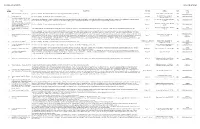
Cobia Database Articles Final Revision 2.0, 2-1-2017
Revision 2.0 (2/1/2017) University of Miami Article TITLE DESCRIPTION AUTHORS SOURCE YEAR TOPICS Number Habitat 1 Gasterosteus canadus Linné [Latin] [No Abstract Available - First known description of cobia morphology in Carolina habitat by D. Garden.] Linnaeus, C. Systema Naturæ, ed. 12, vol. 1, 491 1766 Wild (Atlantic/Pacific) Ichthyologie, vol. 10, Iconibus ex 2 Scomber niger Bloch [No Abstract Available - Description and alternative nomenclature of cobia.] Bloch, M. E. 1793 Wild (Atlantic/Pacific) illustratum. Berlin. p . 48 The Fisheries and Fishery Industries of the Under this head was to be carried on the study of the useful aquatic animals and plants of the country, as well as of seals, whales, tmtles, fishes, lobsters, crabs, oysters, clams, etc., sponges, and marine plants aml inorganic products of U.S. Commission on Fisheries, Washington, 3 United States. Section 1: Natural history of Goode, G.B. 1884 Wild (Atlantic/Pacific) the sea with reference to (A) geographical distribution, (B) size, (C) abundance, (D) migrations and movements, (E) food and rate of growth, (F) mode of reproduction, (G) economic value and uses. D.C., 895 p. useful aquatic animals Notes on the occurrence of a young crab- Proceedings of the U.S. National Museum 4 eater (Elecate canada), from the lower [No Abstract Available - A description of cobia in the lower Hudson Eiver.] Fisher, A.K. 1891 Wild (Atlantic/Pacific) 13, 195 Hudson Valley, New York The nomenclature of Rachicentron or Proceedings of the U.S. National Museum Habitat 5 Elacate, a genus of acanthopterygian The universally accepted name Elucate must unfortunately be supplanted by one entirely unknown to fame, overlooked by all naturalists, and found in no nomenclator. -

Proteomic Analysis of the Venom of Jellyfishes Rhopilema Esculentum and Sanderia Malayensis
marine drugs Article Proteomic Analysis of the Venom of Jellyfishes Rhopilema esculentum and Sanderia malayensis 1, 2, 2 2, Thomas C. N. Leung y , Zhe Qu y , Wenyan Nong , Jerome H. L. Hui * and Sai Ming Ngai 1,* 1 State Key Laboratory of Agrobiotechnology, School of Life Sciences, The Chinese University of Hong Kong, Hong Kong, China; chunningtleung@cuhk.edu.hk 2 Simon F.S. Li Marine Science Laboratory, State Key Laboratory of Agrobiotechnology, School of Life Sciences, The Chinese University of Hong Kong, Hong Kong, China; quzhe@cuhk.edu.hk (Z.Q.); nongwenyan@cuhk.edu.hk (W.N.) * Correspondence: jeromehui@cuhk.edu.hk (J.H.L.H.); smngai@cuhk.edu.hk (S.M.N.) Contributed equally. y Received: 27 November 2020; Accepted: 17 December 2020; Published: 18 December 2020 Abstract: Venomics, the study of biological venoms, could potentially provide a new source of therapeutic compounds, yet information on the venoms from marine organisms, including cnidarians (sea anemones, corals, and jellyfish), is limited. This study identified the putative toxins of two species of jellyfish—edible jellyfish Rhopilema esculentum Kishinouye, 1891, also known as flame jellyfish, and Amuska jellyfish Sanderia malayensis Goette, 1886. Utilizing nano-flow liquid chromatography tandem mass spectrometry (nLC–MS/MS), 3000 proteins were identified from the nematocysts in each of the above two jellyfish species. Forty and fifty-one putative toxins were identified in R. esculentum and S. malayensis, respectively, which were further classified into eight toxin families according to their predicted functions. Amongst the identified putative toxins, hemostasis-impairing toxins and proteases were found to be the most dominant members (>60%). -

Nomad Jellyfish Rhopilema Nomadica Venom Induces Apoptotic Cell
molecules Article Nomad Jellyfish Rhopilema nomadica Venom Induces Apoptotic Cell Death and Cell Cycle Arrest in Human Hepatocellular Carcinoma HepG2 Cells Mohamed M. Tawfik 1,* , Nourhan Eissa 1 , Fayez Althobaiti 2, Eman Fayad 2,* and Ali H. Abu Almaaty 1 1 Department of Zoology, Faculty of Science, Port Said University, Port Said 42526, Egypt; n.essa@sci.psu.edu.eg (N.E.); ali_hussein@sci.psu.edu.eg (A.H.A.A.) 2 Department of Biotechnology, Faculty of Sciences, Taif University, P.O. Box 11099, Taif 21944, Saudi Arabia; faiz@tu.edu.sa * Correspondence: tawfik@sci.psu.edu.eg (M.M.T.); e.esmail@tu.edu.sa (E.F.) Abstract: Jellyfish venom is a rich source of bioactive proteins and peptides with various biological activities including antioxidant, antimicrobial and antitumor effects. However, the anti-proliferative activity of the crude extract of Rhopilema nomadica jellyfish venom has not been examined yet. The present study aimed at the investigation of the in vitro effect of R. nomadica venom on liver cancer cells (HepG2), breast cancer cells (MDA-MB231), human normal fibroblast (HFB4), and human normal lung cells (WI-38) proliferation by using MTT assay. The apoptotic cell death in HepG2 cells was investigated using Annexin V-FITC/PI double staining-based flow cytometry analysis, western blot analysis, and DNA fragmentation assays. R. nomadica venom displayed significant Citation: Tawfik, M.M.; Eissa, N.; dose-dependent cytotoxicity on HepG2 cells after 48 h of treatment with IC50 value of 50 µg/mL Althobaiti, F.; Fayad, E.; Abu Almaaty, and higher toxicity (3:5-fold change) against MDA-MB231, HFB4, and WI-38 cells. -

An Alien Jellyfish Rhopilema Nomadica and Its Impacts to the Eastern
J. Black Sea/Mediterranean Environment Vol. 16(2): 149- 156 (2010) An alien jellyfish Rhopilema nomadica and its impacts to the Eastern Mediterranean part of Turkey Yabancı denizanası Rhopilema nomadica ve Türkiye’nin doğu Akdeniz sahillerine etkileri Bayram Öztürk* and Melek İşinibilir *Department of Marine Biology, Faculty of Fisheries, Istanbul University, Istanbul, Turkey. Abstract An alien scyphomedusa Rhopilema nomadica human health, tourism and fisheries Mediterranean coast of Turkey. The painful stings of jellyfish may pose a danger to holiday makers. A monitoring programme is recommended for the impacts on tourism, human health and fisheries to mitigate of the effect of this jellyfish. Keywords: Rhopilema nomadica, Mediterranean coast of Turkey, invasive species. Introduction In recent years, more alien jellyfish species has been observed in several coasts of the Mediterranean Sea. The highly invasive species Mnemiopsis leidyi is probably the best known of the world. Following its accidental introduction to the Black Sea in the 1980’s, M.leidyi has spread to the Marmara Sea, Caspian, Aegean Sea, Mediterranean Sea, Baltic and North Seas (Shiganova et al. 2001, Isinibilir et al. 2002, Isinibilir et al. 2004, Faasse and Bayha 2006, Javidpour et al. 2006, Shiganova and Malej 2009). *Corresponding author: ozturkb@istanbul.edu.tr 149 A large and stinging jellyfish species, Rhopilema nomadica, entered through the Suez Canal in the 1970s (Galil et al. 1990). Although it is assumed to have arrived via the Suez Canal, R.nomadica is rare in the red Sea and is not known from elsewhere (Mills 2001). Galil et al. (2009) also found the tropical scyphomedusan Phyllorhiza punctata, already recorded from the eastern Mediterranean in the past, but absent for many years. -

Bioinvasions in the Mediterranean Sea 2 7
Metamorphoses: Bioinvasions in the Mediterranean Sea 2 7 B. S. Galil and Menachem Goren Abstract Six hundred and eighty alien marine multicellular species have been recorded in the Mediterranean Sea, with many establishing viable populations and dispersing along its coastline. A brief history of bioinvasions research in the Mediterranean Sea is presented. Particular attention is paid to gelatinous invasive species: the temporal and spatial spread of four alien scyphozoans and two alien ctenophores is outlined. We highlight few of the dis- cernible, and sometimes dramatic, physical alterations to habitats associated with invasive aliens in the Mediterranean littoral, as well as food web interactions of alien and native fi sh. The propagule pressure driving the Erythraean invasion is powerful in the establishment and spread of alien species in the eastern and central Mediterranean. The implications of the enlargement of Suez Canal, refl ecting patterns in global trade and economy, are briefl y discussed. Keywords Alien • Vectors • Trends • Propagule pressure • Trophic levels • Jellyfi sh • Mediterranean Sea Brief History of Bioinvasion Research came suddenly with the much publicized plans of the in the Mediterranean Sea Saint- Simonians for a “Canal de jonction des deux mers” at the Isthmus of Suez. Even before the Suez Canal was fully The eminent European marine naturalists of the sixteenth excavated, the French zoologist Léon Vaillant ( 1865 ) argued century – Belon, Rondelet, Salviani, Gesner and Aldrovandi – that the breaching of the isthmus will bring about species recorded solely species native to the Mediterranean Sea, migration and mixing of faunas, and advocated what would though mercantile horizons have already expanded with be considered nowadays a ‘baseline study’. -

Pelagia Benovici Sp. Nov. (Cnidaria, Scyphozoa): a New Jellyfish in the Mediterranean Sea
Zootaxa 3794 (3): 455–468 ISSN 1175-5326 (print edition) www.mapress.com/zootaxa/ Article ZOOTAXA Copyright © 2014 Magnolia Press ISSN 1175-5334 (online edition) http://dx.doi.org/10.11646/zootaxa.3794.3.7 http://zoobank.org/urn:lsid:zoobank.org:pub:3DBA821B-D43C-43E3-9E5D-8060AC2150C7 Pelagia benovici sp. nov. (Cnidaria, Scyphozoa): a new jellyfish in the Mediterranean Sea STEFANO PIRAINO1,2,5, GIORGIO AGLIERI1,2,5, LUIS MARTELL1, CARLOTTA MAZZOLDI3, VALENTINA MELLI3, GIACOMO MILISENDA1,2, SIMONETTA SCORRANO1,2 & FERDINANDO BOERO1, 2, 4 1Dipartimento di Scienze e Tecnologie Biologiche ed Ambientali, Università del Salento, 73100 Lecce, Italy 2CoNISMa, Consorzio Nazionale Interuniversitario per le Scienze del Mare, Roma 3Dipartimento di Biologia e Stazione Idrobiologica Umberto D’Ancona, Chioggia, Università di Padova. 4 CNR – Istituto di Scienze Marine, Genova 5Corresponding authors: stefano.piraino@unisalento.it, giorgio.aglieri@unisalento.it Abstract A bloom of an unknown semaestome jellyfish species was recorded in the North Adriatic Sea from September 2013 to early 2014. Morphological analysis of several specimens showed distinct differences from other known semaestome spe- cies in the Mediterranean Sea and unquestionably identified them as belonging to a new pelagiid species within genus Pelagia. The new species is morphologically distinct from P. noctiluca, currently the only recognized valid species in the genus, and from other doubtful Pelagia species recorded from other areas of the world. Molecular analyses of mitochon- drial cytochrome c oxidase subunit I (COI) and nuclear 28S ribosomal DNA genes corroborate its specific distinction from P. noctiluca and other pelagiid taxa, supporting the monophyly of Pelagiidae. Thus, we describe Pelagia benovici sp. -
First Records of Three Cepheid Jellyfish Species from Sri Lanka With
Sri Lanka J. Aquat. Sci. 25(2) (2020): 45-55 http://doi.org/10.4038/sljas.v25i2.7576 First records of three cepheid jellyfish species from Sri Lanka with redescription of the genus Marivagia Galil and Gershwin, 2010 (Cnidaria: Scyphozoa: Rhizostomeae: Cepheidae) Krishan D. Karunarathne and M.D.S.T. de Croos* Department of Aquaculture and Fisheries, Faculty of Livestock, Fisheries and Nutrition, Wayamba University of Sri Lanka, Makandura, Gonawila (NWP), 60170, Sri Lanka. *Correspondence (dileepa_dc@yahoo.com, dileepad@wyb.ac.lk) https://orcid.org/0000-0003-4449-6573 Received: 09.02.2020 Revised: 01.08.2020 Accepted: 17.08.2020 Published online: 15.09.2020 Abstract Cepheid medusae appeared in great numbers in the northeastern coastal waters of Sri Lanka during the non- monsoon period (March to October) posing adverse threats to fisheries and coastal tourism, but the taxonomic status of these jellyfishes was unknown. Therefore, an inclusive study on jellyfish was carried out from November 2016 to July 2019 for taxonomic identification of the species found in coastal waters. In this study, three species of cepheid mild stingers, Cephea cephea, Marivagia stellata, and Netrostoma setouchianum were reported for the first time in Sri Lankan waters. Moreover, the diagnostic description of the genus Marivagia is revised in this study due to the possessing of appendages on both oral arms and arm disc of Sri Lankan specimens, comparing with original notes and photographs of M. stellata. Keywords: Indian Ocean, invasiveness, medusae, morphology, taxonomy INTRODUCTION relationships with other fauna (Purcell and Arai 2001), and even dead jellyfish blooms can The class Scyphozoa under the phylum Cnidaria transfer mass quantities of nutrients into the sea consists of true jellyfishes. -

Scyphozoa: Rhizostomeae: Cepheidae) from the Lebanese Waters in the Eastern Mediterranean Sea
J. Black Sea/Mediterranean Environment Vol. 25, No. 2: 172-177 (2019) SHORT COMMUNICATION First record of Marivagia stellata Galil and Gershwin, 2010 (Scyphozoa: Rhizostomeae: Cepheidae) from the Lebanese waters in the eastern Mediterranean Sea Ghazi Bitar *, Ali Badreddine Department of Marine Biology, Faculty of Sciences, Lebanese University, Hadath, Beirut, LEBANON *Corresponding author: ghbitar@ul.edu.lb Abstract Marivagia stellata Galil and Gershwin, 2010 was reported for the first time from the Lebanese waters in the eastern Mediterranean Sea. This Indo-Pacific jellyfish was observed in 2015 during a field work. The present note reports its details in the Lebanese waters. Keywords: Indo-Pacific jellyfish, Marivagia stellata, Lebanese waters Received: 29.05.2019, Accepted: 29.06.2019 The Mediterranean Sea is severely affected by alien species: 986 exotic species are recorded in this basin, representing 6% of the total number of species. Interestingly, 775 of them are established in the eastern basin, mostly (88.4 %) from the Indo-Pacific and tropical Atlantic, and 108 are considered as invasive (Zenetos et al. 2010; 2012). In particular, new invasions of jellyfish are increasingly reported in the Mediterranean Sea in recent years: 13 invasive species which represent 3% of the known jellyfish species in the Mediterranean Sea were reported (Brotz and Pauly 2012; Mizrahi et al. 2015; Oztürk et al. 2018; Mamish et al. 2019). Since the opening of the Suez Canal, the Lebanese waters have been colonized by many exotic species, especially from the Red Sea. Concerning jellyfish, two lessepsian species have been recorded in the Lebanese waters (Lakkis 2013): Rhopilema nomadica (Brotz and Pauly 2012) and Cassiopea andromeda (Forsskål, 1775). -

Impact of Scyphozoan Venoms on Human Health and Current First Aid Options for Stings
toxins Review Impact of Scyphozoan Venoms on Human Health and Current First Aid Options for Stings Alessia Remigante 1,2, Roberta Costa 1, Rossana Morabito 2 ID , Giuseppa La Spada 2, Angela Marino 2 ID and Silvia Dossena 1,* ID 1 Institute of Pharmacology and Toxicology, Paracelsus Medical University, Strubergasse 21, A-5020 Salzburg, Austria; alessia.remigante@pmu.ac.at (A.R.); costa_roberta@hotmail.it (R.C.) 2 Department of Chemical, Biological, Pharmaceutical and Environmental Sciences, University of Messina, Viale F. Stagno D'Alcontres 31, I-98166 Messina, Italy; rmorabito@unime.it (R.M.); laspada.giuseppa@unime.it (G.L.S.); marinoa@unime.it (A.M.) * Correspondence: silvia.dossena@pmu.ac.at; Tel.: +43-662-2420-80564 Received: 10 February 2018; Accepted: 21 March 2018; Published: 23 March 2018 Abstract: Cnidaria include the most venomous animals of the world. Among Cnidaria, Scyphozoa (true jellyfish) are ubiquitous, abundant, and often come into accidental contact with humans and, therefore, represent a threat for public health and safety. The venom of Scyphozoa is a complex mixture of bioactive substances—including thermolabile enzymes such as phospholipases, metalloproteinases, and, possibly, pore-forming proteins—and is only partially characterized. Scyphozoan stings may lead to local and systemic reactions via toxic and immunological mechanisms; some of these reactions may represent a medical emergency. However, the adoption of safe and efficacious first aid measures for jellyfish stings is hampered by the diffusion of folk remedies, anecdotal reports, and lack of consensus in the scientific literature. Species-specific differences may hinder the identification of treatments that work for all stings. -

Rhopilema Nomadica Galil, Spanier & Ferguson, 1990
Identificazione e distribuzione nei mari italiani di specie non indigene Classe Scyphozoa Rhopilema nomadica Ordine Rhizostomeae Galil, Spanier & Ferguson, Famiglia Rhizostomatidae 1990 SINONIMI RILEVANTI Nessuno DESCRIZIONE COROLOGIA / AFFINITA’ Senza dati. Ombrello quasi emisferico, più inspessito nella porzione centrale, si assottiglia gradualmente verso il margine. Esombrello con piccoli granuli. DISTRIBUZIONE ATTUALE Margine dell'ombrello diviso in 64 falde velari Indo-Pacifico, Mediterraneo. arrotondate. Medusa priva di tentacoli marginali, braccia orali fuse per tutta la loro lunghezza. Cavità stomacale PRIMA SEGNALAZIONE IN MEDITERRANEO approssimativamente ottogonale. Coste mediterranee di Israele, 1976 - Galil et al. 1990. COLORAZIONE Blu ghiaccio. PRIMA SEGNALAZIONE IN ITALIA - FORMULA MERISTICA ORIGINE - Oceano Indiano. TAGLIA MASSIMA Il peso può variare da 6 a 10 kg, il diametro varia VIE DI DISPERSIONE PRIMARIE da 500 a 580 mm ma può raggiungere gli 850 mm La dispersione degli stadi di efira e di scifistoma avviene tramite le "ballast waters". Rhopilema nomadica è un invasore lessepsiano. STADI LARVALI Planula. VIE DI DISPERSIONE SECONDARIE SPECIE SIMILI - - STATO DELL ’INVASIONE Specie invasiva. Identificazione e distribuzione nei mari italiani di specie non indigene CARATTERI DISTINTIVI MOTIVI DEL SUCCESSO Sconosciuti - HABITAT SPECIE IN COMPETIZIONE Medusa e efire planctoniche, scifistoma e strobila Rhizostoma pulmo. bentonici. IMPATTI PARTICOLARI CONDIZIONI AMBIENTALI DANNI ECOLOGICI Rhopilema nomadica si sta sostituendo alle meduse La strobilazione può avvenire solo nelle località autoctone, rappresentate soprattutto da Rhizostoma del Mediterraneo dove la temperatura raggiunge pulmo . valori elevati; inoltre sono necessari substrati duri per l'insediamento delle larve e la formazione dello DANNI ECONOMICI scifistoma. Ingenti danni al turismo in quanto la medusa infligge gravi ustioni ai bagnanti; riduzione del BIOLOGIA pescato durante i blooms perché le meduse intasano le reti da pesca. -

Species Report Rhopilema Nomadica (Nomad Jellyfish)
Mediterranean invasive species factsheet www.iucn-medmis.org Species report Rhopilema nomadica (Nomad jellyfish) AFFILIATION CNIDARIANS SCIENTIFIC NAME AND COMMON NAME REPORTS Rhopilema nomadica 18 Key Identifying Features This solid, large jellyfish is light blue in colour with tiny granules on the bell. The bell of this jellyfish can range from 10 to 90 cm in diameter, usually 40–60 cm, and the whole animal can weigh 40 kg. Hanging from the centre are eight large mouth-arms divided at mid-length into two ramifications with numerous long filaments. 2013-2021 © IUCN Centre for Mediterranean Cooperation. More info: www.iucn-medmis.org Pag. 1/5 Mediterranean invasive species factsheet www.iucn-medmis.org Identification and Habitat This species can form dense aggregations in coastal areas during summer months, although it can also appear all year round. Reproduction Its life cycle involves a small (usually < 2 mm) benthic polyp stage that reproduces asexually, and a large swimming medusa stage that reproduces sexually. Spawning usually occurs in July and August. Similar Species The most similar jellyfish is the native Mediterranean Rhizostoma pulmo. It differs from Rhopilema nomadica in its smooth bell surface and a dark purple band around its undulated margin. It has four pairs of very large mouth arms on its under surface but no tentacles. Another common native species is Pelagia noctiluca. It is much smaller and mushroom-shaped, with a bell up to 10 cm in diameter. The medusa varies from pale red to mauve-brown or purple in colour and the bell surface is covered in pink granules. -

The First Confirmed Record of the Alien Jellyfish Rhopilema Nomadica Galil, 1990 from the Southern Aegean Coast of Turkey
Aquatic Invasions (2011) Volume 6, Supplement 1: S95–S97 doi: 10.3391/ai.2011.6.S1.022 Open Access © 2011 The Author(s). Journal compilation © 2011 REABIC Aquatic Invasions Records The first confirmed record of the alien jellyfish Rhopilema nomadica Galil, 1990 from the southern Aegean coast of Turkey Nurçin Gülşahin* and Ahmet Nuri Tarkan Muğla University, Faculty of Fisheries, Department of Hydrobiology, 48000 Muğla, Turkey E-mail: ngulsahin@mu.edu.tr (NG), tarkann@mu.edu.tr (ANT) *Corresponding author Received: 13 July 2011 / Accepted: 16 August 2011 / Published online: 17 September 2011 Abstract The scyphozoan jellyfish Rhopilema nomadica Galil, 1990 has been observed in June 2011 in Marmaris Harbour, on the southern Aegean coast of Turkey. Information on previous records of this invasive species from the Mediterranean coast of Turkey is provided. Key words: Rhopilema nomadica, Scyphozoa, Marmaris Harbour, Turkey, invasive species Introduction and then preserved and deposited in the Faculty of Fisheries in Mugla University in Mugla (Collection number: MUSUM/CNI/2011/1). Rhopilema nomadica Galil, 1990, a large Rhopilema nomadica is known to shelter scyphozoan, entered the Mediterranean through juveniles of a Red Sea carangid fish, Alepes the Suez Canal in the 1970s and soon established djeddaba (Forsskål, 1775) among its tentacles a population in the SE Levantine Basin (Galil et (Galil et al. 1990), indeed, juveniles of this al. 1990). This jellyfish forms great swarms each species were observed to accompany the summer, which when drifting inshore stings specimen collected from Marmaris. The bathers and impacts fisheries by obsturcting juveniles of A. djedaba were also observed fishing nets and covering catches with their among the tentacles of Phyllorhiza punctata stinging mucous.