Oxyops Vitiosa (Pascoe) (Insecta: Coleoptera: Curculionidae)1 J
Total Page:16
File Type:pdf, Size:1020Kb
Load more
Recommended publications
-

Root Weevils Ryan Davis Arthropod Diagnostician
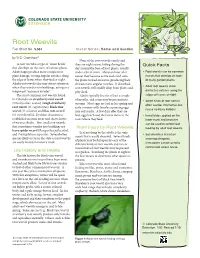
Published by Utah State University Extension and Utah Plant Pest Diagnostic Laboratory ENT-193-18 May 2018 Root Weevils Ryan Davis Arthropod Diagnostician Quick Facts • Root weevils are a group of small, black-to-brown weevils that commonly damage ornamental and small fruit plants in Utah. • Adult root weevil damage is characterized by marginal leaf notching and occasional feeding on buds and young shoots. • Larval root weevil damage occurs below ground; damage to roots can lead to canopy decline or plant death. • Root weevils are occasional nuisance pests in homes and structures mid-summer through fall. • Manage root weevil larvae by applying a systemic insecticide to the soil around host plants April through September. • Adults feeding on the above-ground portion of plants can be targeted with pyrethroid pesticides Black vine weevil adult (Kent Loeffler, Cornell University, Bugwood.org) starting in late June or early July. IDENTIFICATION INTRODUCTION Root weevils are small beetles ranging in length from about 1/4 to 1/3 inch depending on The black vine weevil (Otiorhynchus sulcatus), species. Coloration is variable, but the commonly lilac root weevil (O. meridionalis) strawberry weevil encountered species in Utah are black with gold (O. ovatus) and rough strawberry root weevil (O. flecks (black vine weevil) or solid brown to black, rugosostriatus) are a complex of non-native, snout- shiny or matte. As a member of the weevil family nosed beetles (Coleoptera: Curculionidae) that (Curculionidae), these pests have a snout, but it cause damage to ornamentals and small fruit crops is shortened and rectangular compared to other in Utah. Root weevils are occasional nuisance pests weevils that have long, skinny mouthparts. -
Root Weevils Fact Sheet No
Root Weevils Fact Sheet No. 5.551 Insect Series|Home and Garden by W.S. Cranshaw* None of the root weevils can fly and A root weevil is a type of “snout beetle” they are night active, hiding during the Quick Facts that develops on the roots of various plants. day around the base of host plants, usually Adult stages produce more conspicuous under a bit of cover. About an hour after • Root weevils can be common plant damage, cutting angular notches along sunset they become active and crawl onto insects that develop on roots the edge of leaves when they feed at night. the plants to feed on leaves, producing their of many garden plants. Adult root weevils also may attract attention characteristic angular notches. If disturbed, • Adult root weevils chew when they wander into buildings, acting as a root weevils will readily drop from plants and distinctive notches along the temporary “nuisance invader”. play dead. The most common root weevils found Adults typically live for at least a couple edges of leaves at night. in Colorado are strawberry root weevil of months, and some may be present into • Some kinds of root weevils (Otiorhynchus ovatus), rough strawberry autumn. Most eggs are laid in late spring and often wander into homes but root weevil (O. rugostriatus), black vine early summer with females squeezing eggs cause no injury indoors. weevil (O. sulcatus) and lilac root weevil into soil cracks. A few days after they are (O. meridionalis). Dyslobus decoratus is laid, eggs hatch and the larvae move to the • Insecticides applied on the established in some areas and chews leaves roots where they feed. -

1 Classical Biological Control of Banana Weevil Borer, Cosmopolites Sordidus (Coleoptera; Curculionidae) with Natural Enemies Fr
Classical biological control of banana weevil borer, Cosmopolites sordidus (coleoptera; curculionidae) with natural enemies from Indonesia (With emphasis on west Sumatera) Ahsol Hasyimab, Yusdar Hilmanc aIndonesian Tropical Fruit Research Insitute Jln. Raya Aripan Km 8. Solok, 27301 Indonesia bPresent address: Indonesian Vegetable Research Institute. Jl. Tangkuban Perahu Lembang. Bandung, PO.Box 8413. Bandung 40391, Indonesia c Indonesian Center for Horticulture Research and Development, Jl. Raya Ragunan Pasar Minggu - Jakarta Selatan 12540, Indonesia Email: ahsolhasyim@yahoo.co.id Introduction General basis and protocol for classical biological control Biological control is defined as "the action of parasites (parasitoids), predators or pathogens in Maintaining another organism's population density at a lower average than would occur in their absence" (Debach 1964). Thus, biological control represents the combined effects of a natural enemy complex in suppressing pest populations. The concept of biological control arose from the observed differences in abundance of many animals and plants in their native range compared to areas in which they had been introduced in the absence of (co-evolved) natural enemies. As such, populations of introduced pests, unregulated by their natural enemies may freely multiply and rise to much higher levels than previously observed. Biological control is a component of natural control which describes environmental checks on pest buildup (Debach 1964). In agriculture, both the environment (i.e. farming systems) and natural enemies may be manipulated in an attempt to reduce pest pressure. Classical biological control concerns the search for natural enemies in a pest's area of origin, followed by quarantine and importation into locations where the pest has been introduced. -
The Evolution and Genomic Basis of Beetle Diversity
The evolution and genomic basis of beetle diversity Duane D. McKennaa,b,1,2, Seunggwan Shina,b,2, Dirk Ahrensc, Michael Balked, Cristian Beza-Bezaa,b, Dave J. Clarkea,b, Alexander Donathe, Hermes E. Escalonae,f,g, Frank Friedrichh, Harald Letschi, Shanlin Liuj, David Maddisonk, Christoph Mayere, Bernhard Misofe, Peyton J. Murina, Oliver Niehuisg, Ralph S. Petersc, Lars Podsiadlowskie, l m l,n o f l Hans Pohl , Erin D. Scully , Evgeny V. Yan , Xin Zhou , Adam Slipinski , and Rolf G. Beutel aDepartment of Biological Sciences, University of Memphis, Memphis, TN 38152; bCenter for Biodiversity Research, University of Memphis, Memphis, TN 38152; cCenter for Taxonomy and Evolutionary Research, Arthropoda Department, Zoologisches Forschungsmuseum Alexander Koenig, 53113 Bonn, Germany; dBavarian State Collection of Zoology, Bavarian Natural History Collections, 81247 Munich, Germany; eCenter for Molecular Biodiversity Research, Zoological Research Museum Alexander Koenig, 53113 Bonn, Germany; fAustralian National Insect Collection, Commonwealth Scientific and Industrial Research Organisation, Canberra, ACT 2601, Australia; gDepartment of Evolutionary Biology and Ecology, Institute for Biology I (Zoology), University of Freiburg, 79104 Freiburg, Germany; hInstitute of Zoology, University of Hamburg, D-20146 Hamburg, Germany; iDepartment of Botany and Biodiversity Research, University of Wien, Wien 1030, Austria; jChina National GeneBank, BGI-Shenzhen, 518083 Guangdong, People’s Republic of China; kDepartment of Integrative Biology, Oregon State -

Of the Galapagos Islands, Ecuador
Belgian Journal ofEntomology 5 (2003) : 89-102 A review of the Oedemeridae (Coleoptera) of the Galapagos Islands, Ecuador Stewart B. PECK and Joyce COOK Department of Biology, Carleton University, 1125 Colonel By Drive, Ottawa, K1S 5B6, Canada (e-mail: ste'Yart_peck@carleton.ca). Abstract Extensive new collections contribute new information on the identity and distribution of the oedemerid beetles of the Galiipagos Islands. Specimens previously recorded as near Oxacis pilosa CHAMPION are descn'bed as Oxycopis galapagoensis sp. n. Oxacis pilosa CHAMPION of Guatemala and Nicaragua is transferred to the genus Oxycopis. Hypasclera collenettei (BLAIR) is the most common and widespread species in the islands, and is variable in that it shows significant differences in aedeagus morphology between separate islands. Alloxacis hoodi V AN DYKE is found be a synonym of H. collenettei. H. seymourensis (MUTCHLER) is known only from the central islands. Paroxacis galapagoensis (LINELL) is also widespread. All four Galapagos species are presently considered to be endemic, and each represents a separate ancestral colonization of the archipelago. Keywords: · Hypasclera, Oxycopis, Paroxacis, island insects, endemic species, colonization. Introduction Members of the beetle family Oedemeridae are commonly called the false blister beetles. Adults are found frequently at lights or by sweeping vegetation, and they are obligate pollen feeders (AR.NETT, 1984). Larvae may feed on plant roots or may be inhabitants of moist decaying wood and some may live in salt-soaked driftwood (ARNETT, 1984, KrusKA, 2002). Oedemerids have been described and reported from the Galapagos by several workers: BLAIR (1928; 1933); F'RANZ (1985); LINELL (1898); MUTCHLER (1938); and VAN DYKE (1953). -

Coleoptera: Belidae
Revista de la Sociedad Entomológica Argentina ISSN: 0373-5680 pdellape@fcnym.unlp.edu.ar Sociedad Entomológica Argentina Argentina FERRER, María S.; MARVALDI, Adriana E.; SATO, Héctor A.; GONZALEZ, Ana M. Biological notes on two species of Oxycorynus (Coleoptera: Belidae) associated with parasitic plants of the genus Lophophytum (Balanophoraceae), and new distribution records in Argentina Revista de la Sociedad Entomológica Argentina, vol. 70, núm. 3-4, 2011, pp. 351-355 Sociedad Entomológica Argentina Buenos Aires, Argentina Available in: http://www.redalyc.org/articulo.oa?id=322028524019 How to cite Complete issue Scientific Information System More information about this article Network of Scientific Journals from Latin America, the Caribbean, Spain and Portugal Journal's homepage in redalyc.org Non-profit academic project, developed under the open access initiative ISSN 0373-5680 (impresa), ISSN 1851-7471 (en línea) Rev. Soc. Entomol. Argent. 70 (3-4): 351-355, 2011 351 NOTA CIENTÍFICA Biological notes on two species of Oxycorynus (Coleoptera: Belidae) associated with parasitic plants of the genus Lophophytum (Balanophoraceae), and new distribution records in Argentina FERRER, María S.*, Adriana E. MARVALDI*, Héctor A. SATO** and Ana M. GONZALEZ** * Laboratorio de Entomología, Instituto Argentino de Investigaciones de Zonas Áridas (IADIZA), CCT CONICET- Mendoza, C.C. 507, 5500 Mendoza, Argentina; e-mail for correspondence: msferrer@mendoza-conicet.gob.ar ** Instituto de Botánica del Nordeste C.C. 209. 3400 Corrientes, Argentina Notas biológicas sobre dos especies de Oxycorynus (Coleoptera: Belidae) asociadas con plantas parásitas del género Lophophytum (Balanophoraceae), y nuevos registros de distribución en Argentina RESUMEN. Se brinda nueva información sobre la asociación de gorgojos del género Oxycorynus Chevrolat (Belidae: Oxycoryninae) con plantas parásitas del género Lophophytum Schott & Endl. -

(Coleoptera: Curculionidae) Injury to Soybean: Physiological Response and Injury Guild-Level Economic Injury Levels
University of Nebraska - Lincoln DigitalCommons@University of Nebraska - Lincoln Faculty Publications: Department of Entomology Entomology, Department of 2003 Imported Longhorned Weevil (Coleoptera: Curculionidae) Injury to Soybean: Physiological Response and Injury Guild-Level Economic Injury Levels Thomas E. Hunt University of Nebraska-Lincoln, thunt2@unl.edu Leon G. Higley University of Nebraska-Lincoln, lhigley1@unl.edu Fikru J. Haile Dow AgroSciences Follow this and additional works at: https://digitalcommons.unl.edu/entomologyfacpub Part of the Entomology Commons Hunt, Thomas E.; Higley, Leon G.; and Haile, Fikru J., "Imported Longhorned Weevil (Coleoptera: Curculionidae) Injury to Soybean: Physiological Response and Injury Guild-Level Economic Injury Levels" (2003). Faculty Publications: Department of Entomology. 294. https://digitalcommons.unl.edu/entomologyfacpub/294 This Article is brought to you for free and open access by the Entomology, Department of at DigitalCommons@University of Nebraska - Lincoln. It has been accepted for inclusion in Faculty Publications: Department of Entomology by an authorized administrator of DigitalCommons@University of Nebraska - Lincoln. FIELD AND FORAGE CROPS Imported Longhorned Weevil (Coleoptera: Curculionidae) Injury to Soybean: Physiological Response and Injury Guild-Level Economic Injury Levels 1 2 3 THOMAS E. HUNT, LEON G. HIGLEY, AND FIKRU J. HAILE Department of Entomology, Haskell Agricultural Laboratory, University of Nebraska Northeast Research and Extension Center, 57905 866 Road, Concord, NE 68728 J. Econ. Entomol. 96(4): 1168Ð1173 (2003) ABSTRACT The imported longhorned weevil, Calomycterus setarius Roelofs, is an occasional pest of soybean, Glycine max (L.), and can cause substantial defoliation of seedling soybean when the weevil is present in large numbers. Because weevil populations can reach high levels, the potential exists for signiÞcant seedling injury, so economic injury levels (EILs) are needed for imported longhorned weevil on seedling soybean. -

W024 Cotton Insects: Boll Weevil
Agricultural Extension Service The University of Tennessee W024 Cotton Insects Boll Weevil Scott D. Stewart, Associate Professor Entomology and Plant Pathology Classification and Description America in the 1890s and quickly made their way The boll weevil, Anthonomus grandis grandis across most of the Cotton Belt. Although adults can (Coleoptera: Curculionidae), belongs to a group of beetles characterized by an elongated snout (or probos- cis). The adult boll weevil is about 1⁄4 inch long. Re- cently emerged adults may have a slightly reddish hue, but adult color typically varies from gray or brown to nearly black. The boll weevilʼs snout is about one-half the length of its body. Chewing mouthparts are located at the end of the snout. Boll weevils can generally be separated from other weevils by the presence of two spurs on the femur of each front leg, with the inside spur being larger than the outside spur. Immature life stages, including eggs, larvae and pupae, are found inside squares or bolls. Eggs are small and embedded inside squares and bolls, and thus are not visible. The larval and pupal stages of the boll weevil are found inside squares or bolls. Larvae are white to cream- Boll weevil colored, legless and about 1⁄2 inch long when fully de- veloped. Pupae are also white to cream-colored. Legs, temporarily feed and persist on the pollen of some eyes and mouthparts become visible on pupae as they other plants, this insect can only reproduce on cotton. develop. Life History Hosts and Distribution The boll weevil overwinters as an adult. -
BANANA ROOT-BORER by G
BANANA ROOT-BORER By G. F. MozNETTE 1 Enlomólogical Inspector, Tropical and Subtropical Fruit Insect Investigations, Bureau of Entomology, United States Department of Agriculture INTRODUCTION The existence in Florida of a root-weevil peculiar to the banana was brought to the writer's attention in December, 1917, by the receipt of some specimens from a grower near Larkins, in Dade County, Fla., who advised the writer of serious damage to his banana plants. The insect was determined by Dr. W. Dwight Pierce at Washington, D. C, as the banana root-borer, Cosmopolites sordidus Germar, a dangerous banana pest prevalent in almost every section where bananas are grown for commercial purposes. Since this species and all plants infested with it had been declared to be public nuisances in Florida, the State Plant Board at Gainesville, Fla., was immediately notified, and eradication and inspection work was begun. It was during the eradication and inspec- tion work that the writer, cooperating with members of the State Plant Board, was enabled to make a number of observations on the habits of this species; and it was thought well to publish the following data to aid others who may find this pest of the banana in the State of Florida or wherever bananas are grown. A national quarantine was placed on this species April 1, 1918. This quarantine forbids the importation into the United States from foreign countries where the banana root-borer exists of all species and varieties of banana plants (Musa spp.) or portions thereof, except for experimental and scientific purposes. The spread of the insect from one country to another is probably accomplished by the transportation of infested suckers for planting (u, p. -
Technical Bulletin 228 a Field Guide to Boll Weevil Identification
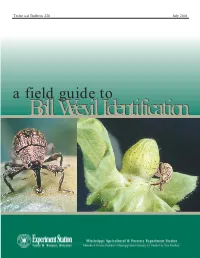
Technical Bulletin 228 July 2001 a field guide to BBolloll WeevilWeevil IdentificationIdentification A Field Guide to Boll Weevil Identification Robert G. Jones Research Entomologist U.S. Department of Agriculture Animal and Plant Health Inspection Service Plant Protection and Quarantine Michael R. Williams Extension Entomologist Department of Entomology and Plant Pathology Mississippi State University For more information, contact Dr. Jones at (662) 320-7423 or rgjones@ra.msstate.edu, or con- tact Dr. Williams at (662) 325-2986 or mwilliams@entomology.msstate.edu. Technical Bulletin 228 was published by the Office of Agricultural Communications, a unit of the Division of the Agriculture, Forestry, and Veterinary Medicine at Mississippi State University. A Field Guide to Boll Weevil Identification INTRODUCTION Identification of boll weevils in both The reduction in the boll weevil Introductioneradication and pest management programs population and the presence of large is critical. Control decisions based on iden- numbers of pheromone traps creates a new tification are major costs to the programs situation for even the most experienced and to cotton growers. Treatments resulting field people. Now, boll weevil scouts are from misidentified boll weevils are disrup- likely to find a variety of other snouted tive, unnecessary, and expensive. Failure to beetles – both in the traps and in the field treat when boll weevils are not correctly – that were not commonly seen before. identified could extend eradication pro- Additionally, differentiation in boll weevil gram operations into extra years. punctures and the small bollworm and Therefore, all identifications of weevils are budworm damage can become more critical. Second opinions should be encour- difficult and takes on new importance. -

Arthropods Associated with Above-Ground Portions of the Invasive Tree, Melaleuca Quinquenervia, in South Florida, USA Author(S): Sheryl L
Arthropods Associated with Above-Ground Portions of the Invasive Tree, Melaleuca quinquenervia, in South Florida, USA Author(s): Sheryl L. Costello, Paul D. Pratt, Min B. Rayamajhi and Ted D. Center Source: The Florida Entomologist, Vol. 86, No. 3 (Sep., 2003), pp. 300-322 Published by: Florida Entomological Society Stable URL: http://www.jstor.org/stable/3496526 . Accessed: 10/09/2014 14:40 Your use of the JSTOR archive indicates your acceptance of the Terms & Conditions of Use, available at . http://www.jstor.org/page/info/about/policies/terms.jsp . JSTOR is a not-for-profit service that helps scholars, researchers, and students discover, use, and build upon a wide range of content in a trusted digital archive. We use information technology and tools to increase productivity and facilitate new forms of scholarship. For more information about JSTOR, please contact support@jstor.org. Florida Entomological Society is collaborating with JSTOR to digitize, preserve and extend access to The Florida Entomologist. http://www.jstor.org This content downloaded from 158.135.136.72 on Wed, 10 Sep 2014 14:40:21 PM All use subject to JSTOR Terms and Conditions 300 Florida Entomologist 86(3) September 2003 ARTHROPODSASSOCIATED WITH ABOVE-GROUNDPORTIONS OF THE INVASIVE TREE, MELALEUCA QUINQUENERVIA, IN SOUTH FLORIDA,USA SHERYL L. COSTELLO, PAUL D. PRATT, MIN B. RAYAMAJHI AND TED D. CENTER USDA-ARS, Invasive Plant Research Laboratory, 3205 College Ave., Ft. Lauderdale, FL 33314 ABSTRACT Melaleuca quinquenervia (Cav.) S. T. Blake, the broad-leaved paperbark tree, has invaded ca. 202,000 ha in Florida, including portions of the Everglades National Park. -
Decision and Finding of No Significant Impact for Field Release of Two
Decision and Finding of No Significant Impact for Field Release of Two Biological Control Agents Boreioglycaspis melaleucae Moore (Hemiptera: Psyllidae) and Lophyrotoma zonalis Rohwer (Hymenoptera: Pergidae) for the Control of Melaleuca quinquenervia (Cav.) S.T. Blake (Myrtales: Myrtaceae) in South Florida Environmental Assessment January 2002 The U.S. Department of Agriculture (USDA), Animal and Plant Health Inspection Service (APHIS), is proposing to issue permits to the USDA, Agricultural Research Service (ARS) for the field release of two biological control agents (Boreioglycaspis melaleucae and Lophyrotoma zonalis) to control Melaleuca quinquenervia populations in the State of Florida. Each agent would be released under authority of a separate permit. Melaleuca was introduced into Florida from its native Australia as an ornamental, for erosion control, and to convert wetlands into productive forest land. It has since replaced native plant species and is causing unforeseen damage to the fragile wetland communities of South Florida. The area of Florida infested with melaleuca includes the Okeechobee Waterway, the Central and Southern Florida Flood Control Project, and the remainder of the State south of State Road 60 between Vero Beach and Tampa. The alternatives available to APHIS are No Action, Issue Permit, and Issue Permit with Conditions. Because of the action being proposed, the Issue Permit and the Issue Permit with Conditions alternatives will result in the release of the biological control agents into the environment. APHIS has therefore analyzed the potential effects of the release of the agents into the environment. The No Action alternative, as described in the environmental assessment (EA), is an ongoing integrated program that has been described and analyzed in an EA prepared by the U.S.