Keynote by Her Majesty Farah Pahlavi
Total Page:16
File Type:pdf, Size:1020Kb
Load more
Recommended publications
-
Shiraz Dissertation Full 8.2.20. Final Format
UNIVERSITY OF CALIFORNIA SAN DIEGO The Shiraz Arts Festival: Cultural Democracy, National Identity, and Revolution in Iranian Performance, 1967-1977 A dissertation submitted in partial satisfaction of the requirements for the degree Doctor of Philosophy In Music By Joshua Jamsheed Charney Committee in charge: Professor Anthony Davis, Co-Chair Professor Jann Pasler, Co-Chair Professor Aleck Karis Professor Babak Rahimi Professor Shahrokh Yadegari 2020 © Joshua Jamsheed Charney, 2020 All rights reserved. The dissertation of Joshua Jamsheed Charney is approved, and it is acceptable in quality and form for publication on microfilm and electronically: _____________________________________________________________ _____________________________________________________________ _____________________________________________________________ _____________________________________________________________ Co-chair _____________________________________________________________ Co-Chair University of California San Diego 2020 iii EPIGRAPH Oh my Shiraz, the nonpareil of towns – The lord look after it, and keep it from decay! Hafez iv TABLE OF CONTENTS Signature Page…………………………………………………………………… iii Epigraph…………………………………………………………………………. iv Table of Contents………………………………………………………………… v Acknowledgements……………………………………………………………… vii Vita………………………………………………………………………………. viii Abstract of the Dissertation……………………………………………………… ix Introduction……………………………………………………………………… 1 Chapter 1: Festival Overview …………………………………………………… 17 Chapter 2: Cultural Democracy…………………………………………………. -

Women Musicians and Dancers in Post-Revolution Iran
Negotiating a Position: Women Musicians and Dancers in Post-Revolution Iran Parmis Mozafari Submitted in accordance with the requirements for the degree of Doctor of Philosophy The University of Leeds School of Music January 2011 The candidate confIrms that the work submitted is her own and that appropriate credit has been given where reference has been made to the work of others. This copy has been supplied on the understanding that it is copyright material and that no quotation from the thesis may be published without proper acknowledgement. 2011 The University of Leeds Parmis Mozafari Acknowledgment I would like to express my gratitude to ORSAS scholarship committee and the University of Leeds Tetly and Lupton funding committee for offering the financial support that enabled me to do this research. I would also like to thank my supervisors Professor Kevin Dawe and Dr Sita Popat for their constructive suggestions and patience. Abstract This research examines the changes in conditions of music and dance after the 1979 revolution in Iran. My focus is the restrictions imposed on women instrumentalists, dancers and singers and the ways that have confronted them. I study the social, religious, and political factors that cause restrictive attitudes towards female performers. I pay particular attention to changes in some specific musical genres and the attitudes of the government officials towards them in pre and post-revolution Iran. I have tried to demonstrate the emotional and professional effects of post-revolution boundaries on female musicians and dancers. Chapter one of this thesis is a historical overview of the position of female performers in pre-modern and contemporary Iran. -

US Covert Operations Toward Iran, February-November 1979
This article was downloaded by: [Tulane University] On: 05 January 2015, At: 09:36 Publisher: Routledge Informa Ltd Registered in England and Wales Registered Number: 1072954 Registered office: Mortimer House, 37-41 Mortimer Street, London W1T 3JH, UK Middle Eastern Studies Publication details, including instructions for authors and subscription information: http://www.tandfonline.com/loi/fmes20 US Covert Operations toward Iran, February–November 1979: Was the CIA Trying to Overthrow the Islamic Regime? Mark Gasiorowski Published online: 01 Aug 2014. Click for updates To cite this article: Mark Gasiorowski (2015) US Covert Operations toward Iran, February–November 1979: Was the CIA Trying to Overthrow the Islamic Regime?, Middle Eastern Studies, 51:1, 115-135, DOI: 10.1080/00263206.2014.938643 To link to this article: http://dx.doi.org/10.1080/00263206.2014.938643 PLEASE SCROLL DOWN FOR ARTICLE Taylor & Francis makes every effort to ensure the accuracy of all the information (the “Content”) contained in the publications on our platform. However, Taylor & Francis, our agents, and our licensors make no representations or warranties whatsoever as to the accuracy, completeness, or suitability for any purpose of the Content. Any opinions and views expressed in this publication are the opinions and views of the authors, and are not the views of or endorsed by Taylor & Francis. The accuracy of the Content should not be relied upon and should be independently verified with primary sources of information. Taylor and Francis shall not be liable for any losses, actions, claims, proceedings, demands, costs, expenses, damages, and other liabilities whatsoever or howsoever caused arising directly or indirectly in connection with, in relation to or arising out of the use of the Content. -
The Death of an Emperor €“ Mohammad Reza Shah Pahlavi
The death of an emperor – Mohammad Reza Shah Pahlavi and his political cancer Khoshnood, Ardavan; Khoshnood, Arvin Published in: Alexandria Journal of Medicine DOI: 10.1016/j.ajme.2015.11.002 2016 Document Version: Publisher's PDF, also known as Version of record Link to publication Citation for published version (APA): Khoshnood, A., & Khoshnood, A. (2016). The death of an emperor – Mohammad Reza Shah Pahlavi and his political cancer. Alexandria Journal of Medicine, 52(3), 201-208. https://doi.org/10.1016/j.ajme.2015.11.002 Total number of authors: 2 Creative Commons License: CC BY-NC-ND General rights Unless other specific re-use rights are stated the following general rights apply: Copyright and moral rights for the publications made accessible in the public portal are retained by the authors and/or other copyright owners and it is a condition of accessing publications that users recognise and abide by the legal requirements associated with these rights. • Users may download and print one copy of any publication from the public portal for the purpose of private study or research. • You may not further distribute the material or use it for any profit-making activity or commercial gain • You may freely distribute the URL identifying the publication in the public portal Read more about Creative commons licenses: https://creativecommons.org/licenses/ Take down policy If you believe that this document breaches copyright please contact us providing details, and we will remove access to the work immediately and investigate your claim. LUND UNIVERSITY PO Box 117 221 00 Lund +46 46-222 00 00 Download date: 02. -

Festival of Arts Shiraz-Persepolis1 OR You Better Believe in As Many As Six Impossible Things Before Breakfast
Updated and illustrated version of a paper originally commissioned by the Asia Society for The Shiraz Arts Festival: A Global Vision Revisited, a symposium held in New York on October 5, 2013. Festival of Arts Shiraz-Persepolis1 OR You better believe in as many as six impossible things before breakfast By Mahasti Afshar OVERVIEW2 1st Shiraz Arts he Shiraz-Persepolis Festival of Arts was an international Festival poster 1967 Tfestival held in Iran every summer for eleven years, 1967-1977. Jashn-e Honar-e Shiraz as it was popularly known in Persian was an inspired and feverish exploration, experimentation and creative conversation between Iran and the outside world that unfolded primarily through music, drama, dance and film. The programs started at 10 a.m. every day and ended at 1 or 2 a.m. the next, staggered across ancient, medieval and modern venues, some natural, some formal, others makeshift, in Shiraz, or forty miles 11th Festival 1977 Poster design: northeast at the Achaemenid ruins of Persepolis and Naqsh-e Qobad Shiva Rostam. True to its mission, the festival’s ecosystem cut across time and other boundaries, refreshing the traditional, celebrating the classical, nurturing the experimental, and stimulating a dialogue across generations, cultures, and languages, East and West, North and South. 1 The official English title in festival catalogues published annually, 1967-1977. CONTENTS 2 The primary printed sources for content and images for this report include the Shiraz Festival OVERVIEW catalogues, bulletins, program notes, and Tamasha Magazine, 1967-1977. Supplemental data were provided by individuals with firsthand knowledge of the Festival, Reza Ghotbi, Sheherazade PROGRAMS Afshar, Bijan Saffari, and Arby Ovanessian, as well as Parviz Sayyad and Mohammad-Baqer Ghaffari. -

Text of the Message by Shahbanou Farah Pahlavi on the Occasion of the Passing of Mrs. Jehan Sadat 18 Tir 1400- 9 July 2021 T
Text of The Message by Shahbanou Farah Pahlavi On the Occasion of The passing of Mrs. Jehan Sadat 18 Tir 1400- 9 July 2021 The world just lost an illustrious personality of stellar qualities. I am bereaved by the loss of a dear friend who in the darkest days of our family’s life stood by our side and overwhelmed us by her kindness and friendship. Some forty years have indeed gone since President Anvar Sadat welcomed us to the ancient land of Egypt at a time no country was willing to receive us, a memory which is deeply anchored in the collective memory of Iranians. My children and I shall always treasure the memory of the cordiality and kindness that was extended to us by President and Lady Jahan Sadat and their children. In the course of these difficult years, whenever my family and I travelled to Cairo to mark the anniversary of the death of my husband, the late Shah of Iran, Jahan Sadat was there with us to lighten the distress and burden of adversities we had all endured. She was a true companion and great support by the side of her illustrious husband through the most challenging times; she took great strides for the promotion of rights and status of Egyptian women. Her name as one of the most effective advocates of gender equality and non-discrimination against women shall remain in annals. I wish to express my heartfelt condolences over the loss of this dear and inestimable friend to her children, Gamal, Lola, Noha and Jehan. May she rest in peace and her memory endure. -
Introduction to Persian Traditional Music
1/9/14 Beyond the Veil: Persian Traditional Music http://www.internews.org/visavis/BTVPagesInews/Persian_trad_music.html Go NOV JAN FEB 110 captures 14 3 Feb 99 ‑ 11 Oct 13 2007 2008 2009 IN THIS SECTION | The Iranian Cinema | Literature| Persian Traditional Music Introduction to Persian Traditional Music by SHAHROKH YADEGARI IN THIS ARTICLE The Influence of Islam The Marriage of Melody with Poetry Radif the foundation of skilled improvisation Popularization and return to roots After the 1979 Revolution Links and recommended recordings The music of Iran has changed considerably in the past 25 years, which incidentally is the period of the Islamic Revolution and the establishment of theocracy in Iran. It is an open question whether Iranian music has changed as a direct result of the Revolution, or whether the music would have evolved similarly in any case. Before 1979, one could easily have separated Persian music into two distinct categories: art music and pop music. The strong censorship practiced before the Revolution required the music to be void of any political messages, and most of the time pop music was the form presented on The National Radio and Television of Iran. Broadcasts of traditional music performances usually ran no longer than 15 minutes. This restriction was established by the producers and had the effect of cramping the music and its form. One can compare traditional Persian music to the classical music of the West, which one should listen to from the beginning to the end with full attention. This form of Iranian music is based on improvisation and has a very inward quality. -
ABSTRACT BIZIEFF, MICHAEL PATRICK. Jimmy Carter and the Shah
ABSTRACT BIZIEFF, MICHAEL PATRICK. Jimmy Carter and the Shah: US Foreign Relations with Iran a Year before the Fall of the Shah (Under the direction of Dr. Nancy Mitchell). This thesis investigates US relations with Iran by focusing on the Shah of Iran’s visit to Washington D.C. in November 1977, President Carter’s visit to Tehran the following December, and the US response to the protests in Qom a week after Carter’s departure. It analyses the objectives of the two visits as well as their impact. It then looks at the tragic moment when the Iranian government fired on protestors in Qom. By focusing on this two-month period, which is considered the beginning of the Iranian Revolution, this thesis deepens our understanding of the Carter administration’s policies toward Iran prior to the Iranian Revolution. © Copyright 2019 by Michael Bizieff All Rights Reserved Jimmy Carter and the Shah: US Relations with Iran a Year before the Fall of the Shah by Michael Patrick Bizieff A thesis submitted to the Graduate Faculty of North Carolina State University in partial fulfillment of the requirements for the degree of Master of Arts History Raleigh, North Carolina 2019 APPROVED BY: _______________________________ _______________________________ Dr. Nancy Mitchell Dr. Katherine Mellen Charron Committee Chair _______________________________ _______________________________ Dr. Julia Rudolph Dr. Golbarg Rekabtalaei External Member ii DEDICATION I dedicate this thesis to my Lord and Savior Jesus Christ, and my two beautiful children, Tristan James and Thea Noël Bizieff. iii BIOGRAPHY Michael Patrick Bizieff received his undergraduate degree from North Carolina State University in Raleigh, North Carolina. -

Masters of Persian Classical Music Sunday, February 27, 2005, 7 Pm Zellerbach Hall
CAL PERFORMANCES PRESENTS Masters of Persian Classical Music Sunday, February 27, 2005, 7 pm Zellerbach Hall Mohammad Reza Shajarian, vocals Hossein Alizadeh, tar Kayhan Kalhor, kamancheh Homayoun Shajarian, tombak This tour is organized by World Music Institute, New York Masters of Persian Music’s New Double CD Faryad is available on the World Village label This performance has been made possible in part by the Friends of Cal Performances. Cal Performances thanks the William and Flora Hewlett Foundation, The Wallace Foundation, and the Zellerbach Family Foundation for their generous support. 27 CAL PERFORMANCES PROGRAM Saz va Avaz (instrument and vocal improvisation) Mohammad Reza Shajarian and Kayhan Kalhor Instrumental piece Raqs-e Zar Tasnif-e Niyayesh Poetry by Sohrab Sepeheri Tasnif-e Bezan Zakhmeh Poetry by Shafe’ie Kadkani Compositions by Hossein Alizadeh INTERMISSION Dastgah Avaz-e Bayat-e Zand Moghadammeh Najva* (Whisper) Poetry by Sa’adi Saz va Avaz Ghazal by Sa’adi Nowrooz* (instrumental) Saz va Avaz Tasnif-e Selseleh Mou** Chaharmezrab Saz va Avaz (in Dashti) Tasnif-e Mara raha kon*** Poetry by Mowlana, Masnavi Tasnif-e Dayreh Fani Poetry by Mowlana * composed by Hossein Alizadeh **anonymous composer ***based on a Kurdish melody by S. Ali Asghar Kurdestani, the distinguished singer of the Qajar period 28 CAL PERFORMANCES ABOUT THE ARTISTS Mohammad Reza Shajarian is the undisputed Tehran in 1975, where he received his degree in master of Persian traditional (classical) singing and composition and performance. During the same is regarded as a national treasure by both musicians period he studied with various ostads of traditional and music lovers. -

Case Studyan Investigation of Tourists' Attitudes Towards Promoting Music
Tourism Management Perspectives 24 (2017) 1–6 Contents lists available at ScienceDirect Tourism Management Perspectives journal homepage: www.elsevier.com/locate/tmp Case study An investigation of tourists' attitudes towards promoting music niche tourism (case study: Isfahan, Iran) Neda Torabi Farsani ⁎,ZahedShafiei, Amin Adilinasab, Sadreddin Taheri Department of Museum and Tourism, Art University of Isfahan, Isfahan, Iran article info abstract Article history: Niche tourism can be a novel strategy for preserving specific heritage. Music tourism, art tourism, literary tour- Received 3 May 2017 ism, architectural tourism etc. constitute good examples. This paper highlights the introduction of Isfahan city Received in revised form 9 June 2017 (Iran) as a new music tourism destination. Moreover, this research has four major purposes: 1) to identify the Accepted 5 July 2017 attractions and heritage for promoting music tourism in Isfahan; 2) to investigate the attitude of tourists towards Available online xxxx music tourism development; 3) to measure tourists' awareness of this niche market; and 4) to measure the atti- Keywords: tude of tourists towards participating in music tours. This study was conducted in Isfahan, Iran. On the basis of the Attitude results of this study it can be concluded that domestic tourists are not familiar with the music tourism concept; Isfahan however, domestic and international tourists are interested in music tourism development in Isfahan city and Music they have a high interest in participating in music tours. Music tourism © 2017 Elsevier Ltd. All rights reserved. Niche tourism 1. Introduction 2. Literature review According to Robinson and Novelli (2005), niche tourism is in oppo- Nowadays, music as tangible (musical instruments) and intangible sition to mass tourism and represents diversity and ways of marking dif- (musical instrument sounds; singing; folk music; traditional music ference. -
In an Exclusive Interview with Canvas , Her Majesty Farah
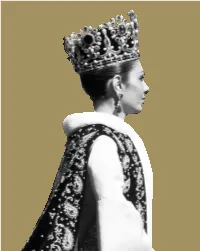
38 THE QUeeN OF CULTURE HER MAJESTY FARAH PAHLAVI In her 20-year tenure as Empress of Iran, Her Majesty Farah Pahlavi was patron to 12 artistic institutions and presided over 26 educational, health, sports and cultural organisations, among them non-governmental entities. In an exclusive interview with Canvas, she reveals unchanged and enduring passions: art, culture, her compatriots and her beloved Iran. 39 artpatron TEXT BY MYRNA AYAD PHOTOGRAPHY BY JEAN-LUC DOLMAIRE ess than 10 minutes into my interview with Her which was wonderful. Slowly, they began to acquire art and Majesty Farah Pahlavi, she has already mentioned orient towards culture.” serving the people of Iran twice. First, to explain her reasons behind pursuing architecture at the École Spéciale Calling for Culture d’Architecture in Paris in 1957 – “It meant building for the Fifty years since she married the late Shah of Iran, Mohammed people. Not just in terms of houses, but for a society.” And Reza Pahlavi, the seeds that Her Majesty sowed into the Iranian second, when I ask what inspired her cultural contribution to Contemporary art field continue to bear fruit. Big names she Iran – “My country is so culturally rich, I wanted to protect what had patronised, such as Charles Hossein Zenderoudi (Canvas we have historically for the people. We can’t only live in the past 5.5), Bahman Mohasses, Faramarz Pilaram, Iran Daroudi, and I wanted to support the young Contemporary artists for Parviz Tanavoli (Canvas 4.2) and Nasser Ovissi – a work by the future generations.” And so she did, primarily by encouraging latter being “my first purchase” – are now among the hottest private businesses, individuals and government entities to build collections and publish books. -
1 Presenting Traditions with Practical and Contemporary Expression in The
Presenting traditions with practical and contemporary expression in the Royal Costume Museum of Saad Abad Cultural & Historical complex Sara Kariman Expert of Research Department and Library of Saad Abad Cultural and Historical Complex Tehran, Iran Abstract The Royal Costume Museum of the Cultural and Historical Complex of Saad Abad 1(1921) has over 200 examples of contemporary royal clothing. The Museum has a collection of handicrafts and decorative arts related to clothing and, in fact, it is the only exclusive clothing museum in the country. Indeed, the contemporary history of Iranian royal clothing (before the Islamic Revolution of 1978) can be divided into two periods: in the first period clothing used was mainly influenced by Western fashion trends and purchased from European companies. In the second period there is the strong use of Iranian elements and arts, especially in the clothes worn at official ceremonies. The 1960s and '70s, initiated a combination of original Persian sewing and fabric with modern designs. As a result of this trend, a number of very lavish dresses, including highly embroidered needlework, handmade textiles, and velvet flowers, are kept at this museum today. This initiative, which was actually the beginning of a movement that is still ongoing, is the revival of Persian arts and traditions in contemporary and applied forms. Contents Introduction The contemporary history of the royal costume of Iran (1925-1979) Post- colonial discourse in Iranian art during 60's- 70's Mass production of ethnic art and handcraft The future of traditions Endnotes References Introduction Apparel is one of the most important indices of indigenous and ethnic culture of any country, and includes numerous artistic and anthropological concepts.