David Rakowski: Stolen Moments Piano Concerto No
Total Page:16
File Type:pdf, Size:1020Kb
Load more
Recommended publications
-
In the Player Piano Conventional Piano
;- THE AMICA NEWS BULLETIN OF THE AUTOMATIC MUSICAL INSTRUMENT COLLECTORS' ASSOCIATION NOVEMBER 1978 VOLUME 15 NUMBER 9 INTERNATlONAL OFFICERS CHAPTER OFFICERS PRESIDENT Bob Rosencrans 36 Hampden Rd. NO. CALIFORNIA Upper Darby, PA 19082 Pres.: Howard Koff Vice Pres: Phil McCoy VICE PRESIDENT Sec. David Fryman Bill Eicher Treas.: Bob Wilcox 465 Winding Way Reporter: Stuart Hunter Dayton, OH 45429 SO. CALIFORNIA Pres.: Francis Cherney SECRETARY Vice Pres.: Mary Lilien Jim Weisenborne Sec.: Greg Behnke AMICA MEMBERSHIP RATES: 73 Nevada St. Treas.: Roy Shelso Rochester, MI 48063 Reporter: Bill Toeppe Continuing Members: $1 S Dues TEXAS New Members, add $S processing fee PUBLISHER Pres.: Haden Vandiver Tom Beckett Vice Pres.: Bill Flynt Lapsed Members, add $3 processing fee 681 7 CI iffbrook SeclTreas.: Charlie Johnson Dallas, TX 75240 Reporter: Dick Barnes MIDWEST MEMBERSHIP SECRETARY Pres.: Bennet Leedy (New memberships and Vice Pres .. Jim Prendergast mailing problems) Sec.: Jim Weisenborne THE AMICA NEWS BULLETIN Charlie W Johnson Treas.: Alvin Wulfekuhl PO. Box 38623 Reporter: Molly Yeckley Dallas, Texas 75238 PHILADELPHIA AREA TREASURER Pres.: Mike Naddeo Published by the Automatic Musical Instrument Collectors' Jack & Mary Riffle Vice Pres. John Berry Association, a non-profit club devoted to the restoration, distribu 5050 Eastside Calpella Rd. Sec. Dick Price tion and enjoyment of musical instruments using perforated paper Ukiah, CA 95482 Treas: Claire Lambert music rolls. Reporter: Allen Ford Contributions: All subjects of interest to readers of the bulletin BOARD REPRESENTATIVES SOWNY (So. Ontario, West NY) are encouraged and invited by the publisher. All articles must be N. Cal. Frank Loob Pres.: Chuck Hannen received by the 10th of the preceding month. -

Amjad Ali Khan & Sharon Isbin
SUMMER 2 0 2 1 Contents 2 Welcome to Caramoor / Letter from the CEO and Chairman 3 Summer 2021 Calendar 8 Eat, Drink, & Listen! 9 Playing to Caramoor’s Strengths by Kathy Schuman 12 Meet Caramoor’s new CEO, Edward J. Lewis III 14 Introducing in“C”, Trimpin’s new sound art sculpture 17 Updating the Rosen House for the 2021 Season by Roanne Wilcox PROGRAM PAGES 20 Highlights from Our Recent Special Events 22 Become a Member 24 Thank You to Our Donors 32 Thank You to Our Volunteers 33 Caramoor Leadership 34 Caramoor Staff Cover Photo: Gabe Palacio ©2021 Caramoor Center for Music & the Arts General Information 914.232.5035 149 Girdle Ridge Road Box Office 914.232.1252 PO Box 816 caramoor.org Katonah, NY 10536 Program Magazine Staff Caramoor Grounds & Performance Photos Laura Schiller, Publications Editor Gabe Palacio Photography, Katonah, NY Adam Neumann, aanstudio.com, Design gabepalacio.com Tahra Delfin,Vice President & Chief Marketing Officer Brittany Laughlin, Director of Marketing & Communications Roslyn Wertheimer, Marketing Manager Sean Jones, Marketing Coordinator Caramoor / 1 Dear Friends, It is with great joy and excitement that we welcome you back to Caramoor for our Summer 2021 season. We are so grateful that you have chosen to join us for the return of live concerts as we reopen our Venetian Theater and beautiful grounds to the public. We are thrilled to present a full summer of 35 live in-person performances – seven weeks of the ‘official’ season followed by two post-season concert series. This season we are proud to showcase our commitment to adventurous programming, including two Caramoor-commissioned world premieres, three U.S. -

Making Musical Magic Live
Making Musical Magic Live Inventing modern production technology for human-centric music performance Benjamin Arthur Philips Bloomberg Bachelor of Science in Computer Science and Engineering Massachusetts Institute of Technology, 2012 Master of Sciences in Media Arts and Sciences Massachusetts Institute of Technology, 2014 Submitted to the Program in Media Arts and Sciences, School of Architecture and Planning, in partial fulfillment of the requirements for the degree of Doctor of Philosophy in Media Arts and Sciences at the Massachusetts Institute of Technology February 2020 © 2020 Massachusetts Institute of Technology. All Rights Reserved. Signature of Author: Benjamin Arthur Philips Bloomberg Program in Media Arts and Sciences 17 January 2020 Certified by: Tod Machover Muriel R. Cooper Professor of Music and Media Thesis Supervisor, Program in Media Arts and Sciences Accepted by: Tod Machover Muriel R. Cooper Professor of Music and Media Academic Head, Program in Media Arts and Sciences Making Musical Magic Live Inventing modern production technology for human-centric music performance Benjamin Arthur Philips Bloomberg Submitted to the Program in Media Arts and Sciences, School of Architecture and Planning, on January 17 2020, in partial fulfillment of the requirements for the degree of Doctor of Philosophy in Media Arts and Sciences at the Massachusetts Institute of Technology Abstract Fifty-two years ago, Sergeant Pepper’s Lonely Hearts Club Band redefined what it meant to make a record album. The Beatles revolution- ized the recording process using technology to achieve completely unprecedented sounds and arrangements. Until then, popular music recordings were simply faithful reproductions of a live performance. Over the past fifty years, recording and production techniques have advanced so far that another challenge has arisen: it is now very difficult for performing artists to give a live performance that has the same impact, complexity and nuance as a produced studio recording. -
The Meshuggah Quartet
The Meshuggah Quartet Applying Meshuggah's composition techniques to a quartet. Charley Rose jazz saxophone, MA Conservatorium van Amsterdam, 2013 Advisor: Derek Johnson Research coordinator: Walter van de Leur NON-PLAGIARISM STATEMENT I declare 1. that I understand that plagiarism refers to representing somebody else’s words or ideas as one’s own; 2. that apart from properly referenced quotations, the enclosed text and transcriptions are fully my own work and contain no plagiarism; 3. that I have used no other sources or resources than those clearly referenced in my text; 4. that I have not submitted my text previously for any other degree or course. Name: Rose Charley Place: Amsterdam Date: 25/02/2013 Signature: Acknowledgment I would like to thank Derek Johnson for his enriching lessons and all the incredibly precise material he provided to help this project forward. I would like to thank Matis Cudars, Pat Cleaver and Andris Buikis for their talent, their patience and enthusiasm throughout the elaboration of the quartet. Of course I would like to thank the family and particularly my mother and the group of the “Four” for their support. And last but not least, Iwould like to thank Walter van de Leur and the Conservatorium van Amsterdam for accepting this project as a master research and Open Office, open source productivity software suite available on line at http://www.openoffice.org/, with which has been conceived this research. Introduction . 1 1 Objectives and methodology . .2 2 Analysis of the transcriptions . .3 2.1 Complete analysis of Stengah . .3 2.1.1 Riffs . -

City Research Online
City Research Online City, University of London Institutional Repository Citation: Pace, I. (2017). Michael Finnissy - The Piano Music (10 and 11) - Brochure from Conference 'Bright Futures, Dark Pasts'. This is the other version of the paper. This version of the publication may differ from the final published version. Permanent repository link: https://openaccess.city.ac.uk/id/eprint/17523/ Link to published version: Copyright: City Research Online aims to make research outputs of City, University of London available to a wider audience. Copyright and Moral Rights remain with the author(s) and/or copyright holders. URLs from City Research Online may be freely distributed and linked to. Reuse: Copies of full items can be used for personal research or study, educational, or not-for-profit purposes without prior permission or charge. Provided that the authors, title and full bibliographic details are credited, a hyperlink and/or URL is given for the original metadata page and the content is not changed in any way. City Research Online: http://openaccess.city.ac.uk/ publications@city.ac.uk BRIGHT FUTURES, DARK PASTS Michael Finnissy at 70 Conference at City, University of London January 19th-20th 2017 Bright Futures, Dark Pasts Michael Finnissy at 70 After over twenty-five years sustained engagement with the music of Michael Finnissy, it is my great pleasure finally to be able to convene a conference on his work. This event should help to stimulate active dialogue between composers, performers and musicologists with an interest in Finnissy’s work, all from distinct perspectives. It is almost twenty years since the publication of Uncommon Ground: The Music of Michael Finnissy (Aldershot: Ashgate, 1998). -

Kyle Gann, the Music of Conlon Nancarrow, the Music
Preface My first thanks must go to Stuart Smith, who got me started on this project and spent tremendous unrecompensed time reading and ofFering suggestions. 1 I profusely thank H. Wiley Hitchcock for his help, advice, and encouragement in this project as in so many other?. Trimpin became my comrade in Nancarrow scholarship, giving me pages and pages of helpful computerized charts over steins The music: general considerations German beer. Peter Garland, Sylvia Srmth, and Don Gillespie provided me with scores, James Tenney with the unpublished works and some helpful analytical advice. Charles Amirkhanian smoothed my way to a composer reputed to be difficult to approach. Eva Soltes, Helen Zimbler, WiUiam Duckworth, and Carlos Sandoval contributed valuable information. Doug Simmons provided expert editing advice. Penny Souster made the book possible. My wife Nancy Cook, Compared to the musical traditions of Africa, India, and Indonesia, European who became a “Nancarrow widow” the way some women become football wid classical music has always been rhythmically limited. As sOon as American com ows, accepted my idee fixe witfc humor and love. Yoko Seguira, Mrs Nancarrow, posers broke away firom Europe following World War I, they made an aggressive was a warm, funny, and helpful informant, and a gracious hostess. And Charles attempt to remedy this deficiency. They found themselves thwarted, however, Nancarrow, since departed, treated me to a defightful evening of reminiscence. first by the difficulty of notating extreme rhythmic complexity,-then by the greater Most of all I thank C)onlon Nancarrow for cooperating in every possible obstacle of getting performers to execute their rhythms acfcurately. -

Music Making Politics: Beyond Lyrics
Politik Nummer 1 | Årgang 23 | 2020 Music making politics: beyond lyrics M.I. Franklin, Professor of Global Media and Politics, Goldsmiths University of London In this article I argue that considering how any sort of music is made more closely - as sonic material, performance cultures, for whom and on whose terms, is integral to pro- jects exploring the music-politics nexus. The case in point is “My Way”, a seemingly apo- litical song, as it becomes repurposed: transformed through modes of performance, unu- sual musical arrangements, and performance contexts. The analysis reveals a deeper, underlying politics of music-making that still needs unpacking: the race, gender, and class dichotomies permeating macro- and micro-level explorations into the links between music, society, and politics. Incorporating a socio-musicological analytical framework that pays attention to how this song works musically, alongside how it can be reshaped through radical performance and production practices, shows how artists in diverging contexts can ‘re-music’ even the most hackneyed song into a form of political engage- ment. Introduction In 2016, Bob Dylan was awarded the Nobel Prize for Literature. In 2018 Kendrick Lamar became the first Rap artist to win the Pulitzer Prize for Music. Between these two medi- atized moments of public recognition, across the race and genre divides of contemporary culture lie many musico-political timelines, recording careers, playlists, and embodied musicalities. This article aims to show why, and how theory and research into the rela- tionship between (the study of) politics and music-making need to move beyond indica- tors of political relevance that are based on lyrics, an artist’s public persona, public profile or critical acclaim. -
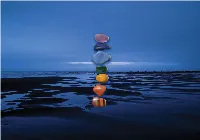
Rmc193chiprograml5.Pdf
SATURDAY APRIL 29, 2017 | 7:30 PM | ROCKEFELLER CHAPEL A TRIPTYCH: Earth, Moon, Peace Works of Augusta Read Thomas Played by Spektral Quartet and Third Coast Percussion ROCKEFELLER CHAPEL | UNIVERSITY OF CHICAGO OF UNIVERSITY 2 PROGRAM The program is performed without intermission, although there will be brief pauses for resetting the stage. You are warmly invited to a wine and cheese reception here in the Chapel after the concert, with refreshments served from the west transept. You will also find CDs on sale. RAINBOW BRIDGE TO PARADISE SELENE Moon Chariot Rituals 2016 2015 3 Russell Rolen CELLO Spektral Quartet Third Coast Percussion and CHI CHI | A TRIPTYCH: EARTH, MOON, PEACE CHI for string quartet RESOUNDING EARTH 2017 World première 2012 I CHI vital life force I INVOCATION pulse radiance II AURA atmospheres, colors, vibrations II PRAYER star dust orbits III MERIDIANS zeniths III MANTRA ceremonial time shapes IV CHAKRAS center of spiritual power in the body IV REVERIE CARILLON crystal lattice Spektral Quartet Third Coast Percussion Clara Lyon VIOLIN David Skidmore Maeve Feinberg VIOLIN Peter Martin Doyle Armbrust VIOLA Robert Dillon Russell Rolen CELLO Sean Connors ABOUT THIS CONCERT Like most works of art, tonight’s concert came into Enter Spektral Quartet (or re-enter, for this being through the confluence of flashes of desire, conversation also had begun, allegro con spirito, some snippets of conversation, and the sudden alignment of eons before). On March 7, 2015, the cosmic lights went energies sparked by the commissioning of a new work. green and we knew we had a program: Selene, to be The flash of desire came just over three years ago. -

Red Note New Music Festival Program, 2013 School of Music Illinois State University
Illinois State University ISU ReD: Research and eData Red Note New Music Festival Music 2013 Red Note New Music Festival Program, 2013 School of Music Illinois State University Follow this and additional works at: https://ir.library.illinoisstate.edu/rnf Part of the Music Commons Recommended Citation School of Music, "Red Note New Music Festival Program, 2013" (2013). Red Note New Music Festival. 7. https://ir.library.illinoisstate.edu/rnf/7 This Book is brought to you for free and open access by the Music at ISU ReD: Research and eData. It has been accepted for inclusion in Red Note New Music Festival by an authorized administrator of ISU ReD: Research and eData. For more information, please contact ISUReD@ilstu.edu. calendar of events SUNDAY, MARCH 3, 2013 3 PM COMPOSER PRESENTATION CENTER FOR THE PERFORMING ARTS David Kirkland Garner centennial east building, room 229 2 - 2:50 pm the illinois state university wind symphony, conducted by daniel belongia, performs music composer david kirkland garner, winner of the by scott lindroth, john mackey, and paul dooley, composition competition, presents on his music as well as marcus maroney’s “rochambeau” (winner of the red note call for scores). COMPOSER Q&A - Tony Solitro MONDAY, MARCH 4, 2013 2-4 PM Kemp Recital Hall 4 - 5:30 pm KEMP RECITAL HALL composer tony solitro discusses his vocal music and career as a composer of opera and songs chicago-based spektral quartet leads a master class for string students in the illinois state university school of music string studio. TUESDAY, MARCH 5, 2013 8 PM KEMP RECITAL HALL MONDAY, MARCH 4, 2013 8 PM KEMP RECITAL HALL illinois state university faculty members and guest pianist blair mcmillen perform works of guest composer joan tower. -
Adapting and Applying Central Javanese Gamelan Music Theory in Electroacoustic Composition and Performance
Middlesex University Research Repository An open access repository of Middlesex University research http://eprints.mdx.ac.uk Matthews, Charles Michael (2014) Adapting and applying central Javanese gamelan music theory in electroacoustic composition and performance. PhD thesis, Middlesex University. [Thesis] Final accepted version (with author’s formatting) This version is available at: https://eprints.mdx.ac.uk/14415/ Copyright: Middlesex University Research Repository makes the University’s research available electronically. Copyright and moral rights to this work are retained by the author and/or other copyright owners unless otherwise stated. The work is supplied on the understanding that any use for commercial gain is strictly forbidden. A copy may be downloaded for personal, non-commercial, research or study without prior permission and without charge. Works, including theses and research projects, may not be reproduced in any format or medium, or extensive quotations taken from them, or their content changed in any way, without first obtaining permission in writing from the copyright holder(s). They may not be sold or exploited commercially in any format or medium without the prior written permission of the copyright holder(s). Full bibliographic details must be given when referring to, or quoting from full items including the author’s name, the title of the work, publication details where relevant (place, publisher, date), pag- ination, and for theses or dissertations the awarding institution, the degree type awarded, and the date of the award. If you believe that any material held in the repository infringes copyright law, please contact the Repository Team at Middlesex University via the following email address: eprints@mdx.ac.uk The item will be removed from the repository while any claim is being investigated. -

Teaching Post-Tonal Music to Twenty-First- Century Students Author(S): Miguel A
Department of Music Theory, Jacobs School of Music, Indiana University A Pedagogical and Psychological Challenge: Teaching Post-Tonal Music to Twenty-First- Century Students Author(s): Miguel A. Roig-Francolí Source: Indiana Theory Review, Vol. 33, No. 1-2 (Summer 2017), pp. 36-68 Published by: Indiana University Press on behalf of the Department of Music Theory, Jacobs School of Music, Indiana University Stable URL: https://www.jstor.org/stable/10.2979/inditheorevi.33.1-2.02 Accessed: 03-09-2018 01:27 UTC JSTOR is a not-for-profit service that helps scholars, researchers, and students discover, use, and build upon a wide range of content in a trusted digital archive. We use information technology and tools to increase productivity and facilitate new forms of scholarship. For more information about JSTOR, please contact support@jstor.org. Your use of the JSTOR archive indicates your acceptance of the Terms & Conditions of Use, available at https://about.jstor.org/terms Indiana University Press, Department of Music Theory, Jacobs School of Music, Indiana University are collaborating with JSTOR to digitize, preserve and extend access to Indiana Theory Review This content downloaded from 129.74.250.206 on Mon, 03 Sep 2018 01:27:00 UTC All use subject to https://about.jstor.org/terms A Pedagogical and Psychological Challenge: Teaching Post-Tonal Music to Twenty-First-Century Students Miguel A. Roig-Francolí University of Cincinnati ost-tonal music has a pr problem among young musicians, and many not-so-young ones. Anyone who has recently taught a course on the theory and analysis of post-tonal music to a general Pmusic student population mostly made up of performers, be it at the undergraduate or master’s level, will probably immediately understand what the title of this article refers to. -
Fylkingen's Text-Sound Festivals 1968–1974
Fylkingen’s Text-Sound Festivals 1968–1974 Teddy Hultberg Abstract In the 1960s the concept and the genre of “text-sound composition” were born in Sweden. Being an offspring of sound poetry in various forms and of the new electro- acoustic music of the post-war years, it took shape as an intermedia art form par excel- lence. This essay traces the emergence of text-sound in a Swedish context and especially its appearance at the internationally renowned text-sound festivals held at Fylkingen in Stockholm during the years 1968–1974. By the time the term was invented in the 1960, text-sound composition, as an aesthetic practice, was already an international phenomenon. The Swedish version of this intermedia genre was given an international plat- form through the famous text-sound festivals that were organised by Fylkingen in Stockholm between 1968 and 1974. Founded as a chamber music society in 1933, Fylkingen had at this time developed into an organisa- tion that promoted all the new events in music, dance and theatre. And in this context sound poetry and text-sound composition appeared to be typi- cal art forms of the time – art forms that would explore the interstices between word and sound, poetry and music, and which would further the investigation of the electro-acoustic landscape staked out in avant-garde music from the post-war period by composers such as Pierre Schaeffer, Karlheinz Stockhausen and Luciano Berio. In short, the history of text-sound composition can be seen as the history of how technology during the early 1960s changed the poetic expression when it opened the literary field to a new kind of sound poetry.