Twenty First Century Security in the OSCE Region
Total Page:16
File Type:pdf, Size:1020Kb
Load more
Recommended publications
-
Defusing Conflict in Tsalka District of Georgia: Migration, International Intervention and the Role of the State
Defusing Conflict in Tsalka District of Georgia: Migration, International Intervention and the Role of the State Jonathan Wheatley ECMI Working Paper #36 October 2006 EUROPEAN CENTRE FOR MINORITY ISSUES (ECMI) Schiffbruecke 12 (Kompagnietor) D-24939 Flensburg Germany +49-(0)461-14 14 9-0 fax +49-(0)461-14 14 9-19 internet: http://www.ecmi.de ECMI Working Paper #36 European Centre for Minority Issues (ECMI) Director: Dr. Marc Weller Copyright 2006 European Centre for Minority Issues (ECMI) Published in October 2006 by the European Centre for Minority Issues (ECMI) ISSN: 1435-9812 2 Table of Contents I. INTRODUCTION......................................................................................................................................................... 4 II. TSALKA DISTRICT: AN OVERVIEW................................................................................................................... 5 ECONOMY AND INFRASTRUCTURE .................................................................................................................................. 5 DEMOGRAPHY AND MIGRATION ..................................................................................................................................... 8 POLITICAL DEVELOPMENTS AND THE ROLE OF THE STATE........................................................................................... 11 III. MAIN ARENAS OF CONFLICT IN TSALKA DISTRICT................................................................................ 14 INTER-COMMUNAL CONFLICT AT LOCAL LEVEL -

The Role of the United Nations in the Georgian-Abkhazian Conflict
The Role of the United Nations in the Georgian-Abkhazian Conflict SUSAN STEWART The Mannheim Centre for European Social Research, University of Mannheim, Germany Issue 2/2003 EUROPEAN CENTRE FOR MINORITY ISSUES (ECMI) Schiffbrücke 12 (Kompagnietor Building) D-24939 Flensburg Germany ( +49-(0)461-14 14 9-0 fax +49-(0)461-14 14 9-19 e-mail: info@ecmi.de internet: http://www.ecmi.de The Role of the United Nations in the Georgian-Abkhazian Conflict* SUSAN STEWART The Mannheim Centre for European Social Research, University of Mannheim, Germany This article analyses UNOMIG efforts at stabilization and mediation in the Georgian-Abkhazian conflict, arguing that while progress in both realms has been slight, there is reason to conclude that stabilization attempts have been more successful than those of mediation. The author contends that difficulties in the mediation sphere can largely be attributed to UN insistence on Georgian territorial integrity and on a comprehensive settlement including continued substantial progress on the question of Abkhazia’s political status. While coordination between the CIS peacekeepers and the UN has proceeded smoothly, the multidimensional involvement of the Russian Federation has complicated the constellation of actors surrounding the conflict. Owing to these external as well as other internal factors, the author concludes that the outlook for Georgian-Abkhazian negotiations in the short to medium term appears bleak, but that the conclusions drawn from the role of the UN in the Georgian-Abkhazian conflict can be useful for understanding difficulties the UN is likely to encounter in similar interventions. I. Introduction The recent war in Iraq has again called into question the potential role of the United Nations in world affairs. -

Economic Prosperity Initiative
USAID/GEORGIA DO2: Inclusive and Sustainable Economic Growth October 1, 2011 – September 31, 2012 Gagra Municipal (regional) Infrastructure Development (MID) ABKHAZIA # Municipality Region Project Title Gudauta Rehabilitation of Roads 1 Mtskheta 3.852 km; 11 streets : Mtskheta- : Mtanee Rehabilitation of Roads SOKHUMI : : 1$Mestia : 2 Dushet 2.240 km; 7 streets :: : ::: Rehabilitation of Pushkin Gulripshi : 3 Gori street 0.92 km : Chazhashi B l a c k S e a :%, Rehabilitaion of Gorijvari : 4 Gori Shida Kartli road 1.45 km : Lentekhi Rehabilitation of Nationwide Projects: Ochamchire SAMEGRELO- 5 Kareli Sagholasheni-Dvani 12 km : Highway - DCA Basisbank ZEMO SVANETI RACHA-LECHKHUMI rehabilitaiosn Roads in Oni Etseri - DCA Bank Republic Lia*#*# 6 Oni 2.452 km, 5 streets *#Sachino : KVEMO SVANETI Stepantsminda - DCA Alliance Group 1$ Gali *#Mukhuri Tsageri Shatili %, Racha- *#1$ Tsalenjikha Abari Rehabilitation of Headwork Khvanchkara #0#0 Lechkhumi - DCA Crystal Obuji*#*# *#Khabume # 7 Oni of Drinking Water on Oni for Nakipu 0 Likheti 3 400 individuals - Black Sea Regional Transmission ZUGDIDI1$ *# Chkhorotsku1$*# ]^!( Oni Planning Project (Phase 2) Chitatskaro 1$!( Letsurtsume Bareuli #0 - Georgia Education Management Project (EMP) Akhalkhibula AMBROLAURI %,Tsaishi ]^!( *#Lesichine Martvili - Georgia Primary Education Project (G-Pried) MTSKHETA- Khamiskuri%, Kheta Shua*#Zana 1$ - GNEWRC Partnership Program %, Khorshi Perevi SOUTH MTIANETI Khobi *# *#Eki Khoni Tskaltubo Khresili Tkibuli#0 #0 - HICD Plus #0 ]^1$ OSSETIA 1$ 1$!( Menji *#Dzveli -

Georgia/Abkhazia
HUMAN RIGHTS WATCH ARMS PROJECT HUMAN RIGHTS WATCH/HELSINKI March 1995 Vol. 7, No. 7 GEORGIA/ABKHAZIA: VIOLATIONS OF THE LAWS OF WAR AND RUSSIA'S ROLE IN THE CONFLICT CONTENTS I. EXECUTIVE SUMMARY, RECOMMENDATIONS............................................................................................................5 EVOLUTION OF THE WAR.......................................................................................................................................6 The Role of the Russian Federation in the Conflict.........................................................................................7 RECOMMENDATIONS...............................................................................................................................................8 To the Government of the Republic of Georgia ..............................................................................................8 To the Commanders of the Abkhaz Forces .....................................................................................................8 To the Government of the Russian Federation................................................................................................8 To the Confederation of Mountain Peoples of the Caucasus...........................................................................9 To the United Nations .....................................................................................................................................9 To the Organization on Security and Cooperation in Europe..........................................................................9 -

Analyzing the Russian Way of War Evidence from the 2008 Conflict with Georgia
Analyzing the Russian Way of War Evidence from the 2008 Conflict with Georgia Lionel Beehner A Contemporary Battlefield Assessment Liam Collins by the Modern War Institute Steve Ferenzi Robert Person Aaron Brantly March 20, 2018 Analyzing the Russian Way of War: Evidence from the 2008 Conflict with Georgia Contents Acknowledgments ........................................................................................................................................ 1 Executive Summary ...................................................................................................................................... 3 Introduction .................................................................................................................................................. 9 Chapter I – History of Bad Blood ................................................................................................................ 13 Rose-Colored Glasses .............................................................................................................................. 16 Chapter II – Russian Grand Strategy in Context of the 2008 Russia-Georgia War ................................... 21 Russia’s Ends ........................................................................................................................................... 22 Russia’s Means ........................................................................................................................................ 23 Russia’s Ways ......................................................................................................................................... -
Southern Caucasus Geographic Information and Mapping Unit As of June 2003 Population and Geographic Data Section Email : Mapping@Unhcr.Ch
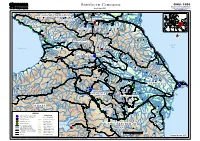
GIMU / PGDS Southern Caucasus Geographic Information and Mapping Unit As of June 2003 Population and Geographic Data Section Email : mapping@unhcr.ch Znamenskoye)) )) Naurskaya Aki-Yurt ))) Nadterechnaya Dokshukino Malgobek Babayurt RUSSIANRUSSIAN FEDERATIONFEDERATION Chervlennaya ))Nalchik INGUSHETIAINGUSHETIAINGUSHETIA Gudermes KABARDINO-BALKARIAKABARDINO-BALKARIA Sleptsovskaya Grozny Khazavyurt )) Argun )) )) NazranNazran )) ))) NazranNazran )) Kizilyurt Ardon Achkhay-Martan ABKHAZIAABKHAZIA Urus-Martan Shali Alagir )) VladikavkazVladikavkaz CHECHNYACHECHNYA VladikavkazVladikavkaz CHECHNYACHECHNYA SOUTHERNCAUCASUS_A3LC.WOR SukhumiSukhumi )) SukhumiSukhumi )) )) NORTHNORTH OSSETIAOSSETIA )))Vedeno Kaspiysk Nizhniy Unal )) Buynaksk )) Itum-Kali)) Botlikh Shatili)) GaliGali Izberbash !!! ZugdidiZugdidi ZugdidiZugdidi Sergokala SOUTHSOUTH OSSETIAOSSETIA Levashi Tskhinvali Caspian Dagestanskiye Ogni Kareli Sea Black Sea )) Derbent Lanchkhuti )) AkhmetaAkhmeta Khashuri Gori AkhmetaAkhmeta Kvareli Telavi Lagodekhi Gurdzhaani TBILISITBILISI Belakan GEORGIAGEORGIA Kasumkent Batumi)) ADJARIAADJARIA Akhaltsikhe Tsnori Zaqatala Khudat Tsalka Tetri-Tskaro Rustavi Khryuk Khachmas Bolnisi Marneuli Tsiteli-Tskaro Akhalkalaki QAKH Kusary Hopa Shulaveri Kuba Dmanisi Bagdanovka Sheki Divichi Pazar Artvin Alaverdi Akstafa Cayeli Ardahan Oghus Siazan Rize Tauz Mingechaur Lake Tumanyan Gabala Idzhevan Dallyar Dzheir Lagich Kirovakan Shamkhor Gyumri Mingechaur Ismailly Dilizhan Dilmamedli Agdash Geokchay Artik Shamakha Nasosnyy Kars Goranboy Yevlakh Kedabek -

Europe Report, No. 195: Russia Vs Georgia
RUSSIA VS GEORGIA: THE FALLOUT Europe Report N°195 – 22 August 2008 TABLE OF CONTENTS EXECUTIVE SUMMARY AND RECOMMENDATIONS................................................. i I. CHRONOLOGY OF THE VIOLENCE......................................................................... 1 II. MONITORING THE CEASEFIRE AND KEEPING PEACE .................................... 4 III. IMPLICATIONS FOR GEORGIA ................................................................................. 7 A. TERRITORIAL INTEGRITY .............................................................................................................7 B. NATO MEMBERSHIP .................................................................................................................10 C. DOMESTIC ECONOMIC AND POLITICAL IMPLICATIONS ...............................................................13 1. Energy..................................................................................................................................13 2. Economy..............................................................................................................................14 3. Politics .................................................................................................................................15 IV. IMPLICATIONS FOR RUSSIA.................................................................................... 16 A. RUSSIAN MOTIVATIONS BEYOND GEORGIA ..............................................................................17 B. POINTS OF LEVERAGE WITH RUSSIA...........................................................................................19 -
Evaluation of the Hepatitis C Care Cascade in the Country of Georgia: Monitoring Progress Towards Elimination
IVHEM 2019. November 22-23, 2019, Amsterdam EVALUATION OF THE HEPATITIS C CARE CASCADE IN THE COUNTRY OF GEORGIA: MONITORING PROGRESS TOWARDS ELIMINATION Tengiz Tsertsvadze,1,2 Amiran Gamkrelidze,3 Nikoloz Chkhartishvili,1 Akaki Abutidze,1 Lali Sharvadze,2,4 Maia Butsashvili,5 David Metreveli,6 Lia Gvinjilia,7 Shaun Shadaker,8 Muazzam Nasrullah,8 Tamar Gabunia, 9 Ekaterine Adamia,9 Stefan Zeuzem,10 Nezam Afdhal,11 Sanjeev Arora,12 Karla Thornton,12 Francisco Averhoff8 1Infectious Diseases, AIDS and Clinical Immunology Research Center, Tbilisi, Georgia; 2Ivane Javakhishvili Tbilisi State University, Tbilisi, Georgia; 3National Center for Disease Control and Public Health, Tbilisi, Georgia; 4Hepatology clinic HEPA, Tbilisi, Georgia; 5Health Research Union, Tbilisi, Georgia; 6Medical Center Mrcheveli, Tbilisi, Georgia; 7CDC Foundation, Tbilisi, Georgia; 8Centers for Disease Control and Prevention, Division of Viral Hepatitis National Center for HIV, Hepatitis, STD&TB Prevention, Atlanta, USA; 9Ministry of IDPs, Labour, Health and Social Affairs of Georgia, Tbilisi, Georgia; 10Goethe University Hospital, Frankfurt, Germany; 11Beth Israel Deaconess Medical Center Liver Center, Boston, USA; 12University of New Mexico, Albuquerque, USA Infectious Diseases, AIDS and Clinical Immunology Research Center Disclosure No relevant financial relationship exists Infectious Diseases, AIDS and Clinical Immunology Research Center 12 COUNTRIES WORLDWIDE ON TRACK TO ELIMINATE HEPATITIS C INFECTION BY 2030 Georgia’s HCV elimination program builds on delivering -

UNICEF Georgia COVID-19 Situation Report
UNICEF Georgia COVID-19 Situation Report 20 November 2020 HIGHLIGHTS SITUATION IN NUMBERS • World Children’s Day, 20 November 2020, was celebrated this week. The UNICEF Representative made a video address from Akhalkalaki, where he met 96,860 Confirmed cases with children and young people to discuss the challenges they are experiencing, as well as their vision for the future; And UNICEF National Ambassador Nikoloz Rachveli, called on Government, private sector and civil society to unite for 894 children in these challenging times - For more information, please see WEEKLY Confirmed deaths FOCUS on page 4. • UNICEF, with financial support from USAID, launched a new initiative to 1,327 enhance COVID-19 related risk communication among young people. Child (<18 years) cases • UNICEF’s partner, Children of Georgia (CoG), provided online psychological support to 410 children and 329 caregivers in small group homes and foster care through group and individual sessions. 2,226 • UNICEF’s partner, Adjara Organization of Georgia Scout’s Movement, provided Quarantined training on COVID-19 prevention measures to 415 students in 10 rural public schools in Adjara region. • UNICEF’s partner, Global Initiative in Psychiatry (GIP) continued online training Abkhazia sessions on psychosocial issues for students and teachers of Adjara and Gori Confirmed cases – 5,278 public schools reaching 952 students and 134 teachers. Confirmed deaths – 67 • UNICEF delivered agricultural equipment to 78 households, reaching 251 children and 212 adults in Abkhazia region. UNICEF funding gap • UNICEF provided food parcels, hygiene supplies and basic medical kits to 398 US$ 1,841,399 (42%) families in need, including 2,231 children and 989 adults in the Abkhazia region. -

Six-Point Ceasefire Agreement Between Russia and Georgia
IMPLEMENTATION REVIEW: SIX-POINT CEASEFIRE AGREEMENT BETWEEN RUSSIA AND GEORGIA THE NATIONAL COMMITTEE ON AMERICAN FOREIGN POLICY AND DAVID L. PHILLIPS August 2011 THE NATIONAL COMMITTEE ON AMERICAN FOREIGN POLICY The National Committee on American Foreign Policy was founded in 1974 by Professor Hans J. Morgenthau and others. It is a nonprofit activist organization dedicated to the resolution of conflicts that threaten US interests. Toward that end, the National Committee identifies, articulates, and helps advance American foreign policy interests from a nonpartisan perspective within the framework of political realism. American foreign policy interests include: • Preserving and strengthening national security; • Supporting countries committed to the values and the practice of political, religious, and cultural pluralism; • Improving U.S. relations with the developed and developing worlds; • Advancing human rights • Encouraging realistic arms-control agreements; • Curbing the proliferation of nuclear and other unconventional weapons; • Promoting an open and global economy An important part of the activity of the NCAFP is Track I ½ and Track II diplomacy. Such closed-door and off-the-record endeavors provide unique opportunities for senior U.S. and foreign officials, think-tank experts, and scholars to engage in discussions designed to defuse conflict, build confidence, and resolve problems. Believing that an informed public is vital to a democratic society, the National Committee offers educational programs that address security challenges facing the United States and publishes a variety of publications, including its bimonthly journal, American Foreign Policy Interests, that present keen analyses of all aspects of American foreign policy. v THE INSTITUTE FOR THE STUDY OF HUMAN RIGHTS AT COLUMBIA UNIVERSITY The Institute for the Study of Human Rights (ISHR) was established in 1978 at Columbia University as the Center for the Study of Human Rights (CSHR). -
5 Abkhazia: Living with Insecurity
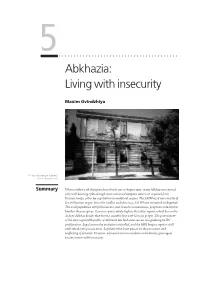
5 Abkhazia: Living with insecurity Maxim Gvindzhiya Destroyed building in Sukhum(i) PHOTO: ANNA MATVEEVA Summary When conflict with Georgian forces broke out in August 1992, many Abkhaz were armed only with hunting rifles, though more advanced weapons were soon acquired from Russian troops, either by negotiation or unilateral seizure. The SALW used were mostly of Soviet/Russian origin. Since the conflict ended in 1993, SALW have remained widespread. The local population still feels insecure, and in such circumstances, people are reluctant to hand in their weapons. Tension is particularly high in the Gal(i) region, which lies on the de facto Abkhaz border that forms a ceasefire line with Georgia proper. The government of the unrecognised Republic of Abkhazia has had some success in regulating SALW proliferation. Legal arms sales are better controlled, and the MOI keeps a register of all individuals who possess arms. Legislation has been passed on the possession and trafficking of firearms. However, whenever tension escalates at the border, guns again become more visible in society. 2 THE CAUCASUS: ARMED AND DIVIDED · ABKHAZIA Traditional gun A close affinity with guns and pastoral gun possession, especially in the mountain culture areas, is rooted in the cultural traditions of the Abkhaz. In the past, an Abkhaz man typically provided his family with food by hunting, fishing or farming and these trad- itions remain strong. Today, coupled with the impact of the war, the Abkhaz attitude to weapons is still largely governed by tradition. Traditional Abkhaz culture stresses the importance of firearms in society, and these ideas are instilled in the Abkhaz from birth. -

Abkhazia: Deepening Dependence
ABKHAZIA: DEEPENING DEPENDENCE Europe Report N°202 – 26 February 2010 TABLE OF CONTENTS EXECUTIVE SUMMARY AND RECOMMENDATIONS................................................. i I. INTRODUCTION ............................................................................................................. 1 II. RECOGNITION’S TANGIBLE EFFECTS ................................................................... 2 A. RUSSIA’S POST-2008 WAR MILITARY BUILD-UP IN ABKHAZIA ...................................................3 B. ECONOMIC ASPECTS ....................................................................................................................5 1. Dependence on Russian financial aid and investment .................................................................5 2. Tourism potential.........................................................................................................................6 3. The 2014 Sochi Olympics............................................................................................................7 III. LIFE IN ABKHAZIA........................................................................................................ 8 A. POPULATION AND CITIZENS .........................................................................................................8 B. THE 2009 PRESIDENTIAL POLL ..................................................................................................10 C. EXTERNAL RELATIONS ..............................................................................................................11