Reflexiones Del Muralismo En El Siglo Xxl
Total Page:16
File Type:pdf, Size:1020Kb
Load more
Recommended publications
-

PHOTO Libraryinc. 305 EAST F O R T Y-S E V E N T H STREET • NEW YORK 17 • PL 2-4477 October 5> 1966 Miss Laura Gilpin P‘O
PHOTO LIBRARYinc. 305 EAST F O R T Y-S E V E N T H STREET • NEW YORK 17 • PL 2-4477 October 5> 1966 Miss Laura Gilpin P‘O. Box 1173 Santa Fe, New Mexico Dear Miss Gilpin: One of our clients is anxious to obtain as quickly as possible illustrative material, both in color and black and white, for a forthcoming book on Mexican art and architecture. I’m enclosing a list that you can use. as a guide; as you can see, our client Is most specific. Do you think you can mail us some of your photographs? We are looking forward to hearing from you. Very truly yours 1) Head of a coyote. Tequixquiac, Mexico State. About 10,000 B.C. 2) Small Seated Statue. Cairo de las Mesaas , Veracruz State. 300-800 A.D. Institute Hacional de Antropoligia e Historia, Mexico City. 3) Olmec Dwarf, and Mara Glyph. Cairo de las Mesaas, Veracruz State. 300-800 A D Institute Hacional de Antropologia e HLstorla, Mexico 6ity. 4) Head of a young Maya. Palenque, Chiapas State. Jgbout 683 A D Institute Hacional de Antropologia.....Mexico City 5) Facade of the Codz-Pop Building. Cabah, Tucutan State. 800-1200 A D 6) Temple of the Warriors. Chichen Itza, Yucatan State 800-1200 A D 7) Entrance to the Temple of the Warriors (see above for location) 8) Great Bail Court. Chichen Itza.... 9) Temple of Venus, with the Castillo in the background, Chichen Itza.... 10) Bearded ’Dancer*. Monte Alban, Oaxaca State. 200-100 B.C. 11) Zapotec Urn. -
Gallery of Mexican Art
V oices ofMerico /January • March, 1995 41 Gallery of Mexican Art n the early the 1930s, Carolina and Inés Amor decided to give Mexico City an indispensable tool for promoting the fine arts in whatI was, at that time, an unusual way. They created a space where artists not only showed their art, but could also sell directly to people who liked their work. It was a place which gave Mexico City a modem, cosmopolitan air, offering domestic and international collectors the work of Mexico's artistic vanguard. The Gallery of Mexican Art was founded in 1935 by Carolina Amor, who worked for the publicity department at the Palace of Fine Arts before opening the gallery. That job had allowed her to form close ties with the artists of the day and to learn about their needs. In an interview, "Carito" —as she was called by her friends— recalled a statement by the then director of the Palace of Fine Arts, dismissing young artists who did not follow prevailing trends: "Experimental theater is a diversion for a small minority, chamber music a product of the court and easel painting a decoration for the salons of the rich." At that point Carolina felt her work in that institution had come to an end, and she decided to resign. She decided to open a gallery, based on a broader vision, in the basement of her own house, which her father had used as his studio. At that time, the concept of the gallery per se did not exist. The only thing approaching it was Alberto Misrachi's bookstore, which had an The gallery has a beautiful patio. -

David Alfaro Siqueiros's Pivotal Endeavor
City University of New York (CUNY) CUNY Academic Works School of Arts & Sciences Theses Hunter College Spring 5-15-2016 David Alfaro Siqueiros’s Pivotal Endeavor: Realizing the “Manifiesto de New York” in the Siqueiros Experimental Workshop of 1936 Emily Schlemowitz CUNY Hunter College How does access to this work benefit ou?y Let us know! More information about this work at: https://academicworks.cuny.edu/hc_sas_etds/68 Discover additional works at: https://academicworks.cuny.edu This work is made publicly available by the City University of New York (CUNY). Contact: AcademicWorks@cuny.edu David Alfaro Siqueiros’s Pivotal Endeavor: Realizing the “Manifiesto de New York” in the Siqueiros Experimental Workshop of 1936 By Emily Schlemowitz Submitted in partial fulfillment of the requirements for the degree of Master of Arts in Art History Hunter College of the City of New York 2016 Thesis Sponsor: __May 11, 2016______ Lynda Klich Date First Reader __May 11, 2016______ Harper Montgomery Date Second Reader Acknowledgments I wish to thank my advisor Lynda Klich, who has consistently expanded my thinking about this project and about the study of art history in general. This thesis began as a paper for her research methods class, taken my first semester of graduate school, and I am glad to round out my study at Hunter College with her guidance. Although I moved midway through the thesis process, she did not give up, and at every stage has generously offered her time, thoughts, criticisms, and encouragement. My writing and research has benefited immeasurably from the opportunity to work with her; she deserves a special thank you. -

Julio Agosto 2019 Actividades Culturales Del INBAL
Actividades Culturales del INBAL PALACIO DE BELLAS ARTES PALACIO Julio Agosto 2019 Año XVII / núm. 4 Detalle, Erupción del Paricutín, 1943. Gerardo Murillo (Dr. Atl). Museo Nacional de Arte EJEMPLAR GRATUITO A DIRECTORIO SECRETARÍA DE CULTURA Alejandra Frausto Guerrero Secretaria Omar Monroy Unidad de Administración y Finanzas Natalia Toledo Subsecretaria de Diversidad Cultural y Fomento a la Lectura Edgar San Juan Padilla Subsecretario de Desarrollo Cultural Antonio Martínez Velázquez Enlace de Comunicación Social y Vocería INSTITUTO NACIONAL DE BELLAS ARTES Y LITERATURA Lucina Jiménez Directora General Laura Elena Ramírez Rasgado Subdirectora General de Bellas Artes Claudia del Pilar Ortega González Subdirectora General de Educación e Investigación Artística Dolores Martínez Orralde Subdirectora General de Patrimonio Artístico Inmueble Pedro Fuentes Burgos Subdirector General de Administración Lilia Torrentera Gómez Directora de Difusión y Relaciones Públicas Índice PALACIO DE JULIO / AGOSTO · 2019 BELLAS ARTES / PBA • • • • • Pág. 1 - 6 TEATRO • • • • • Pág. 7-15 DANZA • • • • • Pág. 16-21 Programación sujeta a cambios sin previo aviso MÚSICA • • • • • Pág. 22-31 AGENDARTE Año XVII núm. 4 Julio-Agosto 2019. Cartelera bimestral LITERATURA • • • • • Pág. 32-40 de distribución gratuita. Adolfo Martínez, editor; DDRP diseño editorial. Dirección de Difusión y MUSEOS • • • • • Pág. 39-49 Relaciones Públicas del INBAL Reforma y Campo Marte, Módulo A, 1.er piso, col. Chapultepec Polanco, NIÑOS • • • • • Pág. 50-53 C.P. 11560, Ciudad de México. -
Omphalos Xv ·Núm
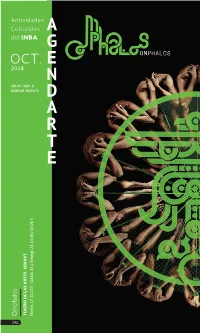
OCT. ejemplar gratuito año del Culturales Actividades 2018 14 p. Omphalos xv ·núm. I N TEATRO DE LAS ARTES. CENART BA Viernes 19, 20:00 h · Sábado 20 y domingo 21, 13:00 y 18:00 h 9 PALACIO DE BELLAS ARTES ESTAMOS RECUPERANDO JUNTOS NUESTRO PATRIMONIO CULTURAL Templo de Santa Prisca, Taxco, Guerrero A UN AÑO, La Secretaría de Cultura trabaja, día SE HAN RECUPERADO EN SU TOTALIDAD: a día, en recuperar 2,340 inmuebles que fueron afectados en 11 estados del país, joyas emblemáticas que han sido testigo 450 del acontecer nacional. inmuebles históricos México enfrenta uno de los mayores retos de su historia:restaurar los 41 bienes históricos y artísticos zonas dañados por los sismos de septiembre arqueológicas de 2017. Rendición de cuentas a la ciudadanía La Secretaría de Cultura reconoce la labor de las comunidades, los especialistas del INAH, OCTUBRE 2018 INBA, la Dirección General de Sitios y Monumentos del Patrimonio Cultural, y el apoyo de la B UNAM, el Fideicomiso Fuerza México, los gobiernos estatales e instancias internacionales. OCTUBRE · 2018 SECRETARÍA DE CULTURA María Cristina García Cepeda secretaria Índice Saúl Juárez Vega ESTAMOS RECUPERANDO JUNTOS subsecretario de desarrollo cultural Jorge Gutiérrez Vázquez NUESTRO PATRIMONIO CULTURAL subsecretario de diversidad cultural y fomento a la lectura Francisco Cornejo Rodríguez oficial mayor Miguel Ángel Pineda Baltazar director general de comunicación Social INSTITUTO NACIONAL DE BELLAS ARTES Lidia Camacho Camacho directora general 2 PALACIO DE BELLAS ARTES Roberto Vázquez Díaz PBA -
Introduction and Will Be Subject to Additions and Corrections the Early History of El Museo Del Barrio Is Complex
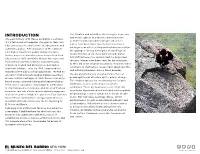
This timeline and exhibition chronology is in process INTRODUCTION and will be subject to additions and corrections The early history of El Museo del Barrio is complex. as more information comes to light. All artists’ It is intertwined with popular struggles in New York names have been input directly from brochures, City over access to, and control of, educational and catalogues, or other existing archival documentation. cultural resources. Part and parcel of the national We apologize for any oversights, misspellings, or Civil Rights movement, public demonstrations, inconsistencies. A careful reader will note names strikes, boycotts, and sit-ins were held in New York that shift between the Spanish and the Anglicized City between 1966 and 1969. African American and versions. Names have been kept, for the most part, Puerto Rican parents, teachers and community as they are in the original documents. However, these activists in Central and East Harlem demanded variations, in themselves, reveal much about identity that their children— who, by 1967, composed the and cultural awareness during these decades. majority of the public school population—receive an education that acknowledged and addressed their We are grateful for any documentation that can diverse cultural heritages. In 1969, these community- be brought to our attention by the public at large. based groups attained their goal of decentralizing This timeline focuses on the defining institutional the Board of Education. They began to participate landmarks, as well as the major visual arts in structuring school curricula, and directed financial exhibitions. There are numerous events that still resources towards ethnic-specific didactic programs need to be documented and included, such as public that enriched their children’s education. -

Finding Aid for the Lola Alvarez Bravo Archive, 1901-1994 AG 154
Center for Creative Photography The University of Arizona 1030 N. Olive Rd. P.O. Box 210103 Tucson, AZ 85721 Phone: 520-621-6273 Fax: 520-621-9444 Email: info@ccp.arizona.edu URL: http://creativephotography.org Finding aid for the Lola Alvarez Bravo Archive, 1901-1994 AG 154 Finding aid updated by Meghan Jordan, June 2016 AG 154: Lola Alvarez Bravo Archive, 1901-1994 - page 2 Lola Alvarez Bravo Archive, 1901-1994 AG 154 Creator Bravo, Lola Alvarez Abstract Photographic materials (1920s-1989) of the Mexican photographer Lola Alvarez Bravo (1903 [sometimes birth date is recorded as 1907] -1993). Includes extensive files of negatives from throughout her career. A small amount of biographical materials, clippings, and publications (1901-1994) are included. The collection has been fully processed. A complete inventory is available. Quantity/ Extent 32 linear feet Language of Materials Spanish English Biographical Note Lola Álvarez Bravo was born Dolores Martínez de Anda in 1903 in Lagos de Moreno, a small city in Jalisco on Mexico's Pacific coast. She moved to Mexico City as a young child, after her mother left the family under mysterious circumstances. Her father died when she was a young teenager, and she was then sent to live with the family of her half brother. It was here that she met the young Manuel Alvarez Bravo, a neighbor. They married in 1925 and moved to Oaxaca where Manuel was an accountant for the federal government. Manuel had taken up photography as an adolescent; he taught Lola and they took pictures together in Oaxaca. Manuel also taught Lola how to develop film and make prints in the darkroom. -

A Promenade Trough the Visual Arts in Carlos Monsivais Collection
A Promenade Trough the Visual Arts in Carlos Monsivais Collection So many books have been written, all over the world and throughout all ages about collecting, and every time one has access to a collection, all the alarms go off and emotions rise up, a new and different emotion this time. And if one is granted access to it, the pleasure has no comparison: with every work one starts to understand the collector’s interests, their train of thought, their affections and their tastes. When that collector is Carlos Monsiváis, who collected a little bit of everything (that is not right, actually it was a lot of everything), and thanks to work done over the years by the Museo del Estanquillo, we are now very aware of what he was interested in terms of visual art in the 20th Century (specially in painting, illustration, engraving, photography). It is only natural that some of the pieces here —not many— have been seen elsewhere, in other exhibitions, when they were part of the main theme; this time, however, it is a different setting: we are just taking a stroll… cruising around to appreciate their artistic qualities, with no specific theme. This days it is unusual, given that we are so used to looking for an overarching “theme” in every exhibition. It is not the case here. Here we are invited to partake, along with Carlos, in the pleasures of color, texture, styles and artistic schools. We’ll find landscapes, portraits, dance scenes, streetscapes, playful scenes. All executed in the most diverse techniques and styles by the foremost mexican artist of the 20th Century, and some of the 21st as well. -

De La Mano Por Los Derechos Humanos -.: CODHEM
artac aiap.unesco De la mano por los derechos humanos CATÁLOGO ICONOGRÁFICO DE LA DECLARACIÓN UNIVERSAL DE LOS DERECHOS HUMANOS 2010. Año del Bicentenario de la Independencia de México COMISIÓN DE DERECHOS HUMANOS DEL ESTADO DE MÉXICO ASOCIACIÓN DE ARTISTAS PLÁSTICOS DE MÉXICO A.C. De la mano por los derechos humanos. Catálogo iconográfico de la Declaración Universal de los Derechos Humanos CENTRO DE ESTUDIOS ISBN: 978-607-95235-8-9 Número de autorización del Cómite Editorial: CE/BLB/06/10 © D.R. Comisión de Derechos Humanos del Estado de México Dr. Nicolás San Juan No. 113, Col. Ex Rancho Cuauhtémoc, C.P. 50010, Toluca, México. Tel. (01 722) 2360560 Fax (01 722) 214-08-70 Página de internet: http://www.codhem.org.mx Tiraje: 0000 ejemplares Primera edición 2010 Comisionado de los Derechos Humanos Marco Antonio Morales Gómez Coordinador General: Albino Luna Sánchez Colaboradoras: Claudia Carranza López Bertha Sonia Calderón Fotografía: Graciela Ferreiro Robles Lugar de edición: CENTRO DE ESTUDIOS Diseño de portada y formación: Deyanira Rodríguez Sánchez Las opiniones vertidas en este texto son responsabilidad de su autor. La Comisión de Derechos Humanos del Estado de México lo ha publicado en apoyo a la libertad de expresión y el respeto a la pluralidad. 2 PRESENTACIÓN El arte es un lenguaje universal. Una imagen bella, una melodía armoniosa, una historia bien contada. Cada una de las manifestaciones que los artistas de hoy y siempre nos ofrecen, son capaces de establecer un diálogo generoso con el público de todas las naciones y de todas las condiciones. En la Comisión de Derechos Humanos del Estado de México estamos convencidos de que el acceso a la belleza creada por el ser humano debe ser parte de nuestros derechos. -
INFORME ANUAL CORRESPONDIENTE AL ÚLTIMO SEMESTRE DEL 2013 Y PRIMER SEMESTRE DE 2014
INFORME ANUAL CORRESPONDIENTE AL ÚLTIMO SEMESTRE DEL 2013 y PRIMER SEMESTRE DE 2014. Informe presentado por el Consejo Directivo Nacional de la Sociedad Mexicana de Autores de las Artes Plásticas, Sociedad De Gestión Colectiva De Interés Público, correspondiente al segundo semestre del 2013 y lo correspondiente al año 2014 ante la Asamblea General de Socios. Nuestra Sociedad de Gestión ha tenido varios resultados importantes y destacables con ello hemos demostrado que a pesar de las problemáticas presentadas en nuestro país se puede tener una Sociedad de Gestión como la nuestra. Sociedades homologas como Arte Gestión de Ecuador quienes han recurrido al cierre de la misma por situaciones económicas habla de la crisis vivida en nuestros días en Latinoamérica. Casos como Guatemala, Colombia, Honduras en especial Centro América, son a lo referido, donde les son imposibles abrir una representación como Somaap para representar a sus autores plásticos, ante esto damos las gracias a todos quienes han hecho posible la creación y existencia de nuestra Sociedad Autoral y a quienes la han presidido en el pasado enriqueciéndola y dándoles el impulso para que siga existiendo. Es destacable mencionar los logros obtenidos en las diferentes administraciones donde cada una han tenido sus dificultades y sus aciertos, algunas más o menos que otras pero a todas les debemos la razón de que estemos en estos momentos y sobre una estructura solida para afrontar los embates, dando como resultado la seguridad de la permanencia por algunos años más de nuestra querida Somaap. Por ello, es importante seguir trabajando en conjunto para lograr la consolidación de la misma y poder pensar en la Somaap por muchas décadas en nuestro país, como lo ha sido en otras Sociedades de Gestión. -

Museos Del Instituto Nacional De Bellas Artes Y Literatura, Abiertos Este 15 De Septiembre
Dirección de Difusión y Relaciones Públicas Ciudad de México, a 13 de septiembre de 2019 Boletín núm. 1402 Museos del Instituto Nacional de Bellas Artes y Literatura, abiertos este 15 de septiembre • El 16 de septiembre permanecerán cerrados El próximo 15 de septiembre el público de la Ciudad de México y visitantes de otros lugares podrán disfrutar de una amplia oferta expositiva en los museos del Instituto Nacional de Bellas Artes y Literatura (INBAL). En el Museo del Palacio de Bellas Artes se ofrece la exposición Pasajero 21, El Japón de Tablada, además de la oportunidad de visitar el Área de murales con importantes obras como: El hombre controlador del universo, Tercera Internacional, Carnaval de la vida mexicana (Diego Rivera), Tormento de Cuauhtémoc (David Alfaro Siqueiros), y otros más que el público podrá apreciar. Dentro del mismo recinto se encuentra el Museo Nacional de Arquitectura, ubicado en el tercer nivel del Palacio de Bellas. El Munarq ofrece a sus visitantes un recorrido por la historia del transporte colectivo más importante de México, con la muestra Metro 50 años. Ambos museos tendrán un horario de 10:00 a 15:00 horas. Por otro lado, el Museo Nacional de Arte (Munal) recibirá a los visitantes con la exposición ATL. Fuego, tierra y viento. Sublime sensación, muestra que pretende mostrar una secuencia fluida del trabajo de este artista, en la que se combina su fase de paisajista en asociación con su afición a la geología, la vulcanología y las expresiones del poder de la naturaleza. Voces de la tierra. Lenguas indígenas es una exposición que se conforma de obras pictóricas, escultóricas, impresas, fotográficas, textiles y dibujísticas que muestran la riqueza lingüística existente en el territorio mexicano. -

El Museo De Arte Moderno Presentará La Exposición Paul Westheim. El Sentido De La Forma
Dirección de Difusión y Relaciones Públicas Subdirección de Prensa Ciudad de México, 15 de abril de 2016 Boletín Núm. 365 El Museo de Arte Moderno presentará la exposición Paul Westheim. El sentido de la forma o La muestra aplica la crítica de arte para ofrecer una relectura de la colección del recinto o Resultado de la colaboración con los archivos Margit y Silvestre Frenk, y Paul Westheim de la Akademie der Künste en Berlín o Será exhibida del 9 de abril al 21 de agosto de 2016 La Secretaría de Cultura, por medio del Museo de Arte Moderno (MAM), presentará la exposición Paul Westheim. El sentido de la forma, resultado de la investigación de su colección permanente, de una sistemática búsqueda hemerográfica y del contacto con los fondos que resguardan los documentos, pinturas y fotografías del intelectual alemán, tanto en México como en Alemania: los archivos Margit y Silvestre Frenk, y Paul Westheim de la Akademie der Künste en Berlín. Esta muestra, que será exhibida en el MAM del 9 de abril al 21 de agosto de 2016, traduce de manera visual los temas analizados por Paul Westheim: la adaptación de la teoría formalista alemana al contexto local; el arte alemán en el exilio; el desarrollo del estudio del arte prehispánico; la arquitectura, la pintura y la escultura modernas en México, y la defensa de su colección perdida durante la Segunda Guerra Mundial. Paul Westheim (Eschwege, Alemania, 1886-Berlín, Alemania, 1963) abordó el arte desde el formalismo desplegado en Alemania, a través de su contacto directo con historiadores como Heinrich Wölfflin, Alois Riegl y Wilhelm Worringer, quienes analizaban el arte en función del desarrollo de los estilos y la intención de sus creadores.