ERM Household Assessment Report
Total Page:16
File Type:pdf, Size:1020Kb
Load more
Recommended publications
-

The ANSO Report (16-30 September 2010)
The Afghanistan NGO Safety Office Issue: 58 16-30 September 2010 ANSO and our donors accept no liability for the results of any activity conducted or omitted on the basis of this report. THE ANSO REPORT -Not for copy or sale- Inside this Issue COUNTRY SUMMARY Central Region 2-7 The impact of the elections and Zabul while Ghazni of civilian casualties are 7-9 Western Region upon CENTRAL was lim- and Kandahar remained counter-productive to Northern Region 10-15 ited. Security forces claim extremely volatile. With AOG aims. Rather it is a that this calm was the result major operations now un- testament to AOG opera- Southern Region 16-20 of effective preventative derway in various parts of tional capacity which al- Eastern Region 20-23 measures, though this is Kandahar, movements of lowed them to achieve a unlikely the full cause. An IDPs are now taking place, maximum of effect 24 ANSO Info Page AOG attributed NGO ‘catch originating from the dis- (particularly on perceptions and release’ abduction in Ka- tricts of Zhari and Ar- of insecurity) for a mini- bul resulted from a case of ghandab into Kandahar mum of risk. YOU NEED TO KNOW mistaken identity. City. The operations are In the WEST, Badghis was The pace of NGO incidents unlikely to translate into the most affected by the • NGO abductions country- lasting security as AOG wide in the NORTH continues onset of the elections cycle, with abductions reported seem to have already recording a three fold in- • Ongoing destabilization of from Faryab and Baghlan. -

Social Water and Integrated Management Project Takhar Province, Afghanistan
Social Water and Integrated Management Project Takhar Province, Afghanistan Contract No. Food/2007/147-691 Reference: EuropeAid/125953/L/ACT/AF FINAL EVALUATION January 2011 Paul D Smith Natural Resources Consultant Contents ABBREVIATIONS, ACRONYMS AND LOCAL TERMS ...................................................................................................... 5 PROJECT DATA ............................................................................................................................................................ 6 SUMMARY OF EVALUATION ....................................................................................................................................... 6 EXECUTIVE SUMMARY ................................................................................................................................................ 7 RELEVANCE AND QUALITY OF DESIGN ....................................................................................................................................... 7 EFFICIENCY OF IMPLEMENTATION ............................................................................................................................................ 7 EFFECTIVENESS .................................................................................................................................................................... 8 IMPACT PROSPECTS ............................................................................................................................................................. -
Watershed Atlas Part IV
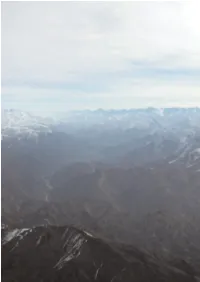
PART IV 99 DESCRIPTION PART IV OF WATERSHEDS I. MAP AND STATISTICS BY WATERSHED II. AMU DARYA RIVER BASIN III. NORTHERN RIVER BASIN IV. HARIROD-MURGHAB RIVER BASIN V. HILMAND RIVER BASIN VI. KABUL (INDUS) RIVER BASIN VII. NON-DRAINAGE AREAS PICTURE 84 Aerial view of Panjshir Valley in Spring 2003. Parwan, 25 March 2003 100 I. MAP AND STATISTICS BY WATERSHED Part IV of the Watershed Atlas describes the 41 watersheds Graphs 21-32 illustrate the main characteristics on area, popu- defined in Afghanistan, which includes five non-drainage areas lation and landcover of each watershed. Graph 21 shows that (Map 10 and 11). For each watershed, statistics on landcover the Upper Hilmand is the largest watershed in Afghanistan, are presented. These statistics were calculated based on the covering 46,882 sq. km, while the smallest watershed is the FAO 1990/93 landcover maps (Shapefiles), using Arc-View 3.2 Dasht-i Nawur, which covers 1,618 sq. km. Graph 22 shows that software. Graphs on monthly average river discharge curve the largest number of settlements is found in the Upper (long-term average and 1978) are also presented. The data Hilmand watershed. However, Graph 23 shows that the largest source for the hydrological graph is the Hydrological Year Books number of people is found in the Kabul, Sardih wa Ghazni, of the Government of Afghanistan – Ministry of Irrigation, Ghorband wa Panjshir (Shomali plain) and Balkhab watersheds. Water Resources and Environment (MIWRE). The data have Graph 24 shows that the highest population density by far is in been entered by Asian Development Bank and kindly made Kabul watershed, with 276 inhabitants/sq. -

Maah/Mrrd/Fao/Wfp National Crop Output Assessment
FAO FAAHM/AFGHANISTAN OSRO/AFG/111/USA MAAH/MRRD/FAO/WFP NATIONAL CROP OUTPUT ASSESSMENT 10th May to 5th June 2003 Farmer met in Badghis while weeding his rain-fed wheat field, 23 May 2003. Raphy Favre, FAO/FAIT Agronomist Consultant, Mission TL Anthony Fitzherbert, FAO Consultant Javier Escobedo, FAO Emergency Agronomist Consultant 25th July 2003 Kabul TABLE OF CONTENT I. EXECUTIVE SUMMARY II. INTRODUCTION III. METHODOLOGY 1. Estimation of Yield 1.1 Field Measurements for Yield Estimates 1.2 Crop Development Stage at the Time of the Assessment 1.3 Interviews with Farmers in the Field 1.4 Selection of Districts and Transects 1.5 Selection of Fields 2. Estimation of Land planted 3. Market Prices IV. RESULTS 4. Estimated Planted Area 4.1 Irrigated Land 4.2 Rain-fed Land 5. Estimated Wheat Yield 5.1 Irrigated Land 5.2 Rain-fed Land 6. Estimated Wheat Production 6.1 Irrigated Land 6.2 Rain-fed Land 6.3 Total Production 6.4 Agricultural Constraints in 2003 7. Estimated Barley Production at Regional Level 8. Wheat Grain Prices V. CONCLUSION & RECOMMENDATIONS ANNEXES ANNEX I - Changes of the Itinerary and Teams Composition due to Security Situation in Southern Afghanistan ANNEX II - Participants ANNEX III - Mission Itinerary and Districts covered by the Survey 2 TABLES Table 1: Estimated irrigated cultivated land in 2003; Total irrigated land cultivated In 2003, irrigated Wheat cultivated and irrigated Barley cultivated in 2003. Table 2: Estimated rain-fed cultivated land in 2003; Total rain-fed land cultivated in 2003, rain-fed Wheat cultivated and rain-fed Barley cultivated in 2003. -

ERM Household Assessment Report
ERM Household Assessment Report Assessment Location: Dashti Qala, khwaja Ghar, Taloqan districts of Takhar province. Type of crises: Conflict Darayem Kesham,districts of Badakhshan, khwaja Ghar, Dashti Qala, Namak Crisis Location: Aab,districts of Takhar, Qaysar district of Faryab province. Assessment Team: ACTED, DACAAR,IDS/WFP, SFL, ME, DoRR Crisis date: Month of January 2019 to February 2019. Date of Notification: 13.02.2019-and 07.March.2019 Date of Assessment: 03. March. 2019 to03. April.2019 HHs: Families: Individuals: Affected Population: 214 214 1277 1. Brief assessment’s findings and planned response. ALERT AND ASSESSMENT Cause of displacement: military operation conducted by ANSF/ by supporting airstrikes against to AOGs in, all villages of Dashti Qala, district of Takhar province, and also the AOGs attacked to the position of ANP in khwaja Ghar district caused the families displaced to secure villages of khwaja Ghar district and Taloqan district, the number of families displaced from Darayem and keshem districts of Badakhshan to Taloqan and some families displaced from Qaysar district of Faryab to Taloqan district, and displaced the high number of IDPs families to secure village of Dashti Qala district, Rustaq and Taloqan. Displacement data: Month of January and February 2019 from conflict areas to all secured villages of Dashti Qala district, khwaja Ghar district, Taloqan district of Takhar province. Number of households assessed: 980 Number of households eligible under ERM assistance: 214. COORDINATED RESPONSE: Food – WFP will provide two-month food ration in-kind to all 214 households NFIs– UNHCR will provide the NFIs kit for 214-households. Shelter– ACTED under ERM project will distribute 2,000 AFN per HH for all 204- families in this caseload and 10 families will not receive cash and will receive assistance from other partners. -

Afghan Forces Recapture Commander in Paktia Badakhshan’S Yamgan District
Page2 2 Main News Page Airstrike Kills Key Taliban Afghan Forces Recapture Commander in Paktia Badakhshan’s Yamgan District KABUL - A key Taliban com- on Monday afternoon. mander, Allah Noor, was killed Provincial police spokesman along seven other militants Sardar Wali Tabasom told Ari- in airstrikes conducted by the ana News that three other Tali- Resolute Support mission in ban militants were also among eastern Paktia province, a po- the deaths. lice official said on Tuesday. The three Taliban commanders The operation was conducted identified as Zahid also known in Sarkal village of Aryob Zazi as Fedaee, Shamal known as district over Taliban hideouts Wafadar, ...(More on P4)...(9) 7 Taliban Killed, 12 Injured by Own Bomb PUL-I-ALAM - Seven Tali- nor’s spokesman, Didar La- ban militants were killed and wang. a dozen more injured when a He told Pajhwok Afghan News bomb they were making went that the militants were busy off prematurely in central Log- making bombs inside a home KABUL - Afghan forces recap- day. A MoD statement said the after four years. brave Afghan forces were pro- ar province last night, an offi- when one of the explosive de- tured Yamgan district of north- district was recaptured as a re- The Taliban sustained heavy gressing and continuing opera- cial said on Monday. vices exploded. eastern Badakhshan province sult of airstrikes and ground op- losses and many of their fighters tions in Badakhshan against the The incident happened in However, the Taliban have so on Monday after four years, the erations and Afghan national flag surrendered to ANDSF, the state- enemies of peace and stability. -

Khwaja Ghar District Purged of Militants: Official
Email: outlookafghanistan@gmail.com Email: thedailyafghanistan@yahoo.com Phone: 0093 (799) 005019/777-005019 Phone: 0093 (799) 005019/777-005019 www.outlookafghanistan.net www.thedailyafghanistan.com Back Page July 04, 2015 Ghazni Kandahar Jalalabad Clear Clear Clear Mazar Clear Herat Partly Bamayan Clear Kabul Clear Cloudy Daily 28°C Outlook 45°C 36°C 44°C 44°C 40°C 38°C Weather 30°C 19°C 27°C 32°C 25°C 11°C 21°C Forcast Osmani Saves $10m Khwaja Ghar District on Hajj Expenses Purged of Militants: Official TALOQAN - Following anti- of rebels. Later, the security militants offensive, the Kh- forces entered Dasht-e-Archi waja Ghar district in north- district in Kunduz province ern Takhar province has for a military operation,” he been completely purged of said, adding that security KABUL - Faiz Mohammad pilgrims and for the first time insurgents, the spokesman forces expel militants from Osmani, Minister of Hajj and Afghan food will be provided for the acting governor said Dasht-e-Archi district, which Religious Affairs, on Thurs- three times a day for locals, on Friday. is situated at the border of day told a press conference and we have prepared proper Sunattullah Taimoor told Pa- Khaja Ghar district. that his ministry had cut costs accommodation for 24,000 Af- jhwok Afghan News Taliban At least 16 militants were this year by $10 million. ghan pilgrims,” said Osmani. had been flushed out of the killed and eight others Osmani, who had been re- About $133 USD will be spent district in a joint operation wounded in last two days porting back following his per person on food for the du- by Afghan security forces. -
Security Report November 2010 - June 2011 (PART II)
Report Afghanistan: Security Report November 2010 - June 2011 (PART II) Report Afghanistan: Security Report November 2010 – June 2011 (PART II) LANDINFO – 20 SEPTEMBER 2011 1 The Country of Origin Information Centre (Landinfo) is an independent body that collects and analyses information on current human rights situations and issues in foreign countries. It provides the Norwegian Directorate of Immigration (Utlendingsdirektoratet – UDI), Norway’s Immigration Appeals Board (Utlendingsnemnda – UNE) and the Norwegian Ministry of Justice and the Police with the information they need to perform their functions. The reports produced by Landinfo are based on information from both public and non-public sources. The information is collected and analysed in accordance with source criticism standards. When, for whatever reason, a source does not wish to be named in a public report, the name is kept confidential. Landinfo’s reports are not intended to suggest what Norwegian immigration authorities should do in individual cases; nor do they express official Norwegian views on the issues and countries analysed in them. © Landinfo 2011 The material in this report is covered by copyright law. Any reproduction or publication of this report or any extract thereof other than as permitted by current Norwegian copyright law requires the explicit written consent of Landinfo. For information on all of the reports published by Landinfo, please contact: Landinfo Country of Origin Information Centre Storgata 33A P.O. Box 8108 Dep NO-0032 Oslo Norway Tel: +47 23 30 94 70 Fax: +47 23 30 90 00 E-mail: mail@landinfo.no Website: www.landinfo.no Report Afghanistan: Security Report November 2010 – June 2011 (PART II) LANDINFO – 20 SEPTEMBER 2011 2 SUMMARY The security situation in most parts of Afghanistan is deteriorating, with the exception of some of the big cities and parts of the central region. -
Part III Description of River Basins
PART III DESCRIPTION OF RIVER BASINS Picture 38 Two different worlds separated by only a river; on the right bank of the Murghab river, ‘kuchi’ nomad tents in Afghanistan, on the left bank, a cooperative in Turkmenistan. Water is largely unused on the Afghan side. Murichak, Bala Murghab, 21 May 2003 (N35.72, E, 63.19, NW) 62 I. MAPS AND STATISTICS BY RIVER BASIN The map 8 shows the boundaries of the five River Basins delineated for Afghanistan: 1. The Amu Darya River Basin 2. The Northern River Basin 3. The Harirod-Murghab River Basin 4. The Hilmand River Basin 5. The Kabul (Indus) River Basin For each river basin, source of water, transboundaries riparian issues, natural resources, protected areas, land cover, type of agriculture, hydrological infrastructures (dams) and main historical development along water sources are summarized and whenever possible illustrated with pictures. The tables 8, 9 and 10 present statistics on area, population and the main land cover features by river basin. The graph 9 shows that the largest of these 5 basins is the Hilmand basin as it covers alone 43% of the national territory. The other 4 basins have similar size and represent 10 to 14% of the country. In additions to these river basins, there are 4 none drainage areas, namely Namaksar, Registan-i Sedi, Registan and Dasth-i Shortepa. The graph on Map 8 shows that 57% of the total river flow in Afghanistan originates from the Amu Darya River Basin. The Kabul (Indus) and Hilmand River Basins contributes respectively to 26 and 11% of the total water flow. -

KEY KIA = Killed in Action / WIA = Wounded in Action / TAL = Taliban / ASF = Afghan Security Forces / IS = ISIS / US = USA
Date Location/District Type of Attack Killed/Wounded Notes Toll [KIA/WIA] TAL: ASF: IS: US: 6/4/17 Khwaja Baha Wuddin District, Takhar province Taliban Attack Convoy T:3/0 ASF:0/2 Convoy transporting Dargad 3/0 0/2 0/0 0/0 District Governor 6/4/17 Near Tarikot,capital of Uruzgan Province Afghan SF Operation T:7/10 ASF:1/12 10/10 1/14 0/0 0/0 6/4/17 Shindand District, Herat Province Clash T:10/7 ASF:5/5 Taliban claim 10 killed or wounded 20/17 6/19 0/0 0/0 7/4/17 Achin District, Nangarhar Province Operation HAMZA (Military) IS:15 KIA Airstrikes and raids against IS 20/17 6/19 15/0 0/0 Militants 7/4/17 Paktika ,Logar ,Maidan, Wardak,Ghazni, Counter Terrorism Operation T:13/7 33/24 6/19 15/0 0/0 Kandahar Uruzgan, Herat, Faryab, Kunduz, Balkh, Sar-I-Pul, Helmand Provinces 7-8/4/17 Mihtarlam, Laghman Province Afghan SF Operation T:7/9 Govt Casualty Figures Unavailable 40/33 6/19 15/0 0/0 9/4/17 Chimtal District, Balkh Province Roadside Bomb ASF:9/4 40/33 15/23 15/0 0/0 10/4/17 Achin/Kot Districts, Nangarhar Province ANA Operations IS:19 KIA 40/33 15/23 34/0 0/0 10/4/17 Sayyad District, Sar-e-Pol Province Clash T:10/0 Govt Casualty Figures Unavailable 50/33 15/23 34/0 0/0 10/4/17 Charahi Qambar Area, Kabul Lone Gunman ASF:2 KIA Two Employees of the Anti Corruption 50/33 17/23 34/0 0/0 KEY KIA = Killed In Action / WIA = Wounded In Action / TAL = Taliban / ASF = Afghan Security Forces / IS = ISIS / US = USA Date Location/District Type of Attack Killed/Wounded Notes Toll [KIA/WIA] TAL: ASF: IS: US: Justice Centre (ACJC) Gunned Down 11/4/17 Deh -
THE ANSO REPORT -Not for Copy Or Sale
The Afghanistan NGO Safety Office Issue: 47 01-15 April 2010 ANSO and our donors accept no liability for the results of any activity conducted or omitted on the basis of this report. THE ANSO REPORT -Not for copy or sale- Inside this Issue COUNTRY SUMMARY Central Region 2-5 In BAGHLAN major clashes against NGO presence. ties in KUNAR while the Northern Region 6-10 occurred in Pul-i-Khumri In KANDAHAR the IMF withdrawal from Eastern Region 10-12 and Baghlan-i-Jadid as poppy harvest creates a lull Korangal Valley is expected ANSF/IMF attempted to to improve security there. Southern Region 13-15 in activity. Three BBIEDs reclaim some territory from target NDS HQ in an un- In NANGAHAR clashes Western Region 16-18 AOG in those areas to lim- successful attacks while between empowered tribes- ited success. AOG alignment ANSO Info Page 19 other VBIEDs target the men and the ANP continue with the Pashtun side of a compound of a civilian con- in Sherzad and Khogani land dispute in Hussein Khel tractor and an IMF convoy. while land disputes result in area threatens to polarize An IMF Escalation of violence elsewhere. YOU NEED TO KNOW communities there. Force shooting kills four In NURISTAN road work- In KUNDUZ heavy clashes persons on a local bus and ers are abducted and re- • Heavy fighting in Baghlan, occurred in Chahar Dara escalates tension in the city. Kunduz and Jawzjan leased by AOG while and while AOG focussed their In HERAT and FARAH ANSF proposal to renter • Return of AOG to Marjah response on Kunduz City IEDs result in civilian fatali- Kamdesh district is antici- and significant suicide with IED and rocket strikes. -

Afghanistan: Extremism & Terrorism
Afghanistan: Extremism & Terrorism On September 7, 2021, the Taliban officially announced the appointments within its caretaker government. At the helm of the movement is Haibatullah Akhundzada, who will serve as supreme leader. Mullah Muhammad Hassan was named the acting prime minister, with Mullah Abdul Ghani Baradar and Mawlawi Abdul Salam Hanafi named deputy prime ministers. The top security post was given to Sirajuddin Haqqani, who will serve as acting minister of the interior, a role in which he will have extensive authority over policing and legal matters. Mawlawi Mohammad Yaqoob, who is the oldest son of Taliban founder Mullah Muhammad Omar, is named the acting defense minister. The government is exclusively male, with many positions filled with veterans from their hardline movement in the early nineties. (Sources: New York Times, Associated Press) The appointments came a month after the Taliban began its offensive against major Afghan cities on August 6, 2021. By August 16, the Taliban laid siege to the presidential palace and took complete control of Kabul, declaring the war in Afghanistan had ended. The last U.S. troops flew out of Kabul on August 30, ending a 20-year war that took the lives of 2,500 American troops and 240,000 Afghans and cost about $2 trillion. By the evening of August 30, 123,000 people were evacuated from Kabul. Before departing, U.S. troops destroyed more than 70 aircraft, dozens of armored vehicles, and disabled air defenses that were used to counteract jihadist attacks in the country. The final withdrawal of U.S. troops was not a celebration of a more secure Afghanistan, but marked the beginning of a new Taliban regime.