American Commemoratives Stamp Series: Rock 'N' Roll/Rhythm & Blues
Total Page:16
File Type:pdf, Size:1020Kb
Load more
Recommended publications
-

The Twist”—Chubby Checker (1960) Added to the National Registry: 2012 Essay by Jim Dawson (Guest Post)*
“The Twist”—Chubby Checker (1960) Added to the National Registry: 2012 Essay by Jim Dawson (guest post)* Chubby Checker Chubby Checker’s “The Twist” has the distinction of being the only non-seasonal American recording that reached the top of “Billboard’s” pop charts twice, separately. (Bing Crosby’s “White Christmas” topped the holiday tree in 1942, 1945, and 1947). “The Twist” shot to No. 1 in 1960, fell completely off the charts, then returned over a year later like a brand new single and did it all over again. Even more remarkable was that Checker’s version was a nearly note-for- note, commissioned mimicry of the original “The Twist,” written and recorded in 1958 by R&B artist Hank Ballard and released as the B-side of a love ballad. Most remarkable of all, however, is that Chubby Checker set the whole world Twisting, from Harlem clubs to the White House to Buckingham Palace, and beyond. The Twist’s movements were so rudimentary that almost everyone, regardless of their level of coordination, could maneuver through it, usually without injuring or embarrassing themselves. Like so many rhythm and blues songs, “The Twist” had a busy pedigree going back decades. In 1912, black songwriter Perry Bradford wrote “Messin’ Around,” in which he gave instructions to a new dance called the Mess Around: “Put your hands on your hips and bend your back; stand in one spot nice and tight; and twist around with all your might.” The following year, black tunesmiths Chris Smith and Jim Burris wrote “Ballin’ the Jack” for “The Darktown Follies of 1913” at Harlem’s Lafayette Theatre, in which they elaborated on the Mess Around by telling dancers, “Twist around and twist around with all your might.” The song started a Ballin’ the Jack craze that, like nearly every new Harlem dance, moved downtown to the white ballrooms and then shimmied and shook across the country. -
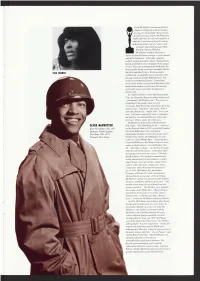
Clyde Mcphatter 1987.Pdf
Clyde McPhatter was among thefirst | singers to rhapsodize about romance in gospel’s emotionally charged style. It wasn’t an easy stepfor McP hatter to make; after all, he was only eighteen, a 2m inister’s son born in North Carolina and raised in New Jersey, when vocal arranger and talent manager Billy | Ward decided in 1950 that I McPhatter would be the perfect choice to front his latest concept, a vocal quartet called the Dominoes. At the time, quartets (which, despite the name, often contained more than four members) were popular on the gospel circuit. They also dominated the R&B field, the most popular being decorous ensembles like the Ink Spots and the Orioles. Ward wanted to combine the vocal flamboyance of gospel with the pop orientation o f the R&B quartets. The result was rhythm and gospel, a sound that never really made it across the R &B chart to the mainstream audience o f the time but reached everybody’s ears years later in the form of Sixties soul. As Charlie Gillett wrote in The Sound of the City, the Dominoes began working instinctively - and timidly. McPhatter said, ' ‘We were very frightened in the studio when we were recording. Billy Ward was teaching us the song, and he’d say, ‘Sing it up,’ and I said, 'Well, I don’t feel it that way, ’ and he said, ‘Try it your way. ’ I felt more relaxed if I wasn’t confined to the melody. I would take liberties with it and he’d say, ‘That’s great. -

57 Lessons: CD 1 57 Lessons: CD 2
57 Lessons: CD 1 Track Title Artist/Comooser 1 Star Spangled Banner U.S. Army ~and 'i~. 2 " "" Jose Feliciano ~1 3 " "" Jimi Hendrix- ~;~i 4 Barbara Allen Joan Baez'" 4:li~ 5 ,," Harry & Jeannie West 3:Sj1 6 Fanfare For the Common Man, Copland. '. 2:54i7: 7 Billy the Kid " 19:17 8 Hard Traveling Woody Guthrie 2:07 9 If I Had a Hammer Peter, Paul & Mary 2:09 " 10 The Times They Are a Changin' Bob Dylan 3:16 ~ 11 Richard Cory Simon & Garfunkel 2:53 12 Both Sides Now Judy Collins 3:12 13 Salty Dog Blues Lester Flatt & Earl Scruggs 1:54 (~ 14 Just Between You and Me Charley Pride 2:Q:?,~~; 15 "dialogue" "" l:3Q, i6 Love Sick Blues "" , 2:36) 17 The Ceremony Tammy Wynette & George Jones 3:01J:~ 18 Folsom Prison Blues Johnny Cash 2:45.~; 19 The Gambler K~nny Rodgers 3:3(31 20 In America Charlie Daniels 3:l3t'i' 21 Ceremonial Music of a Chieftan & his Tribe ., 1:17tl 22 ,Secret So~iety Dance Song' Nigetja 2:00:~: ,!:3Decret SO~letypx:ums Q:>~ly~hrtllms) . "_,,_, __,".~~Jq;~¢f 57 Lessons: CD 2 Tr,!!ck Title Artist/Composer rune 1 Tell Every body Herbie Hancock 7:52 2 Lucumi Song(Eastern Cuba) Yoruba Tribe Descendants 2:38 3 Steel Drwns of Trinidad <';;;~."!'> ,4:25 4 My Name Has Been Written Down Spiritual(Missis.slppi, 1949) 2:24 5 Said I W asn 't GDnna Tell Nobody Abyssinian Baptist Gospel Clwir 5:35 '6 Maple Leaf Rag Scott Joplin 3:12 7 Boogie \Voogie Man "" 2:40 8 Good Morning Blues Leadbelly 2:22 9 Reckless Blues Bessie Smith 3:05 10 Crying Time Ray Charles 2:52 11 Tiger Rag (1918) Original Dixieland Jazz Band 3:06 12 Livery Stable Blues "" "" 3:05 13 Eb Blues Fats Waller 2:29 14 Snake Drive Eric Clap ton 2:21 15 Telephone Blues John Mayall 3:54 16 Rhapsody in Blue George Gershwin 14:52 17 Porgy & Bcss-I Got Plenty of Nothin'"'' 3:04 18 Porgy & Bess-Summeriime '"" 2:38 19 Porg,.v& Bess-Bess You Is My Woman Now " 5:12 57 Lessons: CD 3 Track --.-litleu __ m Artist/Composer Tim~ 1 Porgy & Be~It Ain't Nc-ccssarilySo G. -

Title Format Released Abyssinians, the Satta Dub CD 1998 Acklin
Title Format Released Abyssinians, The Satta Dub CD 1998 Acklin, Barbara The Brunswick Anthology (Disc 2) CD 2002 The Brunswick Anthology (Disc 1) CD 2002 Adams Johnny Johnny Adams Sings Doc Pomus: The Real Me CD 1991 Adams, Johnny I Won't Cry CD 1991 Walking On A Tightrope - The Songs Of Percy Mayfield CD 1989 Good Morning Heartache CD 1993 Ade & His African Beats, King Sunny Juju Music CD 1982 Ade, King Sunny Odu CD 1998 Alabama Feels So Right CD 1981 Alexander, Arthur Lonely Just Like Me CD 1993 Allison, DeAnn Tumbleweed CD 2000 Allman Brothers Band, The Beginnings CD 1971 American Song-poem Anthology, The Do You Know The Difference Between Big Wood And Brush CD 2003 Animals, The Animals - Greatest Hits CD 1983 The E.P. Collection CD 1964 Aorta Aorta CD 1968 Astronauts, The Down The Line/ Travelin' Man CD 1997 Competition Coupe/Astronauts Orbit Kampus CD 1997 Rarities CD 1991 Go Go Go /For You From Us CD 1997 Surfin' With The Astronauts/Everything Is A-OK! CD 1997 Austin Lounge Lizards Paint Me on Velvet CD 1993 Average White Band Face To Face - Live CD 1997 Page 1 of 45 Title Format Released Badalamenti, Angelo Blue Velvet CD 1986 Twin Peaks - Fire Walk With Me CD 1992 Badfinger Day After Day [Live] CD 1990 The Very Best Of Badfinger CD 2000 Baker, Lavern Sings Bessie Smith CD 1988 Ball, Angela Strehli & Lou Ann Barton, Marcia Dreams Come True CD 1990 Ballard, Hank Sexy Ways: The Best of Hank Ballard & The Midnighters CD 1993 Band, The The Night They Drove Old Dixie Down: The Best Of The Band [Live] CD 1992 Rock Of Ages [Disc 1] CD 1990 Music From Big Pink CD 1968 The Band CD 1969 The Last Waltz [Disc 2] CD 1978 The Last Waltz [Disc 1] CD 1978 Rock Of Ages [Disc 2] CD 1990 Barker, Danny Save The Bones CD 1988 Barton, Lou Ann Read My Lips CD 1989 Baugh, Phil 64/65 Live Wire! CD 1965 Beach Boys, The Today! / Summer Days (And Summer Nights!!) CD 1990 Concert/Live In London [Bonus Track] [Live] CD 1990 Pet Sounds [Bonus Tracks] CD 1990 Merry Christmas From The Beach Boys CD 2000 Beatles, The Past Masters, Vol. -

Bb&T Blue Skies and Golden Sands Tour
BB&T BLUE SKIES AND GOLDEN SANDS TOUR - PROGRAM NOTES Blue Skies and Golden Sands continues a musical journey that embarked at the start of the North Carolina Symphony’s 75th anniversary season in September 2006. A special pops concert called Blue Skies and Red Earth brought the orchestra together with some of North Carolina’s finest folk musicians for a grand celebration of our state’s musical heritage. Blue Skies and Red Earth thrilled audiences with the sheer depth and breadth of homegrown musical traditions that have evolved over centuries. From haunting Cherokee flute music to the propulsive sounds of the fiddle and banjo, from stately spirituals to ecstatic gospel, from earthy blues to sophisticated jazz, the anniversary program showed the Tar Heel state to be a wellspring of musical treasures. Despite having enlisted dozens of guest artists who performed ten or more styles of music, Blue Skies and Red Earth by no means exhausted North Carolina’s musical resources. A few months after the final performance, planning commenced on a follow-up concert to highlight music oriented more to the state’s eastern shores than the rolling hills and mountains to the west. It began with what seemed like a casual question: “What about beach music?" As most Carolinians know, beach music refers to a body of popular songs that provides just the right mood and rhythms for a popular style of swing dancing called the Carolina Shag. Once heavily associated with beach clubs and dance pavilions from Wilmington, North Carolina to Myrtle Beach, South Carolina, shag dancing is performed all over the Southeast nowadays, and many commercial radio stations present the classic beach playlist over the air waves. -

Jackie Wilson: a Biography
Jackie Wilson: A Biography By Harvey Kubemik Jackie Wilson is one of the most important and influential recording artists of his generation. He was called “Mr. Excitement.” Jackie possessed dazzling stage moves and a soaring vocal range with a mesmerizing upper register few artists could do in a studio or on stage. Wilson’s music spanned a variety of genres from doo-wop and rhythm & blues to easy listening standards and rock ‘n’ roll. Jackie was an electrifying, charismatic showman. He was an agent of race music’s transition from the fifties that would lead to the sixties R&B and soul formats. “Jackie Wilson was my close friend and was one of the greatest entertainers ever. Hands down,” volunteered Marshall Thompson of The Chi-Lites. “He had the looks for the people and the girls screaming ‘til their heads fell off. The greatest dancer to ever hit a stage!” “Just listen to his voice. Who has those three and a half octaves and that incredible operatic instrument,” suggested music journalist, Kirk Silsbee. “And, who is gonna do on stage what Jackie did? 'Jackie Wilson was also employing things that seemed to defy human possibility in his stage moves. “Jackie was the first artist at the Apollo Theater to make audiences rash the stage,” stressed Bobby Schiffman, the former owner of the famed Harlem venue. Jackie Wilson became a mainstay of the R&B and pop charts from 1958 to 1970, where he amassed two dozen Top Forty singles. All of his classics were released on the landmark Brunswick Records label under the direction of future label president and record producer Nat Tarnopol, who initially served as Wilson’s manager and was a crucial force in shaping R&B music in that period. -

Clyde Mcphatter & Bonus
Clyde McPhatter & Bonus The Great R&B Files (# 12 of 12) Updated February 2, 2019 An R&B Pioneers Series Special Feature: Clyde McPhatter - the Original Soul Star Presented by Claus Röhnisch The R&B Pioneers Series Volume Twelve of twelve The R&B Pioneers Series: find them all at The Great R&B-files Created by Claus Röhnisch http://www.rhythm-and-blues.info BONUS FEATURES: - Ink Spots (grandfathers of ”Doo Wop”) - Combat Jet Aircraft and Top Interests North American X-15 - El Coyote (pulp character) FF: June 8, 1959 (USA) - JLA (Justice League of America) comics I: Sept 1959 Max speed: Mach 6:72 B: 3 (of which 1 was lost) - From Joel Whitburn’s Top 10 R&B Hits S: retired in December 1968 page 1 (52) http://www.rhythm-and-blues.info Clyde McPhatter & Bonus 2 http://www.rhythm-and-blues.info Clyde McPhatter & Bonus Clyde McPhatter – the Original Soul Star *near Durham, North Carolina 1932 (raised in Teaneck, New Jersey) ±New York City, 1972 Introduction The R&B Pioneers Series Volume Twelve (of twelve) Although Clyde McPhatter is not featured as a solo act in “The R&B Pioneer Series Top 30 Favorites” special edition, he sure is to be recognized as one of the most important pioneers of all, and he was absolutely the first “Soul Star”, paving the way for Sam Cooke, Jackie Wilson, Little Willie John, Nolan Strong, Dee Clark, Sammy Turner, Marv Johnson, Smokey Robinson, the second generation Drifters, and James Brown et al (with probably only Roy Brown as the forerunner). -

Chapter 3 - the Demise of Rock and Roll and the Promise of Soul
Chapter 3 - The Demise of Rock and Roll and the Promise of Soul 1. Splitting up the Market 1. Brill Building 1. 2. 3. 1. 2. 2. Teen idols – 1. Cast as potential boyfriends – 2. Frankie Avalon 3. Bobby Rydell 4. Freddy Cannon 5. Bobby Vee 6. Bobby Vinton 7. Paul Anka 8. Bobby Darin 9. Neil Sedaka 10. Fabian Forte – 3. American Bandstand 1. 2. 3. 4. 5. 4. Folk music 1. College-age listeners 2. Seemed more "real" than commercial pop- 3. Popular through 1940s – 1. Pete Seeger 2. Woody Guthrie 3. Advocacy for social change 4. Populist character – 1. Untutored quality of folksingers – 2. Break with the norms of middle-class life 3. Almost anyone could play folk music 5. Kingston Trio 6. Importance of album sales 7. Two sides of the folk revival 1. Those who explored rich literature of documented folk music 1. Bob Dylan 2. Joan Baez 2. Commercial, pop-based acts 1. Kingston Trio 2. Highwaymen 3. Rooftop Singers 4. New Christy Minstrels 5. Peter, Paul, and Mary 3. Constructed image of authenticity and sincerity 8. Similarities to Brill Building pop. 2. The Rise of the Producer 1. What is a producer? – 1. Developed from A&R, matching artists and repertoire 2. Shaped sound of record – 1. Details of arrangement 2. Recording process 3. Spurred ambitious attitudes toward pop 1. Musical sophistication 2. Trademark "sound" 3. Record is more than a recorded live performance 2. Leiber and Stoller – 1. Music for Elvis 1. 2. 3. 2. Spark Records 1. Had vision of sound for each song 3. -

Chapter 1 the Prehistory of Rock 'N' Roll
Chapter 1 The Prehistory of Rock ’n’ Roll 1. Popular music before the rise of rock ’n’ roll a. Sheet music i. Printed notation of popular songs ii. Designed for amateur pianists iii. Payments to songwriters were made in the form of royalties b. Tin Pan Alley i. Streamlined music production process ii. Relied heavily on AABA form c. Broadcasting and recording i. Radio 1. Top 40 radio developed in early 1950s by Todd Stroz in Ohama, Nebraska 2. Licensing companies ASCAP and BMI competed in the marketplace ii. Television 1. Fuses forms and functions of radio, record player, and cinema iii. Recordings 1. Growth in sales supported booming economy 2. The southern roots of rock ’n’ roll a. Record companies i. Major labels were large companies with substantial resources 1. Examples: RCA, Victor, Columbia, Decca, Capitol Records ii. Independent labels were smaller and specialized in a single genre b. Radio i. Helped popularize R&B and country 3. Pre-rock ’n’ roll rhythm & blues a. Jump band music i. First commercially successful form of R&B ii. Flourished just after World War II 1. Exemplified by Louis Jordan and the Tympany Five b. Chicago blues i. Created by transplanted southerners living on the South of Chicago ii. Rooted in the Delta Blues tradition iii. Exemplified by artists like Muddy Waters and Willie Dixon c. Vocal harmony groups (a.k.a. doo-wop) i. Grounded in the music of the black church ii. Exemplified by Clyde McPhatter and the Dominoes d. Female R&B performers i. Big Mama Thornton 1. -
The Drifters a Half Century of Classic American Music
The Drifters A Half Century of Classic American Music There's a very good reason that Rolling Stone magazine, in their iconic issue "500 Greatest Rock and Roll Performers" said of the Drifters "No group has done it this well for this long--no one, not even the Rolling Stones." That's quite a accolade to live up to but hopefully, on their latest tour, the Drifters will once again prove Rolling Stone to be the sage of rock and roll. Because, once again, the Drifters are on tour with a lineup of super talent revolving around performers who have had between them, over a century of making and recording the most meaningful songs in Rock and Roll. Through their historic journey which began in the 1957, the Drifters have had no less than 5 legendary lead singers including Rock and Roll hall of Famers Clyde McPhatter and Ben E. King. Such stalwart and famed individual lead singers as Charley Thomas, Bill Pinkney and Johnny Moore have passed through the group over the years, each recording their share of Drifters hits. And today, as has been the case for nearly 25 years, their star lead singer is Jerome Jackson who also performed as the lead singer for the Main Ingredient in the 1970s. There are many "firsts" for the Drifters; they were the first group inducted into the Rock and Roll Hall of Fame along with fellow inductees The Rolling Stones, The Beatles, Bob Dylan and the Supremes. Just reflect for a moment if you will, on that class of Rock and Roll stars that the Drifters were an integral part of. -
Sinky” Hendricks a Musician’S Musician
Belford C. “Sinky” Hendricks A Musician’s Musician STANLEY WARREN reat music often draws on diverse sources and great musicians typi- G cally defy categorization. The men and women who redefine the form and content of the musical genre in which they work often live “be- fore their time” and are recognized only at the end of a long career or after death. Scores of well-known Indiana musicians have made significant con- tributions to the world of music. Fans of jazz will recognize the names of Wilbur and Sidney DeParis, horn players from Crawfordsville;Speed Webb, band leader from Peru; and Sid Catlett, drummer from Evansville. India- napolis was home to saxophone player Beryl Steiner, trombonist J. J. Johnson, pianist and vocalist Russell Smith, orchestra leader Reginald DuValle, singer and vaudevillian Noble Sissle, pianist Carl Perkins, bass- ist Leroy Vinnegar, brothers Wes, Monk, and Buddy Montgomery, and the members of the Ink Spots.’ Far less known to jazz lovers is the name of Belford C. “Sinky” Hen- dricks, composer, arranger, pianist, and conductor from Evansville, Indi- ana. Yet it would be difficult to find an adult who lived during the 1950s or the 1960s who has not hummed a tune written or arranged by Hendricks. Stanley Warren is Dean Emeritus of Education, DePauw University, Greencastle, Indiana ‘On jazz in Indiana and Indianapolis, see Duncan Schiedt, The Jazz State of Indiana (Pittsboro, Ind., 1977); David Baker, “Jazz,” in Encyclopedia of Indianapolis, eds. David J. Bodenhamer and Robert G. Barrows (Bloomington, Ind., 1994). INDIANA MAGAZINE OF HISTORY, 100 (June 2004). 0 2004, Trustees of Indiana University BELFORD C. -

Soul Music in American Culture
UNIVERZITA PALACKÉHO V OLOMOUCI FILOZOFICKÁ FAKULTA Katedra anglistiky a amerikanistiky Hynek Hanzlík Soul music in American culture Bakalářská práce Vedoucí práce: Mgr. Jiří Flajšar, Ph.D. Olomouc 2014 Prohlašuji, že jsem tuto bakalářskou práci vypracoval samostatně a uvedl jsem všechny použité podklady a literaturu. V Přerově dne 5. 5. 2014 …............................... Hynek Hanzlík Rád bych poděkoval Mgr. Jiřímu Flajšarovi, Ph.D. za vedení mé bakalářské práce a za poskytnutí informací a rad souvisejících s její tvorbou. Content 1 Introduction ................................................................................................................. 1 2 What is soul ................................................................................................................. 2 3 Development of soul music ......................................................................................... 5 3.1 Early developments ....................................................................................... 6 3.2 Sam Cooke's crossover .................................................................................. 8 3.3 From soul to funk .......................................................................................... 9 4 Black American society at the birth of soul ................................................................ 11 4.1 The Civil Rights Movement ........................................................................ 11 4.2 Soul music and the civil rights movement .................................................