C O N F E R E N C E 16 24 January 2018
Total Page:16
File Type:pdf, Size:1020Kb
Load more
Recommended publications
-
Helminths of the Common Opossum Didelphis Marsupialis
Available online at www.sciencedirect.com Revista Mexicana de Biodiversidad Revista Mexicana de Biodiversidad 88 (2017) 560–571 www.ib.unam.mx/revista/ Taxonomy and systematics Helminths of the common opossum Didelphis marsupialis (Didelphimorphia: Didelphidae), with a checklist of helminths parasitizing marsupials from Peru Helmintos de la zarigüeya común Didelphis marsupialis (Didelphimorphia: Didelphidae), con una lista de los helmintos de marsupiales de Perú a,∗ a b c a Jhon D. Chero , Gloria Sáez , Carlos Mendoza-Vidaurre , José Iannacone , Celso L. Cruces a Laboratorio de Parasitología, Facultad de Ciencias Naturales y Matemática, Universidad Nacional Federico Villarreal, Jr. Río Chepén 290, El Agustino, 15007 Lima, Peru b Universidad Alas Peruanas, Jr. Martínez Copagnon Núm. 1056, 22202 Tarapoto, San Martín, Peru c Laboratorio de Parasitología, Facultad de Ciencias Biológicas, Universidad Ricardo Palma, Santiago de Surco, 15039 Lima, Peru Received 9 June 2016; accepted 27 March 2017 Available online 19 August 2017 Abstract Between May and November 2015, 8 specimens of Didelphis marsupialis Linnaeus, 1758 (Didelphimorphia: Didelphidae) collected in San Martín, Peru were examined for the presence of helminths. A total of 582 helminths representing 11 taxa were identified (2 digeneans and 9 nematodes). Five new host records and 4 species of nematodes [Gongylonemoides marsupialis (Vaz & Pereira, 1934) Freitas & Lent, 1937, Trichuris didelphis Babero, 1960, Viannaia hamata Travassos, 1914 and Viannaia viannaia Travassos, 1914] are added to the composition of the helminth fauna of the marsupials in this country. Further, a checklist of all available published accounts of helminth parasites reported from Peru is provided. To date, a total of 38 helminth parasites have been recorded. -
Studies on the Systematics and Life History of Polymorphous Altmani (Perry)
Louisiana State University LSU Digital Commons LSU Historical Dissertations and Theses Graduate School 1967 Studies on the Systematics and Life History of Polymorphous Altmani (Perry). John Edward Karl Jr Louisiana State University and Agricultural & Mechanical College Follow this and additional works at: https://digitalcommons.lsu.edu/gradschool_disstheses Recommended Citation Karl, John Edward Jr, "Studies on the Systematics and Life History of Polymorphous Altmani (Perry)." (1967). LSU Historical Dissertations and Theses. 1341. https://digitalcommons.lsu.edu/gradschool_disstheses/1341 This Dissertation is brought to you for free and open access by the Graduate School at LSU Digital Commons. It has been accepted for inclusion in LSU Historical Dissertations and Theses by an authorized administrator of LSU Digital Commons. For more information, please contact gradetd@lsu.edu. This dissertation has been microfilmed exactly as received 67-17,324 KARL, Jr., John Edward, 1928- STUDIES ON THE SYSTEMATICS AND LIFE HISTORY OF POLYMORPHUS ALTMANI (PERRY). Louisiana State University and Agricultural and Mechanical College, Ph.D., 1967 Zoology University Microfilms, Inc., Ann Arbor, Michigan Reproduced with permission of the copyright owner. Further reproduction prohibited without permission. © John Edward Karl, Jr. 1 9 6 8 All Rights Reserved Reproduced with permission of the copyright owner. Further reproduction prohibited without permission. -STUDIES o n t h e systematics a n d LIFE HISTORY OF POLYMQRPHUS ALTMANI (PERRY) A Dissertation 'Submitted to the Graduate Faculty of the Louisiana State University and Agriculture and Mechanical College in partial fulfillment of the requirements for the degree of Doctor of Philosophy in The Department of Zoology and Physiology by John Edward Karl, Jr, Mo S«t University of Kentucky, 1953 August, 1967 Reproduced with permission of the copyright owner. -

Helminth Parasites of the Common Grackle Quiscalus Quiscula Versicolor Vieillot in Indiana
This dissertation has been 62—3609 microfilmed exactly as received WELKER, George William, 1923- HELMINTH PARASITES OF THE COMMON GRACKLE QUISCALUS QUISCULA VERSICOLOR VIEILLOT IN INDIANA. The Ohio State University, Ph.D., 1962 Zoology University Microfilms, Inc., Ann Arbor, Michigan HELMINTH PARASITES OP THE COMMON GRACKLE QUISCALU5 QUISCULA VERSICOLOR VIEILLOT IN INDIANA DISSERTATION Presented in Partial Fulfillment of the Requirements for the Degree Doctor of Philosophy in the Graduate School of The Ohio State University By George William Welker, B. S., M. A. u _ u u u The Ohio State University 1962 Approved by: 1'XJijdJi ~7 Adviser urtameenhtt of Zoology and Entomology Dedicated as a tribute of appreciation and admiration to ELLEN ANN, my wife, for her help and for the sacrifices which she made during the four years covered by this study. ii ACKNOWLEDGMENTS The author wishes to express his sincere appreciation for all the help and cooperation which he has received from many people during the course of this study: Dr. Joseph Jones, Jr. of St. Augustine's College, Raleigh, North Carolina; Dr. Donal Myer, Southern Illinois university; Dr. E. J. Robinson, Jr., Kenyon College, Gambier, Ohio; Dr. Martin J. Ulmer, Iowa State University, Ames, Iowa; and Dr. A. Carter Broad and Dr. Carl Reese of the reading committee who helped in checking the paper for errors. Special acknowledgment goes to two persons whose help and influence are most deeply appreciated. To Professor Robert H. Cooper, Head of the Department of Science at Ball State Teachers College, whose sincere and continuous interest, encouragement and help made possible the completion of the work; and to Professor Joseph N. -
Development and Life Cycles
View metadata, citation and similar papers at core.ac.uk brought to you by CORE provided by UNL | Libraries University of Nebraska - Lincoln DigitalCommons@University of Nebraska - Lincoln Faculty Publications from the Harold W. Manter Laboratory of Parasitology Parasitology, Harold W. Manter Laboratory of 1985 Development and life cycles Gerald D. Schmidt University of Northern Colorado Follow this and additional works at: https://digitalcommons.unl.edu/parasitologyfacpubs Part of the Parasitology Commons Schmidt, Gerald D., "Development and life cycles" (1985). Faculty Publications from the Harold W. Manter Laboratory of Parasitology. 694. https://digitalcommons.unl.edu/parasitologyfacpubs/694 This Article is brought to you for free and open access by the Parasitology, Harold W. Manter Laboratory of at DigitalCommons@University of Nebraska - Lincoln. It has been accepted for inclusion in Faculty Publications from the Harold W. Manter Laboratory of Parasitology by an authorized administrator of DigitalCommons@University of Nebraska - Lincoln. Schmidt in Biology of the Acanthocephala (ed. by Crompton & Nickol) Copyright 1985, Cambridge University Press. Used by permission. 8 Development and life cycles Gerald D. Schmidt 8.1 Introduction Embryological development and biology of the Acanthocephala occupied the attention of several early investigators. Most notable among these were Leuckart (1862), Schneider (1871), Hamann (1891 a) and Kaiser (1893). These works and others, including his own observations, were summarized by Meyer (1933) in the monograph celebrated by the present volume. For this reason findings of these early researchers are not discussed further, except to say that it would be difficult to find more elegant, detailed and correct studies of acanthocephalan ontogeny than those published by these pioneers. -

Some Internal and External Parasites of the Redwinged Blackbird
THE OHIO JOURNAL OF SCIENCE VOL. 65 MARCH, 1965 No. 2 SOME INTERNAL AND EXTERNAL PARASITES OF THE REDWINGED BLACKBIRD, AGELAIUS PHOENTCEUS PHOENICEUS L., FROM CENTRAL OHIO; INCLUDING DESCRIPTIONS OF THREE NEW FEATHER MITES1- 2 GERHARD R. SPORY Department of Zoology and Entomology, The Ohio State University, Columbus 103 ABSTRACT From sixty-one redwinged blackbirds that were collected and examined between 1962 and 1963, eighteen species of parasites were recovered. Seven species of parasites represent new host records. These are: the trematode Conspicuum icteridorum; the feather mites Strelkoviacarus critesi sp. n., Mesalges johnstoni sp. n., Proctophyllodes egglestoni sp. n., Dermoglyphus sp.; the nasal mite Speleognathus sp.; and the mallophagan Machaerilaemus laticorpus. Cited is a table containing previous published and unpublished records of parasites taken from redwinged blackbirds. During the summer and autumn of 1962 and spring of 1963 a study was made of the internal and external parasites of the redwinged blackbird, Agelaius p. phoeniceus, from central Ohio. Sixty-one birds were collected from The Ohio State University farm pond area in Franklin County, Ohio, and the Delaware Reservoir Wildlife Area, Delaware County, Ohio. The procedure used in capturing redwings and collecting their parasites can be found in my Master's thesis (Spory, 1963). The following list presents the parasites found in this study, including descrip- tions for three new feather mites. Acanthocephala Order Archiacanthocephala Family Gigantorhynchus Mediorhynchus grandis Van Cleave, 1916. A single worm was found in the intestine of each of two birds of the 61 examined. Other hosts for this parasite have been reported by Van Cleave (1947). -

A Harmon Et Al. – Supporting Information Webtable 1. Partial List of Parasites Identified in Archaeological and Paleontologica
Title Parasites lost: using natural history collections to track disease change across deep time Authors Harmon, A; Littlewood, DTJ; Wood, CL Date Submitted 2019-07-10 A Harmon et al. – Supporting Information WebTable 1. Partial list of parasites identified in archaeological and paleontological animal coprolites Parasite Host Time period Technique used to identify parasite Source Eggs: Cestoda Shark ~270 million years BP Thin sectioning, optic microscopy Dentzien-Dias et al. (2013) Possible developing larva: Cestoda Cysts: Entamoebites antiquus Dinosaurian, possibly Early Cretaceous Carbonate removal; rehydration; Poinar and Boucot Megalosaurus dunkeri centrifugation; removal of silicates, clay, (2006) Eggs: Digenites proterus (Trematoda), and quartz; optical microscopy (Nikon Ascarites priscus, Ascarites gerus (Nematoda) Optiphot) Eggs: Toxocara sp Likely Pachycrocuta 1.2 million years BP Thin sectioning, petrographic microscopy Perri et al. (2017) brevirostris under PPL and XPL Eggs: Macrocanthorhynchus hirudinaceus Canine 4th–5th century CE Rehydration, light microscopy Mowlavi et al. (2015) Eggs: Anoplocephalid cestode, nematode, Tentative canid 6540 ± 110 years BP Rehydration, spontaneous sedimentation, Fugassa et al. (2013) dioctophymatid light microscopy Eggs: Anoplocephalid, possibly Monoecocestus Lagidium viscacia Holocene and Late Holocene, 14C Rehydration, homogenization, spontaneous Beltrame et al. (2013) or Andrya dating sedimentation, light microscopy Eggs: Trichurus sp Cervidae, likely Mazama or 1040 ± 50 years BP Rehydration, optical microscopy Sianto et al. (2012) Ozotoceros Eggs: Diphyllobothrium sp (Cestoda), Canis familiaris 700–1476 CE Partial necropsy of mummified remains, Richardson et al. Toxocara canis (Nematoda), Trichuris vulpis rehydration, compound microscopy (2012) (Nematoda), Spirocera lupi (Nematoda) Eggs: Trichurus sp (Nematoda), Heteroxynema Lagidium viscacia 9240 ± 130 years BP to 2540 ± 80 Rehydration, homogenization, spontaneous Beltrame et al. -
Ahead of Print Online Version Classification of the Acanthocephala
Ahead of print online version FoliA PArAsitologicA 60 [4]: 273–305, 2013 © institute of Parasitology, Biology centre Ascr issN 0015-5683 (print), issN 1803-6465 (online) http://folia.paru.cas.cz/ Classification of the Acanthocephala Omar M. Amin institute of Parasitic Diseases, scottsdale, Arizona, UsA Abstract: in 1985, Amin presented a new system for the classification of the Acanthocephala in crompton and Nickol’s (1985) book ‘Biology of the Acanthocephala’ and recognized the concepts of Meyer (1931, 1932, 1933) and Van cleave (1936, 1941, 1947, 1948, 1949, 1951, 1952). this system became the standard for the taxonomy of this group and remains so to date. Many changes have taken place and many new genera and species, as well as higher taxa, have been described since. An updated version of the 1985 scheme incorporating new concepts in molecular taxonomy, gene sequencing and phylogenetic studies is presented. the hierarchy has undergone a total face lift with Amin’s (1987) addition of a new class, Polyacanthocephala (and a new order and family) to remove inconsistencies in the class Palaeacanthocephala. Amin and Ha (2008) added a third order (and a new family) to the Palaeacanthocephala, Heteramorphida, which combines features from the palaeacanthocephalan families Polymorphidae and Heteracanthocephalidae. other families and subfamilies have been added but some have been eliminated, e.g. the three subfamilies of Arythmacanthidae: Arhythmacanthinae Yamaguti, 1935; Neoacanthocephaloidinae golvan, 1960; and Paracanthocephaloidinae golvan, 1969. Amin (1985) listed 22 families, 122 genera and 903 species (4, 4 and 14 families; 13, 28 and 81 genera; 167, 167 and 569 species in Archiacanthocephala, Eoacanthocephala and Palaeacanthocephala, respectively). -

Nomenclature of the Acanthocephala
Research and Reviews in Parasitology, 54 (3): 135-205 (1994) Published by A.P.E. © 1994 Asociaci6n de Parasit61ogos Espafioles (A.P.E) Printed in Barcelona, Spain NOMENCLATURE OFTHE ACANTHOCEPHALA Y.J. GOLVAN Parasitologie, Pathologie et Epidemiologic Parasitaires, U.R.A. 1344 du C.N.R.S., Faculte de Medecine Saint Antolne, rue Chaligny 27, 75571 Paris Cedex 12, France Received 7 April 1993; accepted 20 April 1994 REFERENCE:GOLVAN(Y.1.), 1994.- Nomenclature of the Acanthocephala. Research and Reviews in Parasitology, 54 (3): 135-205. SUMMARYTh: e whole Phylum Acanthocephala is reviewed from the point of view of the nomenclature. All the genera and species described so far are alphabetically listed and their validity established and/or discussed. Synonyms and geographical distribution are noted for each species. All the references concerning these genera and species are included. The following new taxa are proposed: Arhythmorhynchus turbidus (Van Cleave, 1937) novocomb. (=Corynosoma turbidum Van Cleave, 1937); Arhythmorhynchus villoti nom. novo(=Echinorhynchus longicollis Villot, 1875); Cen- trorhynchus hartwichi nom. nov. (=Centrorhynchus conspectus sensu Hartwich, 1956); Centrorhynchus latai nom. novo[=Centrorhynchus indicus (Gupta et Lata, 1966) Gupta et Fatma, 1983]; Cleaveius inglisi (Gupta et Fatma, 1987) novocomb. (=Mehrarhynchus inglisi Gupta et Fatma, 1987); Cleaveius singhai (Gupta et Fatma, 1987) novocomb. (=Mehrarhynchus singhai Gupta et Fatma, 1987); Echinorhynchus (Metechinorhynchus) muraenolepisi (Rodyuk, 1984) novocomb. t=Metechinorhynchus muraenolepisi Rodyuk, 1984); Neoechinorhynchus dauai nom. novo(=Neoechi- norhynchus rutili sensu Datta, 1936 nec O.F. MUller, 1780); Neoechinorhynchus edmondsi nom. novo(=Neoechinorhynchus rutili sensu Edmonds, 1982); Neoechinorhynchus hartwichi nom. novo (=Neoechinorhynchus australis sensu Hartwich, 1956); Nephridiacanthus thapari (Sen et Chauhan, 1972) novocomb. -
Smithsonian Miscellaneous Collections Smithsonian Miscellaneous Collections
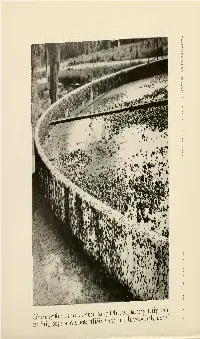
VOL. 134, NO. 10, PL. 1 SMITHSONIAN MISCELLANEOUS COLLECTIONS SMITHSONIAN MISCELLANEOUS COLLECTIONS VOLUME 134, NUMBER 10 THE MEDICAL AND VETERINARY IMPORTANCE OF COCKROACHES (With Seven Plates) By LOUIS M. ROTH and EDWIN R. WILLIS Pioneering Research Division Quartermaster Research and Engineering Center Natick, Mass. (Publication 4299) CITY OF WASHINGTON PUBLISHED BY THE SMITHSONIAN INSTITUTION DECEMBER 19, 1957 THE LORD BALTIMORE PRESS, INC. BALTIMORE, MD., U. S. A. FOREWORD It is rare indeed that a reviewer finds that a publication completely changes his orientation to the matter discussed. In all honesty that was the end result of reading this detailed, comprehensive, and fascinating review of the relationships, both probable and possible, of cockroaches and disease. Although the cockroach has long been the target of intensive control efforts in both the civilian and the military communities, my personal grudge against the insect has been based more on suspicion than fact. I would surmise that most physicians, like myself, have been influenced by the lack of emphasis on the disease transmission potential of the cockroach in most medical curricula. This review has corrected that deficiency. It has replaced a complacent acceptance of the insect as an unpleasant nuisance in areas of poor sanitation with a firm belief that greater attention must be placed on increased attempts to demon- strate, both in the laboratory and in the field, possible relationships between the prevalence of cockroaches and the incidences of certain diseases. Perhaps these insects have received less attention in this country than they have deserved. One could say the same for typhoid fever, smallpox, yellow fever, dengue, and malaria. -

Zootaxa 20Th Anniversary Celebration: Section Acanthocephala
Zootaxa 4979 (1): 031–037 ISSN 1175-5326 (print edition) https://www.mapress.com/j/zt/ Editorial ZOOTAXA Copyright © 2021 Magnolia Press ISSN 1175-5334 (online edition) https://doi.org/10.11646/zootaxa.4979.1.7 http://zoobank.org/urn:lsid:zoobank.org:pub:047940CE-817A-4AE3-8E28-4FB03EBC8DEA Zootaxa 20th Anniversary Celebration: section Acanthocephala SCOTT MONKS Universidad Autónoma del Estado de Hidalgo, Centro de Investigaciones Biológicas, Apartado Postal 1-10, C.P. 42001, Pachuca, Hidalgo, México and Harold W. Manter Laboratory of Parasitology, University of Nebraska-Lincoln, Lincoln, NE 68588-0514, USA �monks.scott@gmail.com; http://orcid.org/0000-0002-5041-8582 Abstract Of 32 papers including Acanthocephala that were published in Zootaxa from 2001 to 2020, 5, by 11 authors from 5 countries, described 5 new species and redescribed 1 known species and 27 checklists from 11 countries and/geographical regions by 72 authors. A bibliographic analysis of these papers, the number of species reported in the checklists, and a list of new species are presented in this paper. Key words: Acanthocephala, new species, checklist, bibliography The Phylum Acanthocephala is a relatively small group of endoparasitic helminths (helminths = worm-like animals that are parasites; not a monophyletic group). Adults use vertebrates as definitive hosts (fishes, amphibians, reptiles, birds, and mammals), eggs are passed in the feces and infect arthropods (insects and crustacean) as intermediate hosts, where the cystacanth develops, and the cystacanth infects the definitive host when it is ingested. In some cases, fishes, reptiles, and amphibians that eat arthropods serve as paratenic (transport) hosts to bridge ecological barriers to adults of a species that typically does not feed on arthropods. -
Some Acanthocephalans from Panama and Colombia1
OF WASHINGTON, VOLUME 39, NUMBER 2, JULY 1972 245 Some Acanthocephalans from Panama and Colombia1 VERNON E. THATCHER AND BKENT B. NICKOL Departamento de Biologia, Universidad del Valle, Cali, Colombia; and Department of Zoology, University of Nebraska ABSTRACT: Eighteen species of Acanthocephala (in 11 genera) are listed from neotropical Panama and Colombia. Of these species, 10 are new locality records. Additionally, the findings of: Centrorhynchus giganteum in Buteogallus urubitinga and Leucopternis semiplumbea; Oncicola oncicola in Felis wiedii; and Qiiadrigyrus torquatus in Hoplias microlepis represent new host records. Little is known of the acanthocephalans of recovered from a single collared forest-falcon Panama and Colombia. Only a few reports of obtained near Panama City. these parasites in the area have been published (e.g., Dunn, 1934; Calero et al, 1950; Takos Centrorhynchus tumidulus (Rud., 1819) and Thomas, 1958; Thatcher and Porter, .1968; HOST: Heterospizias meridionalis (Latham) Nickol and Thatcher, 1971). (savanna hawk). The present paper is a list of the acantho- SITE: Lower intestinal tract. cephalans which we have encountered in verte- LOCALITIES: Province of Panama, R. P.; brate hosts during the past 9 years in the Department of Meta, Colombia. two countries. This species was found in one savanna hawk in Panama, and in a hawk of the same species Materials and Methods in eastern Colombia. Four specimens of C. Acanthocephalans were removed from the tumidulus were recovered from each of these intestinal tracts of the hosts by inserting dis- two birds. This parasite has been reported secting needles near the proboscides. They previously from Brazil, Cuba, Uruguay, Vene- were then left in tap water until turgid with zuela, and India. -
Zoonoses and Communicable Diseases Common to Man and Animals
ZOONOSES AND COMMUNICABLE DISEASES COMMON TO MAN AND ANIMALS Third Edition Volume III Parasitoses Scientific and Technical Publication No. 580 PAN AMERICAN HEALTH ORGANIZATION Pan American Sanitary Bureau, Regional Office of the WORLD HEALTH ORGANIZATION 525 Twenty-third Street, N.W. Washington, D.C. 20037 U.S.A. 2003 Also published in Spanish (2003) with the title: Zoonosis y enfermedades transmisibles comunes al hombre y a los animales: parasitosis ISBN 92 75 31991 X (3 volume set) ISBN 92 75 31992 8 (Vol. 3) PAHO HQ Library Cataloguing-in-Publication Pan American Health Organization Zoonoses and communicable diseases common to man and animals: parasitoses 3rd ed. Washington, D.C.: PAHO, © 2003. 3 vol.—(Scientific and Technical Publication No. 580) ISBN 92 75 11991 0—3 volume set ISBN 92 75 11993 7—Vol. 3 I. Title II. (Series) 1. ZOONOSES 2. PARASITIC DISEASES 3. DISEASE RESERVOIRS 4. COMMUNICABLE DISEASE CONTROL 5. FOOD CONTAMINATION 6. PUBLIC HEALTH VETERINARY NLM WC950.P187 2003 v.3 En The Pan American Health Organization welcomes requests for permission to reproduce or translate its publications, in part or in full. Applications and inquiries should be addressed to Publications, Pan American Health Organization, Washington, D.C., U.S.A., which will be glad to provide the latest information on any changes made to the text, plans for new editions, and reprints and translations already available. ©Pan American Health Organization, 2003 Publications of the Pan American Health Organization enjoy copyright protection in accor- dance with the provisions of Protocol 2 of the Universal Copyright Convention. All rights are reserved.