Libro De Resúmenes Xxx Jam
Total Page:16
File Type:pdf, Size:1020Kb
Load more
Recommended publications
-
Supporting Files
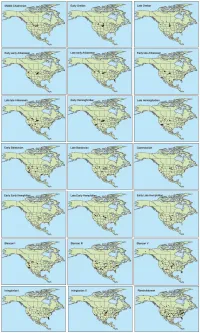
Table S1. Summary of Special Emissions Report Scenarios (SERs) to which we fit climate models for extant mammalian species. Mean Annual Temperature Standard Scenario year (˚C) Deviation Standard Error Present 4.447 15.850 0.057 B1_low 2050s 5.941 15.540 0.056 B1 2050s 6.926 15.420 0.056 A1b 2050s 7.602 15.336 0.056 A2 2050s 8.674 15.163 0.055 A1b 2080s 7.390 15.444 0.056 A2 2080s 9.196 15.198 0.055 A2_top 2080s 11.225 14.721 0.053 Table S2. List of mammalian taxa included and excluded from the species distribution models. -

The Neotropical Region Sensu the Areas of Endemism of Terrestrial Mammals
Australian Systematic Botany, 2017, 30, 470–484 ©CSIRO 2017 doi:10.1071/SB16053_AC Supplementary material The Neotropical region sensu the areas of endemism of terrestrial mammals Elkin Alexi Noguera-UrbanoA,B,C,D and Tania EscalanteB APosgrado en Ciencias Biológicas, Unidad de Posgrado, Edificio A primer piso, Circuito de Posgrados, Ciudad Universitaria, Universidad Nacional Autónoma de México (UNAM), 04510 Mexico City, Mexico. BGrupo de Investigación en Biogeografía de la Conservación, Departamento de Biología Evolutiva, Facultad de Ciencias, Universidad Nacional Autónoma de México (UNAM), 04510 Mexico City, Mexico. CGrupo de Investigación de Ecología Evolutiva, Departamento de Biología, Universidad de Nariño, Ciudadela Universitaria Torobajo, 1175-1176 Nariño, Colombia. DCorresponding author. Email: elkalexno@gmail.com Page 1 of 18 Australian Systematic Botany, 2017, 30, 470–484 ©CSIRO 2017 doi:10.1071/SB16053_AC Table S1. List of taxa processed Number Taxon Number Taxon 1 Abrawayaomys ruschii 55 Akodon montensis 2 Abrocoma 56 Akodon mystax 3 Abrocoma bennettii 57 Akodon neocenus 4 Abrocoma boliviensis 58 Akodon oenos 5 Abrocoma budini 59 Akodon orophilus 6 Abrocoma cinerea 60 Akodon paranaensis 7 Abrocoma famatina 61 Akodon pervalens 8 Abrocoma shistacea 62 Akodon philipmyersi 9 Abrocoma uspallata 63 Akodon reigi 10 Abrocoma vaccarum 64 Akodon sanctipaulensis 11 Abrocomidae 65 Akodon serrensis 12 Abrothrix 66 Akodon siberiae 13 Abrothrix andinus 67 Akodon simulator 14 Abrothrix hershkovitzi 68 Akodon spegazzinii 15 Abrothrix illuteus -

Richness, Endemism and Conservation of Sigmodontine Rodents in Argentina
Mastozoología Neotropical, 26(1):99-116, Mendoza, 2019 Copyright ©SAREM, 2019 Versión on-line ISSN 1666-0536 http://www.sarem.org.ar https://doi.org/10.31687/saremMN.19.26.1.0.17 http://www.sbmz.com.br Artículo RICHNESS, ENDEMISM AND CONSERVATION OF SIGMODONTINE RODENTS IN ARGENTINA Anahí Formoso1 and Pablo Teta2 1 Centro para el Estudio de Sistemas Marinos (CESIMAR-CENPAT-CONICET). Puerto Madryn, Chubut, Argentina. 2 División Mastozoología, Museo Argentino de Ciencias Naturales “Bernardino Rivadavia” Buenos Aires, Argentina. [Correspondence: Pablo Teta <antheca@yahoo.com.ar>] ABSTRACT. Sigmodontine rodents, with 86 genera and ~430 living species, constitute one of the most successful radiations of Neotropical mammals. In this contribution, we studied the distributional ranges of 108 sigmodontine species in Argentina. Our objectives were (i) to establish geographical patterns of species richness and endemism, and (ii) to evaluate the regional conservation status of these taxa. We constructed a minimum convex polygon for each species, using information from literature and biological collections. Individual maps were superimposed on a map of Argentina divided into cells of 25 km on each side. For each cell, we calculated the species rich- ness, which varied between 1 and 21 species, and its degree of endemism, which fluctuated between 0.001 and 3.28. There were 30 species of sigmodontine rodents distributed almost exclusively in Argentina, most of them restricted to forested areas (Southern Andean Yungas) or to arid and semiarid environments (High and Low Monte and Patagonian Steppe). Areas with high species richness and endemism scores corresponded grossly with the Southern Andean Yungas, the Humid Chaco plus the Paraná flooded savannas, the Alto Parana Atlantic forests plus the Araucaria moist forests, the High Monte and the ecotone between the Patagonian steppe and the Valdivian temperate forests. -

Mammalia, Didelphimorphia, Didelphidae, Chacodelphys Formosa (Shamel, 1930): Range Extension
Check List 3(4): 333–335, 2007. ISSN: 1809-127X NOTES ON GEOGRAPHIC DISTRIBUTION Mammalia, Didelphimorphia, Didelphidae, Chacodelphys formosa (Shamel, 1930): Range extension. Pablo Teta1 Ulyses F. J. Pardiñas2 1 Departamento de Ecología, Genética y Evolución, Facultad de Ciencias Exactas y Naturales, Universidad de Buenos Aires, Avenida Intendente Güiraldes 2160, Ciudad universitaria, Pabellón II, 4to piso, C1428EHA Ciudad Autónoma de Buenos Aires, Argentina. E-mail: antheca@yahoo.com.ar 2 Centro Nacional Patagónico, Casilla de Correo 128, Puerto Madryn, Chubut, Argentina. Chacodelphys formosa (Shamel, 1930) is possibly of a Barn Owl (Tyto alba; Tytonidae, the smallest species of the Didelphimorphia (head Strigiformes) pellet sample. Owl pellets were and body length = 68 mm, tail length = 55 mm; collected in 1991 from a human building in see Voss et al. 2004). Its distribution is only Estancia Santa Inés (department of Posadas, known from five localities in the east of the Chaco province of Misiones; 27º31' S, 55º52' W; 95 m; and Formosa provinces, Argentina (Teta et al. Figure 1). Osseous remains were identified by 2006). These five localities cover an area of about comparison with reference material housed at the 10,000 km2 in the South American Humid Chaco mammal collection of the Centro Nacional eco-region. According to the criteria of the UICN, Patagónico, Puerto Madryn, Argentina, and Teta et al. (2006) suggested that this species must literature (Voss et al. 2004; 2005). The examined be considered as Vulnerable. specimens are preserved in the Colección de material de egagrópilas y afines "Elio Massoia" Here we report a new recording locality for of the Centro Nacional Patagónico (under the Chacodelphys formosa resulting from the analysis number CNP-E 187-1). -

Phylogenetic Analysis of Sigmodontine Rodents (Muroidea), with Special Reference to the Akodont Genus Deltamys
Mamm. biol. 68 (2003) 351±364 Mammalian Biology ã Urban & Fischer Verlag http://www.urbanfischer.de/journals/mammbiol Zeitschrift fuÈr SaÈ ugetierkunde Original investigation Phylogenetic analysis of sigmodontine rodents (Muroidea), with special reference to the akodont genus Deltamys By G. D'ELIÂA,E.M.GONZAÂLEZ, and U. F. J. PARDINÄ AS The University of Michigan Museum of Zoology, Ann Arbor, Michigan, USA, Laboratorio de EvolucioÂn, Facultad de Ciencias, Montevideo, Uruguay, Museo Nacional de Historia Natural, Montevideo, Uruguay and Centro Nacional Pa- tagoÂnico, Puerto Madryn, Chubut, Argentina Receipt of Ms. 24. 06. 2002 Acceptance of Ms. 13. 01. 2003 Abstract We present a comprehensive phylogenetic analysis based on cytochrome b gene sequences of sig- modontine rodents. Our particular interest is to estimate the phyletic position of Deltamys, a tax- on endemic to a small portion of the La Plata river basin in Argentina, Brazil, and Uruguay, and to assess its generic status. The three primary conclusions derived from our analyses are: (1) cotton rats (Sigmodon) are the sister group of the remaining sigmodontines, (2) the tribe Akodontini is monophyletic with moderate support, and (3) Deltamys falls outside of a clade containing all spe- cies of subgenera of Akodon yet examined, and thus we grant Deltamys status of full genus. Key words: Akodon, Akodontini, Muroidea, Sigmodontinae, phylogeny Introduction The high diversity of muroid rodents to Thomas (1916, 1918) who recognised the belonging to the New World subfamily Sig- morphologic similarity among Akodon and modontinae has seriously challenged re- some other taxa ranked as genera by him searchers attempting to understand their (e. -

Redalyc.An Annotated Checklist of the Mammals of Paraguay
Therya E-ISSN: 2007-3364 therya@cibnor.mx Asociación Mexicana de Mastozoología México DE LA SANCHA, NOÉ U.; LÓPEZ-GONZÁLEZ, CELIA; D’ELÍA, GUILLERMO; MYERS, PHILIP; VALDEZ, LOURDES; ORTIZ, MARÍA LUISA An annotated checklist of the mammals of Paraguay Therya, vol. 8, núm. 3, 2017, pp. 241-259 Asociación Mexicana de Mastozoología Baja California Sur, México Available in: http://www.redalyc.org/articulo.oa?id=402352772009 How to cite Complete issue Scientific Information System More information about this article Network of Scientific Journals from Latin America, the Caribbean, Spain and Portugal Journal's homepage in redalyc.org Non-profit academic project, developed under the open access initiative THERYA, 2017, Vol. 8 (3): 241-260 DOI: 10.12933/therya-17-473 ISSN 2007-3364 An annotated checklist of the mammals of Paraguay NOÉ U. DE LA S ANCHA 1, 2* CELIA LÓPEZ -G ONZÁLEZ 3, G UILLERMO D’ELÍA 4, PHILIP MYER S5, LOURDE S V ALDEZ ,6 AND MARÍA LUISA ORTIZ 7 1 Chicago State University, Department of Biological Sciences, 9501 S King Drive, Chicago 60628. Ilinois, United States. Email: delasancha@msn.com (NDLS). 2 The Field Museum of Natural History, Integrative Research Center, 1400 S Lake Shore Dr., Chicago 60605. Ilinois, United States (NDLS). 3 Instituto Politécnico Nacional, CIIDIR Unidad Durango, Calle Sigma 119 Fracc. 20 de Noviembre II, CP. 34220, Durango. Durango, México. Email: celialg@prodigy.net.mx (CLG). 4 Universidad Austral de Chile, Facultad de Ciencias, Instituto de Ciencias Ambientales y Evolutivas. Valdivia, Chile. Email: guille. delia@gmail.com (GD) 5 Museum of Zoology, Research Museums Center, 3600 Varsity Drive, Ann Arbor 48108. -
Phylogenetics of Sigmodontinae (Rodentia, Muroidea, Cricetidae), with Special Reference to the Akodont Group, and with Additional Comments on Historical Biogeography
Cladistics Cladistics 19 (2003) 307–323 www.elsevier.com/locate/yclad Phylogenetics of Sigmodontinae (Rodentia, Muroidea, Cricetidae), with special reference to the akodont group, and with additional comments on historical biogeography Guillermo DÕElııaa,b a The University of Michigan Museum of Zoology, Ann Arbor, USA b Laboratorio de Evolucion, Facultad de Ciencias, Igua 4225 esq. Mataojo, Montevideo CP 11400, Uruguay Accepted 6 June 2003 Abstract This is the first cladistic analysis of sigmodontine rodents (Cricetidae, Sigmodontinae) based on nuclear and mitochondrial DNA sequences. Two most parsimonious cladograms (7410 steps in length; CI ¼ 0.199; RI ¼ 0.523) were discovered. Sig- modontinae appears well supported. Sigmodon is sister to the remaining living sigmodontines. It is shown that Euneomys is not a phyllotine and that the Reithrodon group is not monophyletic. Results corroborate that the abrothricines form a natural group that is not part of the akodont radiation. The akodontine tribe is well supported, and is composed of five main clades, whose limits and relationships are thoroughly discussed. For instance, the scapteromyines do not form a natural group and they fall within the akodontine clade. Additionally, I present some taxonomic judgments and comments on the historical biogeography of sigm- odontines in the light of the newly discovered relationships. For example, five akodontine divisions are suggested: the Akodon, the Bibimys, the Blarinomys, the Oxymycterus, and the Scapteromys Divisions. It is shown that traditional hypotheses of sigmodontine historical biogeography are falsified by the recovered topology. Ó 2003 The Willi Hennig Society. Published by Elsevier Inc. All rights reserved. Introduction time it has seriously challenged researchers attempting to study their phylogenetic relationships and classify With about 71 extant genera, muroids of the sub- them accordingly (Table 1). -

Maestri Et Al Suppl
Journal of Biogeography SUPPORTING INFORMATION Geographical variation of body size in sigmodontine rodents depends on both environment and phylogenetic composition of communities Renan Maestri, André Luís Luza, Lurdiana Dayse de Barros, Sandra Maria Hartz, Augusto Ferrari, Thales Renato Ochotorena de Freitas, Leandro D. S. Duarte Appendix S1 Body mass (in grams) for each of the 245 sigmodontine species (Rodentia, Sigmodontinae) used in the study, plus the place of each species within tribes (see Appendix S2). Species Mass (grams) Tribe Abrawayaomys ruschii 63.00 Clade A Abrothrix illuteus 47.80 Clade B Abrothrix lanosus 32.50 Clade B Abrothrix longipilis 37.60 Clade B Abrothrix sanborni 24.70 Clade B Aepeomys lugens 37.00 Thomasomyini Akodon aerosus 60.00 Akodontini Akodon affinis 24.90 Akodontini Akodon albiventer 21.80 Akodontini Akodon azarae 25.00 Akodontini Neomicroxus bogotensis 13.00 Clade A Akodon boliviensis 27.50 Akodontini Akodon budini 26.90 Akodontini Akodon cursor 39.90 Akodontini Akodon dayi 32.50 Akodontini Akodon dolores 50.50 Akodontini Akodon fumeus 22.70 Akodontini Akodon iniscatus 28.70 Akodontini Akodon juninensis 39.00 Akodontini Akodon kofordi 29.50 Akodontini Akodon latebricola 39.00 Akodontini Akodon mimus 24.00 Akodontini Akodon molinae 33.00 Akodontini Akodon mollis 30.40 Akodontini Akodon montensis 44.10 Akodontini Akodon neocenus 42.40 Akodontini Akodon orophilus 39.00 Akodontini Akodon paranaensis 32.40 Akodontini Akodon reigi 30.10 Akodontini Akodon sanctipaulensis 27.10 Akodontini Akodon serrensis 28.30 -

Redalyc.MISCELLANY on Bibimys (RODENTIA, SIGMODONTINAE), A
Mastozoología Neotropical ISSN: 0327-9383 enrique.lessa@gmail.com Sociedad Argentina para el Estudio de los Mamíferos Argentina Pardiñas, Ulyses F. J.; Voglino, Damián; Galliari, Carlos A. MISCELLANY ON Bibimys (RODENTIA, SIGMODONTINAE), A UNIQUE AKODONTINE CRICETID Mastozoología Neotropical, vol. 24, núm. 1, julio, 2017, pp. 241-250 Sociedad Argentina para el Estudio de los Mamíferos Tucumán, Argentina Available in: http://www.redalyc.org/articulo.oa?id=45753369021 How to cite Complete issue Scientific Information System More information about this article Network of Scientific Journals from Latin America, the Caribbean, Spain and Portugal Journal's homepage in redalyc.org Non-profit academic project, developed under the open access initiative Mastozoología Neotropical, 24(1):241-250, Mendoza, 2017 Copyright ©SAREM, 2017 http://www.sarem.org.ar Versión impresa ISSN 0327-9383 http://www.sbmz.com.br Versión on-line ISSN 1666-0536 Nota MISCELLANY ON Bibimys (RODENTIA, SIGMODONTINAE), A UNIQUE AKODONTINE CRICETID Ulyses F. J. Pardiñas1, Damián Voglino2, and Carlos A. Galliari3 1Instituto de Diversidad y Evolución Austral (IDEAus-CONICET), Puerto Madryn, Chubut, Argentina. [Correspondence: Ulyses Pardiñas <ulyses@cenpat-conicet.gob.ar>] 2Museo de Ciencias Naturales Antonio Scasso, Don Bosco 580, San Nicolás de los Arroyos, Buenos Aires, Argentina. 3Centro de Estudios Parasitológicos y de Vectores (CEPAVE-CONICET-UNLP), La Plata, Buenos Aires, Argentina. ABSTRACT. We comment on the geographical distribution of the 3 recognized species of Bibimys, focusing in the type species, B. torresi. By briefly reviewing the fossil occurrence of this form we posit that the species suffered a very recent marked retraction. Based on few collected individuals belonging to B. -

The Mammals of Argentina: an Etymology
Mastozoología Neotropical; 2(2):173-206 ISSN 0327-9383 SAREM, 1995 THE MAMMALS OF ARGENTINA: AN ETYMOLOGY Janet K. Braun and Michael A. Mares1,2 ' Oklahoma Museum of Natural History, University of Oklahoma, Norman, OK 73019 2 Department of Zoology, University of Oldahoma, Norman, OK 73019 ABSTRACT: The etymology of all genera and species of terrestrial mammals of Argentina are described. RESUMEN: Los mamíferos de Argentina: una etimología. Se presenta la etimología de todos los géneros y especies de los mamíferos terrestres de la Argentina. Key words: Mammals, etymology, Argentina, genera, species, taxonomy, South America Palabras clave: Mamíferos, etimología, Argentina, géneros, especies, taxonomía INTRODUCTION Lucero (1981), Bárquez (1987), Bárquez et The etymology of Argentine mammals has not al. (1991, 1993), and Redford and Eisenberg been completely presented in other published (1992). works that have dealt with one or another as- Methods pect of the derivation of mammalian scientific names (Palmer, 1904; Conisbee, 1953, 1960, Taxa are listed in systematic order following 1964, 1970, 1975; Gotch, 1979). Argentina is Wilson and Reeder (1993). Orders, families, a very active geographic area for the descrip- and subfamilies, if appropriate, are given. tion of new species (and even genera) of mam- Genera and species are arranged alphabeti- mals. We have attempted to ascertain, as much cally. The authority and date are given after as possible, the construction of the Latin bi- each species name. nomials of all Argentine mammal species. We Whenever possible, derivations of names are believe that a review of these names is in- given. Major sources used include: Palmer structive, not only in codifying many aspects (1904); Conisbee (1953); Brown (1956); Jae- of the biology of the mammals, but in pre- ger (1962); Gotch (1979). -
An Annotated Checklist of the Mammals of Paraguay
THERYA, 2017, Vol. 8 (3): 241-260 DOI: 10.12933/therya-17-473 ISSN 2007-3364 An annotated checklist of the mammals of Paraguay NOÉ U. DE LA SANCHA1, 2* CELIA LÓPEZ-GONZÁLEZ3, GUILLERMO D’ELÍA4, PHILIP MYERS5, LOURDES VALDEZ,6 AND MARÍA LUISA ORTIZ7 1 Chicago State University, Department of Biological Sciences, 9501 S King Drive, Chicago 60628. Ilinois, United States. Email: delasancha@msn.com (NDLS). 2 The Field Museum of Natural History, Integrative Research Center, 1400 S Lake Shore Dr., Chicago 60605. Ilinois, United States (NDLS). 3 Instituto Politécnico Nacional, CIIDIR Unidad Durango, Calle Sigma 119 Fracc. 20 de Noviembre II, CP. 34220, Durango. Durango, México. Email: celialg@prodigy.net.mx (CLG). 4 Universidad Austral de Chile, Facultad de Ciencias, Instituto de Ciencias Ambientales y Evolutivas. Valdivia, Chile. Email: guille. delia@gmail.com (GD) 5 Museum of Zoology, Research Museums Center, 3600 Varsity Drive, Ann Arbor 48108. Michigan, United States. Email: pmyers@ umich.edu (PM) 6 Universidad Austral de Chile, Facultad de Ciencias, Doctorado en Ciencias mención Ecología y Evolución.. Valdivia, Chile. Email: louvald@gmail.com (LV) 7 Itaipu Binacional, Centro de Investigación de Animales Silvestres, Dirección de Coordinación Ejecutiva. Hernandarias, Paraguay. mariaortizfleitas@gmail.com (MLO) *Corresponding author As the center of convergence of some of the major bioregions of South America, Paraguay is a biodiverse country of biogeographic impor- tance. Yet despite a long history of natural history research, basic knowledge of its fauna, including mammals, is still lacking. The last updated list of Paraguayan mammals was published in 2002, but increased research efforts since that time have brought about numerous changes in the taxonomy and known distribution of many species. -

Mammalian Diversification C H R O M O
OOLOGY OLUME V Z aphy sification Available online at http://repositories.cdlib.org/ucpress/Available ation of the omosomes to Phylogeogr om Chr r UNIVERSITY OF CALIFORNIA PUBLICATIONS Mammalian Diver F (A Celebr of James L.Career Patton) Edited by Eileen A. Lacey and Philip Myers Mammalian Diversification: From Chromosomes to Phylogeography (A Celebration of the Career of James L. Patton) 33 1 ZOO Lacey Myers --- --- ISBN --- ISBN ISBN RESS P www.ucpress.edu ALIFORNIA / C OF .A. Javier Rodríguez-Robles,A. David Good, B.Wake. and David Brief History of . L. Yuri R. Leite. rats,Atlantic tree and Systematics of the Evolution Phyllomys Genus List of Type Specimens of Recent Amphibians and Reptiles Specimens of Recent Type List of Herpetology in the Museum of Vertebrate Zoology, of California, University Vertebrate Herpetology Berkeley, in the Museum of with a (Rodentia, Species New Echimyidae),Two with Description of - Vol. Vol. NIVERSITY U Berkeley Other Volumes Available University of California Publications in Zoology MAMMALIAN DIVERSIFICATION: FROM CHROMOSOMES TO PHYLOGEOGRAPHY (A Celebration of the Career of James L. Patton) For Jim and Carol, with many thanks Mammalian Diversification: From Chromosomes to Phylogeography (A Celebration of the Career of James L. Patton) Eileen A. Lacey1 and Philip Myers2 (editors) 1 Museum of Vertebrate Zoology and Department of Integrative Biology of the University of California at Berkeley 2 Museum of Zoology and Department of Ecology and Evolutionary Biology of the University of Michigan at Ann