2016 Southern New Mexico Historical Review
Total Page:16
File Type:pdf, Size:1020Kb
Load more
Recommended publications
-
How Historical Myths Are Born ...And Why They Seldom
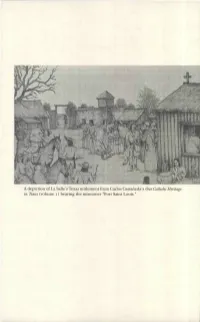
A depiction of La Salle's Texas settlement from Carlos Castañeda's Our Catholic Heritage in Texas (volume l) bearing the misnomer "Fort Saint Louis." How Historical Myths Are Born . And Why They Seldom Die* BY DONALD E. CHIPMAN AND ROBERT S. WEDDLE* Introduction HEN CHRISTOPHER COLUMBUS MADE HIS FIRST LANDFALL ON the fringe of North America, he believed he had reached the WEast Indies. He therefore called the strange people he met "Indians," a name that came to be applied to all American indigenes. In similar manner, inappropriate names—or names misapplied—have risen all across the Americas. When one of these historical errors arises, it takes on a life of its own, though not without a healthy boost from us historians. Historians, of course, come in all stripes, and so do the myths they espouse. Somedmes the most egregious of them may result from the purest intentions. But there is no denying that others are born of impure motives, of which the most prevalent perhaps is chauvinism—bending his- tory out of shape by falsely linking some major historic episode to one's native province. Mostly, however, such miscues arise from the urgency to provide answers—an explanation, a name, or an opinion—before the facts at hand justify it. For example, consider the various identities posited for the river shown on the famous "Pineda" map sketch (ca. 1519) as El Rio del Espíritu Santo. Was it the Mississippi as it has been long thought to be, or some other stream, perhaps as far east as Florida or as far west as Texas? Still * Donald E. -
PD Commons PD Books PD Commons EARLY EXPLORATION/ and MISSION ESTABLISHMENT/ in TEXAJ"
PD Commons PD Books PD Commons EARLY EXPLORATION/ AND MISSION ESTABLISHMENT/ IN TEXAJ" PD Books PD Commons fc 8 w Q fc O 8 fc 8 w G w tn H U5 t-i EARLY EXPLORATIONS AND MISSION ESTABLISHMENTS IN TEXAS BY EDWARD W. HEUSINQER, F.R.Q.S. Illustrated With Original Photographs Maps and Plans THE NAYLOR COMPANY SAN ANTONIO, TEXAS 1936 PD Books PD Commons EARLY EXPLORATIONS AND MISSION ESTABLISHMENTS IN TEXAS BY EDWARD W. HEUSINGER, F.R.Q.S. Illustrated With Original Photographs Maps and Plans THE NAYLOR COMPANY SAN ANTONIO, TEXAS 1936 PD Books PD Commons Copyright, 1936 THE NAYI.OR COMPANY Printed in the United States of America All rights reserved. This book, or parts thereof, may not be reproduced in any form without permission of the publisher. V This book is dedicated to the memory of the Franciscan Missionaries: PR. DAMIAN MASSANET FR. ANTONIO DE SAN BUENAVENTURA Y OLIVARES FR. YSIDRO FELIX DE ESPINOSA FR. ANTONIO MARGIL DE JESUS FR. BARTHOLOME GARCIA and their many intrepid co-workers who unselfishly gave their labor and their lives that Texas might enjoy the heritage of Christianity. PD Books PD Commons INTRODUCTION For two centuries after the discovery of America, Texas remained an unexplored and almost unvisited frontier province of Spain's far-flung empire. The reasons for this are not far to seek. First of all, Texas was almost inaccessible from the Spanish point of view. There were three possible ways of getting to it, each one less attractive than the pre- ceding. The one by sea was over the totally un- charted Gulf of Mexico, which was rendered doubly difficult by the peculiar formation of Matagorda Peninsula and the bay it protects. -

Les Complots Confédérés En Californie Pendant La Guerre De Sécession
LES COMPLOTS CONFÉDÉRÉS EN CALIFORNIE PENDANT LA GUERRE DE SÉCESSION Serge NOIRSAIN Les Amis de Serge Noirsain • contact@noirsain.net Bruxelles • Paris 2015 1 RÉORGANISATION DU DÉPARTEMENT DU PACIFIQUE EN 1861 Les élections présidentielles de décembre 1860 démontrent qu’en Californie le Parti républicain n’emporte pas la majorité absolue : 38 733 voix pour Lincoln, 37 999 pour Douglas, 33 969 pour Breckenridge et 9 911 pour Bell. Donc, sur les 120 612 Californiens qui ont voté, 76 732 rejettent les exigences des esclavagistes et 43 880 plébiscitent la dissoultion de l’Union s’ils n’obtiennent pas une modification de la Constitution autorisant l’extension de l’esclavage au sein de l’Union américaine. Les quatre candidats à la présidence, de gauche à droite : • Abraham LINCOLN (Parti républicain). Opposé à l’extension de l’esclavage dans les nouveaux États et Territoires, il obtient 39,7 % des votes au niveau national. • Stephen DOUGLAS (Parti démocrate nordiste). Partisan de laisser chaque nouvel État décider s’il permet ou non la pratique de l’esclavage, il obtient 29,5 % des votes au niveau national. • John BRECKINRIDGE (Futur général confédéré et porte-parole de l’intelligentsia conservatrice dans le Sud). Il revendique une modification de la Constitution pour autoriser l’extension de l’esclavage dans les nouveaux États et Territoires, il obtient 18,2 % des votes au niveau national. • John BELL (Parti constitutionnel de l’Union). Modéré en matière d’esclavage parce que son programme vise à maintenir l’Union à tout prix, il obtient 12,6 % des votes au niveau national. Albert S. -
View Finding
University of Oklahoma Libraries Western History Collections Advertising of the West Collection Advertising of the West Collection. Printed material, 1874–2016. 2 feet. Subject collection. Promotional brochures, flyers, handbills, maps, and original illustrations advertising geographic locations in the American West, as well as using the image of the West to sell other goods and services. The materials advertise tourist destinations such as rodeos, ranches, and the Grand Canyon; promotional brochures for western cities and towns such as Deming, New Mexico, and Lander, Wyoming; illustrated mining company stock certificates; and illustrations by Ken Laager for the covers of various western novels. ________________________ Box 1 Folder: 1. Color tourist brochure for Scenic Airways, Inc., Arizona, “Fly Over the Colorful West.” Cover features illustration of a Ford tri-motor plane flying over the Grand Canyon. 2. Tourist brochure for California’s Oak Knoll Ranch, Melone Co., Napa, California. Black and white with green details; cover features a man astride a rearing horse. 3. Color advertising brochure, “Here’s the Inside Story of the 1938 Pontiac Silver Streak, America’s Finest Low-Price Car.” Cover features illustrated profile of American Indian chief Pontiac and the face of Uncle Sam on yellow background. Brochure opens to reveal 3 lifting tabs that show various exterior and interior views of the car and its construction. 4. Brady's Tourist Guide: Oklahoma. Official Road Information of Brady Map & Pub. Co. Inc., Oklahoma City, Okla., for North America, 1925. 5. Promotional map of Grand Lake and Spavinaw Lake of Oklahoma, published by The Northeast Oklahoma Lakes Association and The Miami Chamber of Commerce, n.d. -

La Brigade Confédérée De L'arizona
LA BRIGADE CONFÉDÉRÉE DE L’ARIZONA Serge Noirsain Les principaux officiers de la brigade. De gauche à droite : William P. Hardeman (National Archives) ; George W. Baylor (Texas Ranger Hall of Fame and Museum); Spruce M. Baird (http://www.google.be/imgres?imgurl=http://azrebel.tripod.com/Baird) Origine, objectifs et formation Singulière unité que cette brigade dont le nom et les membres étaient étrangers à sa dénomination. En effet, destinée à envahir une seconde fois le Nouveau-Mexique, elle n’en prit pas la direction. Quant à ses hommes, tous provenaient du Texas à l’exception des quelques escadrons1 levés au Nouveau-Mexique. Le 24 février 1864, Bredett C. Murray, l’un des anciens éditeurs du Mesilla Times, écrit néanmoins dans un journal de Galveston que plus de 500 Arizoniens s’étaient engagés dans l’armée confédérée. Cette affirmation n’est pas fausse, mais elle est certainement très exagérée en raison du peu d’Américains qui résidaient au Nouveau-Mexique en 1860.2 Si les régiments de l’Arizona Brigade ne combattirent jamais sous un même commandement, leurs hommes marquèrent tout de même l’histoire du Trans-Mississippi d’une empreinte ambiguë.3 L’histoire de cette brigade débute en juillet 1862, après la déconfiture des forces confédérées au Nouveau-Mexique. Rappelons-en brièvement les principales péripéties. Le 5 mars 1861, le Texas entre dans la Confédération et son nouveau gouverneur, Edward Clark, approuve la création des 1st et 2nd Texas Mounted Rifles dont les hommes ne se sont engagés que pour un an. Au départ, ces deux régiments appartiennent à la milice du Texas, mais ils sont rapidement incorporés dans l’armée confédérée. -
The Foreign Service Journal, June 1939
qL AMERICAN FOREIGN SERVICE ★ * JOURNAL * * VOL. 16 JUNE, 1939 No. 6 GOING ON LEAVE? • To many in the Foreign Service that means a visit to New York—and the Hotel New Yorker because of its location—con¬ venient to everything you want to see and do here. A leave spent in New York can be a memorable one because this city offers so much in the way of divertisement. Foreign Service men have always made this hotel their headquarters for a number of reasons—excellent service, modest rates and attractively appointed rooms. Further, the New Yorker is the nearest large hotel to all the principal piers and is connected by private tunnel to Pennsyl¬ vania Station. Four popular priced restaurants including the famed Ice Terrace with the sensational Hotel New Yorker Ice Revue on real ice! Ten minutes and a ten cent fare to the New York World’s Fair 2500 Rooms from $3.50 Hotel NEW YORKER 34TH STREET AT EIGHTH AVENUE, NEW YORK Ralph Hitz, President Leo A. Molony, Manager <? *«°*IW>* A TABLE OF CONTENTS (JUNE, 1939) Cover Picture Tpm pie at Agrigento (See also page 350) “The Camels Are Coming” By Major Robert Ginsburgh, U. S. A 309 Photograph of Yugoslav Peasant Women By Peggy Lane 312 The Foreign Service Retirement Act 313 Births 313 In Meinoriam 313 Helsinki, Scene of the Twelfth Olympiad By Douglas R. Schoenfeld 314 Inside the Foreign Office 316 Photograph of Nelson’s Column from the National Gallery 317 The Mother Tongue By Troy L. Perkins 319 War on Imported Animal Disease By W. -

Advance and Retreat: Lt. Franklin Cook Recalls the Battle of Valverde
New Mexico Historical Review Volume 81 Number 4 Article 2 10-1-2006 Advance and Retreat: Lt. Franklin Cook Recalls the Battle of Valverde Jerry Thompson Follow this and additional works at: https://digitalrepository.unm.edu/nmhr Recommended Citation Thompson, Jerry. "Advance and Retreat: Lt. Franklin Cook Recalls the Battle of Valverde." New Mexico Historical Review 81, 4 (2021). https://digitalrepository.unm.edu/nmhr/vol81/iss4/2 This Article is brought to you for free and open access by UNM Digital Repository. It has been accepted for inclusion in New Mexico Historical Review by an authorized editor of UNM Digital Repository. For more information, please contact amywinter@unm.edu, lsloane@salud.unm.edu, sarahrk@unm.edu. Advance and Retreat LT. FRANKLIN COOK RECALLS THE BATTLE OF VALVERDE Jerry Thompson t the southern end ofthe pine-shrouded Sangre de Cristo Mountains, A near where the Santa Fe Trail wound through Glorieta Pass, a mass grave of thirty Confederate soldiers was unearthed in the summer of1987. The publicity that followed helped renew an interest in the Civil War in New Mexico Territory. A flurry ofarchaeological scholarship brought forth the grisly details of exactly how the Confederates perished in the Battle of Glorieta. l The approach ofthe centennial ofthe war more than three decades ear lier inspired the first serious scholarship on the Civil War in New Mexico Territory. Major studies concentrated on the failed 1861-1862 Confederate invasion.2 Interest in the conflict also spawned the republication of those portions of the Official Records of the Union and Confederate Armies rela tive to the Confederate invasion of the New Mexico Territory as well as a number ofletters, diaries, journals, and memoirs from soldiers on both sides ofthe conflict. -

Confederate Guerrillas in Southern Colorado 305
Tightening the Colorado Purse Strings BY JAMES F. WICKENS Twice during the period between the two world wars, in the late twenties and again in the late thirties, Colorado govern ment faced what state officials claimed to be fiscal "crises," when legislative over-appropriation caused state deficits. In both cases retrenchment brought state expenditures back into line with state income. In neither case, however, did state officials ever come to grips with the essential problem: out moded administrative procedures hindered effective handling of fiscal matters. Failure to initiate substantial administrative re organization left Colorado state government little more efficient in 1941 than it had been two decades earlier. During much of this period Governor William H. Adams was the leading political figure. "Billy,'' as he asked to be called, was a cattle rancher, simple in taste and manner. A conservative Democrat, he spent forty years in the state senate as a representative of the San Luis Valley. His victory for governor in 1926 and his re-election in 1928, as well as his un precedented third term in 1930, exemplify Adams' power in Colorado during the era between the two world wars.1 It might have been difficult for a Colorado voter to prog nosticate what Governor Adams (1927-33) was going to em phasize as state executive, because he had never campaigned actively for public office, made many speeches, or introduced many bills. Anyone who knew the governor's political philos ophy, however, easily could have predicted his approach: rigid economy in state government.2 Opposed to increased taxation, 1 Typical of Adams' character, his official portrait as governor of Colorado pictures him leaning against a barbed-wire fence post and wearing weather beaten stockmen's clothes. -

Is This to Be the Glory of Our Brave Men?: the New Mexico Civil War Journal and Letters of Dr
New Mexico Historical Review Volume 75 Number 4 Article 4 10-1-2000 Is This to Be the Glory of Our Brave Men?: The New Mexico Civil War Journal and Letters of Dr. Henry Jacob "Hal" Hunter Jerry Thompson Follow this and additional works at: https://digitalrepository.unm.edu/nmhr Recommended Citation Thompson, Jerry. "Is This to Be the Glory of Our Brave Men?: The New Mexico Civil War Journal and Letters of Dr. Henry Jacob "Hal" Hunter." New Mexico Historical Review 75, 4 (2000). https://digitalrepository.unm.edu/nmhr/vol75/iss4/4 This Article is brought to you for free and open access by UNM Digital Repository. It has been accepted for inclusion in New Mexico Historical Review by an authorized editor of UNM Digital Repository. For more information, please contact disc@unm.edu. "Is This to Be the Glory ofOur Brave Men?": The New Mexico Civil War Journal and Letters ofDr. Henry Jacob "Hal" Hunter EDITED BY JERRY THOMPSON INTRODUCTION Not until the approach of the Civil War centennial did any serious scholarship appear on the war in New Mexico Territory. Major studies, as expected, concentrated on the grandiose and ill-fated Confederate invasion of 1861-1862.1 Just before the centennial and in the decades that followed, biographers chronicled the Union and Confederate com manders ofthe two armies, respectively Edward R. S. Canby and Henry Hopkins Sibley, as well as many of their subordinates. 2 Even more impressive are several thoroughly researched books on the pivqtal bat tles ofValverde and Glorieta and two superb studies ofsouthern objec tives that detail the dramatic failure of the Confederate Army of New Mexico to create an empire in the remote Southwest) Moreover, since 1960, over twenty journal articles have discussed everything from whether the retreating Federals from Fort Fillmore had whiskey in their canteens prior to their surrender at St. -

Sentinel 7, 2018 a Fortunado Publication in Conjunction with Countywide News Service 10808 Foothill Blvd
The San Bernardino County News of Note from Around the Largest County in the Lower 48 States Friday, DecemberSentinel 7, 2018 A Fortunado Publication in conjunction with Countywide News Service 10808 Foothill Blvd. Suite 160-446 Rancho Cucamonga, CA 91730 (951) 567-1936 City Of Commerce Now Trying To Muscle In On Tres Hermanos Ranch O’Gilvie Bests By Mark Gutglueck the activity with regard geles Times Publisher of Industry, which as its the Los Angeles County Cole In Come- Seemingly out of no- to the 2,445-acre prop- Harry Chandler and the name implies is largely boundary from Chino From-Behind where, the southeast Los erty, which a significant heirs of California pio- dedicated to the prolif- Hills some 16 miles dis- Angeles County munici- number of Chino Hills neer John Rowland, the eration of manufacturing tant. To facilitate that Photo Finish pality of Commerce has residents want to see property was acquired concerns, would have ac- aim, the City of Indus- In 29 Palms inserted itself into the kept as open space but by the City of Industry cess to water that would try banked the property sweepstakes to com- which is coveted by mul- in 1978 for $12.1 million. be adequate to keep in within the Industry Ur- mandeer Tres Hermanos tiple entities in both the That city had taken pos- operation the more than ban Development Agen- Ranch and pursue the private and public sector session of it with what one thousand light, me- cy, which served as its likely agenda of using for its development po- was then a somewhat dium and heavy facto- redevelopment agency, the property to host a tential. -

Arizona Brigade Never Served Together Under the Same Command
CONFEDERATE HISTORICAL ASSOCIATION OF BELGIUM “ VengeanceatOkolona” John Paul Strain Painting by © By Serge Noirsain Adapted into English by Gerald Hawkins Origin, objectives and formation hat a singular unit this brigade was, whose name and members were W completely foreign to its denomination. Indeed, destined to invade Arizona and New Mexico a second time, it never took that direction. As for its men, all came from Texas except for a few companies raised in New Mexico, which had followed Sibley in his retreat. All do not agree with this statement. On February 24, 1864, the former publisher of the Mesilla Times wrote in a Galveston newspaper: “probably not less than 500 Arizonans had joined the Rebel Army but had been scattered through various commands.” In Murray’s opinion, “strenuous efforts should have been made to have all the men from Arizona united in the same command.” This assertion is probably not false, but it is certainly exaggerated since very few white American males of Southern origin resided in the neo-Mexican Territory at that time.1 In addition, the regiments of the Arizona Brigade never served together under the same command. Whatever, its men marked the military history of the Confederate Trans-Mississippi with such an ambiguous footprint that historian Robert Perkins calls them “Heroes and 1 Finch L.B., Confederate Pathway to the Pacific, Tucson, 1996, pp. 205, 277, note 8. CONFEDERATE HISTORICAL ASSOCIATION OF BELGIUM Renegades.” The story of the Arizona Brigade begins in July 1862, after the rout of the Rebel forces in New Mexico. Below is a brief account of its adventures. -

Contents Part I. West Texas Under the Dominion of Spain, France and Mexico I
CONTENTS PART I. WEST TEXAS UNDER THE DOMINION OF SPAIN, FRANCE AND MEXICO I. Explorations and Expeditions. II. Old Missions. Forts and Early Colonization. III. Industrial, Social and Local Conditions. PART II. WEST TEXAS BEFORE ANNEXATION AND AFTER THE BEGINNING OF AMERICAN COLONIZATION I. Colonial Development. II. Industrial Enterprises, Overland Transportation, Early Roads, and Well-Known Places. III. Important Expeditions. PART III. THE FRONTIER FROM ANNEXATION UNTIL THE CESSATION OF INDIAN HOSTILITIES Effect of Annexation and Further Explorations and Expeditions. II. Federal Forts, Posts, and Stations. III. Forts, Posts, and Stations (Continued). IV. Characteristics of Early Army Cantonments. V. Early Settlers, and their Domestic, Social, and Other Activities. VI. Early Roads and Overland Transportation. VII. The Civil War and Its Effect on the Frontier. PART IV. COUNTY ORGANIZATION AND COUNTY HISTORY I. Creation of New Counties - Bexar County - Travis County - Comal County - Denton County - Gillespie County - Hays County - Medina County - Williamson County - Cooke County - Bell County - El Paso County - McLennan County - Tarrant County - Hill County - Johnson County - Bosque County - Coryell County - Burnet County - Uvalde County - Bandera County - Kerr County - Llano County - San Saba County - Lampasas County - Comanche County - Erath County - Parker County - Wise County - Young County - Jack County - Palo Pinto County - Brown County - Blanco County - Mason County - Hamilton County - Montague County - Clay County - Stephens County - Kendall County - Coleman County - Hood and Somervell Counties - Menard County - Eastland County - Shackelford County - Presidio County - Tom Green County - McCulloch County - Callahan County - Taylor County - Throckmorton County - Further Activities, Accomplishments and Reward of Early Western Frontiersmen. PART V. INDIANS OF WESTERN TEXAS I. The Early Indians of West Texas.